
The Housemaid's Secret: An Absolutely Addictive Psychological Thriller with a Jaw-Dropping Twist
Paperback
• 320 Pages
• ₹ 366.00
• English
• 9780143462491
No ratings yet
| Publisher | Penguin |
|---|---|
| ISBN13 | 9780143462491 |
| ASIN/SKU | 0143462490 |
| Book Format | Paperback |
| Language | English |
| Pages | 320 |
| List Price | ₹ 366.00 |
| Publishing Date | 01/08/2023 |
| Dimensions | 21.5 x 14 x 2.9 cm |
| Weight | 190 g |
| Book Code | BD00055067 |
Buy this Book
Amazon Stores
Ebook Stores
Other Stores
Discover The Housemaid's Secret: An Absolutely Addictive Psychological Thriller with a Jaw-Dropping Twist by Freida McFadden. This book is published by Penguin in Paperback format, ISBN 9780143462491, ASIN 0143462490, under Literature and Fiction, Mysteries, Science Fiction Crime and Mystery.
Book Description
"Don't go in the guest bedroom." A shadow falls on Douglas Garrick's face as he touches the door with his fingertips. "My wife... she's very ill." As he continues showing me their incredible penthouse apartment, I have a terrible feeling about the woman behind closed doors. But I can't risk losing this job-not if I want to keep my darkest secret safe...
It's hard to find an employer who doesn't ask too many questions about my past. So I thank my lucky stars that the Garricks miraculously give me a job, cleaning their stunning penthouse with views across the city and preparing fancy meals in their shiny kitchen. I can work here for a while, stay quiet until I get what I want.
It's almost perfect. But I still haven't met Mrs Garrick, or seen inside the guest bedroom. I'm sure I hear her crying. I notice spots of blood around the neck of her white nightgowns when I'm doing laundry. And one day I can't help but knock on the door. When it gently swings open, what I see inside changes everything...
That's when I make a promise. After all, I've done this before. I can protect Mrs Garrick while keeping my own secrets locked up safe.
Douglas Garrick has done wrong. He is going to pay. It's simply a question of how far I'm willing to go...
This absolutely explosive and shockingly twisty sequel to international bestseller The Housemaid will keep you racing through the pages late into the night. Anyone who loves The Perfect Marriage by Jeneva Rose, The Woman in the Window and Gone Girl will be totally hooked! This book can also be enjoyed as a standalone.
It's hard to find an employer who doesn't ask too many questions about my past. So I thank my lucky stars that the Garricks miraculously give me a job, cleaning their stunning penthouse with views across the city and preparing fancy meals in their shiny kitchen. I can work here for a while, stay quiet until I get what I want.
It's almost perfect. But I still haven't met Mrs Garrick, or seen inside the guest bedroom. I'm sure I hear her crying. I notice spots of blood around the neck of her white nightgowns when I'm doing laundry. And one day I can't help but knock on the door. When it gently swings open, what I see inside changes everything...
That's when I make a promise. After all, I've done this before. I can protect Mrs Garrick while keeping my own secrets locked up safe.
Douglas Garrick has done wrong. He is going to pay. It's simply a question of how far I'm willing to go...
This absolutely explosive and shockingly twisty sequel to international bestseller The Housemaid will keep you racing through the pages late into the night. Anyone who loves The Perfect Marriage by Jeneva Rose, The Woman in the Window and Gone Girl will be totally hooked! This book can also be enjoyed as a standalone.
Author Biography
#1 New York Times, Amazon Charts, USA Today, Washington Post, Wall Street Journal, Sunday Times, and Publisher's Weekly bestselling author Freida McFadden is a physician who has penned multiple bestselling psychological thrillers and medical humor novels. Freida is the winner of the International Thriller Writer Award for Best Paperback Original, the Goodreads Choice Award for Best Thriller, and was honored as one of TIME 100’s most influential people in the world for 2026. Her novels have been translated into more than 45 languages.
Freida lives with her family and cat in a centuries-old three-story home overlooking the ocean, with staircases that creak and moan with each step, and nobody could hear you if you scream. Unless you scream really loudly, maybe.
To hear Freida talk about herself more in the third person, check out her website freidamcfadden dot com.
Freida lives with her family and cat in a centuries-old three-story home overlooking the ocean, with staircases that creak and moan with each step, and nobody could hear you if you scream. Unless you scream really loudly, maybe.
To hear Freida talk about herself more in the third person, check out her website freidamcfadden dot com.
Editorial Reviews
Editorial Reviews will be added soon…
Book Summary
The Housemaid's Secret is the second novel in Freida McFadden's Housemaid series and a fast-paced psychological thriller centered on Millie Calloway, a housemaid with a troubled past who becomes entangled in the secrets of a wealthy Manhattan couple. The novel combines domestic suspense, deception, abuse, murder, revenge, and multiple reversals, building its story around the question of whether the person who appears to need saving is actually the person orchestrating the danger. It can also be read as a standalone novel.
Millie Gets a New Job
At the beginning of the novel, Millie is trying to rebuild her life. She has a criminal record and knows that potential employers are likely to ask uncomfortable questions about her past. Because of this, finding reliable work is difficult.
Her situation changes when she is offered a position working for Douglas Garrick, the wealthy CEO of Coinstock.
The job seems almost too good to be true.
Millie will clean the Garricks' luxurious penthouse, prepare meals, and perform household duties. The apartment is beautiful, the salary is attractive, and the position could provide the stability she desperately needs.
But there is one strange condition.
Douglas warns her not to enter the guest bedroom.
His wife, Wendy Garrick, is supposedly very ill and spends most of her time behind the locked door.
Millie agrees to respect the boundary.
But almost immediately, she becomes suspicious.
She hears Wendy crying.
She notices disturbing sounds coming from the room.
Then, while doing laundry, she sees blood on Wendy's nightclothes.
Millie's instincts tell her that something is seriously wrong.
The Woman Behind the Door
Millie eventually cannot ignore what she is seeing.
She knocks on the guest-room door and discovers Wendy inside.
Wendy appears frightened and physically abused. She has bruises and tells Millie that Douglas is responsible.
The situation immediately activates something deeply personal in Millie.
Because of her own past, she has developed a strong instinct to protect women who may be trapped in abusive relationships. She believes Wendy is another woman who needs someone willing to intervene.
The official description deliberately establishes this uncertainty: Millie sees signs of abuse, while Douglas insists that his wife is simply ill and warns Millie to stay away from the bedroom.
Millie decides that she cannot simply continue cleaning the penthouse while Wendy remains trapped.
She offers to help Wendy escape.
Millie's Secret Past
Millie is not an ordinary housemaid.
She has previously spent time in prison after accidentally killing a man who was attempting to sexually assault her friend. Her criminal record makes her cautious, but it has also shaped her sense of justice.
After leaving prison, Millie became involved in helping women escape abusive relationships, sometimes with the assistance of her former boyfriend, Enzo Accardi.
This history becomes crucial.
Millie is not merely sympathetic toward Wendy.
She believes she has experience recognizing abusive men and helping their victims.
Unfortunately, that confidence makes her vulnerable to manipulation.
She assumes she understands what is happening before she has all the facts.
Trying to Save Wendy
Millie helps Wendy plan an escape.
Wendy identifies an old college friend in Albany who can supposedly provide a safe place for her.
Millie drives Wendy there and arranges a motel room.
For a short time, Millie believes she has succeeded.
But Wendy soon returns to Manhattan.
She tells Millie that Douglas found her and brought her back.
The situation becomes even more frightening.
Wendy claims that Douglas is increasingly violent and that she has discovered a gun hidden in his study.
She asks Millie to teach her how to use it.
Millie refuses.
She understands that introducing a gun into an abusive relationship could turn a dangerous situation into a deadly one.
Her instinct is to find a way out without violence.
But Wendy has other plans.
The Shooting
One day, Millie hears a violent confrontation in the penthouse.
She believes Douglas is attacking Wendy.
When she sees Wendy apparently being strangled, Millie retrieves the gun and shoots the man she believes is Douglas.
The man collapses.
Wendy tells Millie to leave immediately.
She promises that she will call the police and explain that she discovered her husband's body after returning home.
Millie, frightened that her criminal record will send her back to prison, follows Wendy's instructions and leaves.
She believes she has killed an abusive man while trying to save his wife.
But she is wrong.
The person she shot was not Douglas Garrick.
And that revelation changes everything.
The Man Behind the Deception
Millie eventually realizes that the man she shot was a stranger who had been impersonating Douglas.
The real Douglas is still alive.
The discovery leaves Millie horrified.
She has been manipulated into believing a carefully constructed story.
The person she thought she was saving may not have been a helpless victim at all.
At this point, the novel shifts perspective and reveals Wendy's true story.
The apparently abused wife has been hiding a completely different agenda.
Wendy's Real Motive
Wendy married Douglas largely because of his wealth.
But the marriage eventually became unhappy, and Wendy began an affair with Russell Simonds, a furniture salesman whose wife, Marybeth, works for Douglas.
Douglas discovers the affair.
He responds by preparing to divorce Wendy.
But Wendy has a serious financial problem.
Her prenuptial agreement contains a provision that would leave her with little or nothing if the marriage ended because of infidelity.
Wendy therefore has a powerful financial motive for wanting Douglas dead.
She does not simply want freedom from her marriage.
She wants his money.
This is where the novel's central deception becomes clear.
Wendy and Russell create an elaborate plan.
They need someone who will believe Wendy is being abused.
They need someone willing to intervene.
And they need someone whose criminal history could make her vulnerable if something goes wrong.
That person is Millie.
Millie Was Chosen
Millie eventually realizes that she was not randomly hired.
Wendy knew about her past.
She knew that Millie had a criminal record.
She knew that Millie had a strong instinct to protect abused women.
And she knew that Millie would be more likely than an ordinary housekeeper to intervene if she believed Wendy was being assaulted.
Wendy therefore constructed a situation designed specifically for Millie.
The blood.
The locked room.
The cries.
The bruises.
The gun.
The apparent abuse.
Everything was part of the manipulation.
The person Millie thought she was rescuing had actually been using her.
This is the central twist of the novel and the source of its title.
The real secret is not simply what is happening inside the Garrick penthouse.
It is who has been controlling the story.
Douglas's Murder
Wendy and Russell's plan becomes increasingly complicated.
Russell impersonates Douglas and helps convince Millie that the supposed abuse is real.
Eventually, Millie shoots Russell, believing she has shot Douglas.
But Wendy still needs the real Douglas to die.
She arranges for him to come to the penthouse.
When Douglas arrives, Wendy kills him herself.
The murder is then positioned so that suspicion can fall on Millie.
The entire scheme is designed to exploit Millie's desperation and her criminal history.
Wendy believes she can get away with murder while making someone else appear responsible.
But she has underestimated Millie.
Millie Fights Back
Once Millie understands what happened, she knows that simply going to the police may not be enough.
She has already been involved in the shooting.
Her criminal record makes her vulnerable.
Wendy has constructed evidence that could make Millie look guilty.
So Millie turns to someone she trusts: Enzo.
Enzo becomes an important ally as Millie tries to uncover the truth.
Their relationship also provides an emotional counterbalance to the increasingly dangerous situation.
Where Wendy uses manipulation and betrayal, Enzo represents loyalty and trust.
Together, Millie and Enzo begin piecing together the evidence surrounding Wendy, Russell, and Douglas.
They discover that Wendy and Russell are connected to a remote cabin.
Millie realizes that the police may not be able to solve the situation before Wendy gets away with everything.
She therefore decides to expose Wendy through another person.
Marybeth Learns the Truth
Millie contacts Marybeth Simonds, Russell's wife.
Marybeth has no idea that her husband has been involved in an affair or a murder conspiracy.
Millie tells her the truth.
Marybeth now has a devastating choice to make.
She can turn to the authorities.
Or she can confront the people who have destroyed her life.
The story moves into increasingly morally complicated territory.
Millie wants justice, but she is also willing to manipulate circumstances to ensure that Wendy pays for what she has done.
This is one of the novel's central moral questions:
How far can someone go to punish a person who has committed terrible crimes?
Millie began the story believing that violence should be avoided.
Yet the events surrounding Wendy force her into increasingly dangerous choices.
The Final Revenge
Marybeth eventually confronts Russell and Wendy.
Russell is killed, and Wendy is forced into a situation in which she can no longer control the narrative.
Marybeth makes Wendy write a confession and suicide note before administering a lethal dose of medication.
The deaths are arranged to appear as a murder-suicide.
The police ultimately close the case.
Millie escapes the immediate danger and is cleared of the murder she did not commit.
The truth has been hidden again—but this time, Millie is the person who benefits from the deception.
This ending is deliberately morally complicated.
The villains are punished, but the resolution does not occur through a clean legal process.
Instead, the characters manipulate the system just as Wendy manipulated Millie.
Millie's Transformation
Millie's journey is one of the most important parts of the novel.
At the beginning, she sees herself as someone who helps vulnerable women.
She believes she can recognize abuse and knows how to intervene.
But Wendy's manipulation teaches her an important lesson:
Appearances can be manufactured.
A crying woman can be telling the truth—or performing.
A frightened person can be a victim—or an architect of the situation.
A wealthy, respectable man can be dangerous.
And a person with a criminal record can still be trying to do the right thing.
Millie's greatest mistake is not caring too much.
It is trusting her first interpretation without questioning whether someone might be manipulating her.
By the end, she has become much more cautious and strategic.
The Theme of Deception
Deception is the dominant theme of The Housemaid's Secret.
Nearly every major character is hiding something.
Millie hides her criminal past.
Douglas hides the truth about his marriage.
Wendy hides her motives.
Russell hides his affair.
Marybeth does not initially know the truth about her husband.
The apparent victim is actually a manipulator.
The apparent murderer is not the person who committed the murder.
The person who seems to be telling the truth may be constructing a lie.
This constant instability creates the novel's psychological tension.
The reader is encouraged to trust one explanation and then forced to reconsider it.
The Danger of First Impressions
The story also explores how easily people make judgments based on appearances.
Wendy looks like a wealthy woman trapped in an abusive marriage.
Millie looks like a troubled former criminal.
Douglas looks like a successful businessman.
Russell looks like an ordinary furniture salesman.
But none of these surface impressions tells the whole story.
McFadden uses these contradictions to demonstrate how unreliable appearances can be.
This is particularly important in domestic thrillers, where violence often occurs behind respectable doors.
The Garrick penthouse looks luxurious and safe.
Inside it, however, is a carefully constructed web of lies.
Money and Power
Money is another major force in the novel.
Douglas's wealth gives him enormous power.
Wendy's desire for that wealth drives her toward murder.
The prenuptial agreement becomes a crucial source of conflict.
The novel therefore shows how financial dependence can influence relationships and how money can become a weapon within a marriage.
The characters are not simply fighting over love.
They are fighting over control, freedom, reputation, and financial security.
Justice Versus Revenge
The final stages of the story blur the distinction between justice and revenge.
Millie wants Wendy to pay for what she has done.
But instead of simply trusting the legal system, she helps create a situation in which Wendy and Russell face consequences outside ordinary legal proceedings.
This raises uncomfortable questions.
If the justice system is vulnerable to manipulation, what should a person do when a dangerous criminal may escape punishment?
Is revenge ever justified?
And when someone uses deception to punish another person who has already used deception, does that make the outcome just—or simply another cycle of manipulation?
McFadden does not provide an easy philosophical answer.
Instead, she creates a thriller in which the characters' moral boundaries become increasingly difficult to define.
A Story About Women Protecting Women
Another important element is Millie's desire to protect women from abusive relationships.
Her experiences have made her particularly sensitive to signs of coercion and violence.
Her instinct to help Wendy is therefore not foolish in itself.
It is one of her strengths.
The tragedy is that Wendy exploits that strength.
In this sense, the novel offers a warning about compassion as well as a celebration of it: kindness is powerful, but it can be manipulated when trust is given without verification.
The Psychological Thriller Structure
The novel's effectiveness comes from its repeated reversals.
The opening mystery asks what is happening behind the guest-room door.
Then the reader believes Wendy is a victim.
Then Millie becomes the apparent perpetrator.
Then the identity of the man she shot changes the entire situation.
Then Wendy's perspective reveals her true plan.
Then Millie begins plotting against Wendy.
The result is a story in which the reader is repeatedly forced to reconsider earlier events.
This structure is central to McFadden's style, and the publisher describes the novel as an especially twist-driven psychological thriller.
Conclusion
The Housemaid's Secret is ultimately a story about manipulation, hidden motives, abuse, revenge, and the danger of trusting appearances.
Millie begins the novel believing that she has found another wealthy household where she can earn money while quietly rebuilding her life.
Instead, she walks into an elaborate trap.
The woman behind the locked bedroom door appears to need rescue.
The husband appears to be the villain.
The housemaid appears to be the innocent outsider.
But as the truth emerges, every assumption collapses.
Wendy is not the helpless victim she appears to be.
Douglas is not the only person capable of cruelty.
Russell is not simply an accomplice.
And Millie is not merely a housemaid caught in someone else's crime.
She becomes an active participant in a dangerous game of survival and revenge.
The novel's most compelling idea is that the truth is often less obvious than the story people construct around it. Wendy understands that Millie's compassion, criminal record, and protective instincts can all be turned against her. Millie eventually learns to use that same understanding of human behavior to protect herself.
By the end, Millie has survived another terrifying encounter with people who underestimated her.
She has also deepened her relationship with Enzo and begins looking toward a more stable future.
Yet the moral ambiguity remains.
She has escaped the trap, but she has also crossed boundaries she once tried to avoid.
That complexity gives The Housemaid's Secret much of its appeal.
It is not simply a story about discovering a secret behind a locked door.
It is a story about discovering that the person who seems most in need of help may be the person controlling the entire situation.
And once Millie learns that lesson, she realizes that surviving a dangerous world sometimes requires more than courage.
It requires the ability to question everything—even the story that seems most obvious.
Millie Gets a New Job
At the beginning of the novel, Millie is trying to rebuild her life. She has a criminal record and knows that potential employers are likely to ask uncomfortable questions about her past. Because of this, finding reliable work is difficult.
Her situation changes when she is offered a position working for Douglas Garrick, the wealthy CEO of Coinstock.
The job seems almost too good to be true.
Millie will clean the Garricks' luxurious penthouse, prepare meals, and perform household duties. The apartment is beautiful, the salary is attractive, and the position could provide the stability she desperately needs.
But there is one strange condition.
Douglas warns her not to enter the guest bedroom.
His wife, Wendy Garrick, is supposedly very ill and spends most of her time behind the locked door.
Millie agrees to respect the boundary.
But almost immediately, she becomes suspicious.
She hears Wendy crying.
She notices disturbing sounds coming from the room.
Then, while doing laundry, she sees blood on Wendy's nightclothes.
Millie's instincts tell her that something is seriously wrong.
The Woman Behind the Door
Millie eventually cannot ignore what she is seeing.
She knocks on the guest-room door and discovers Wendy inside.
Wendy appears frightened and physically abused. She has bruises and tells Millie that Douglas is responsible.
The situation immediately activates something deeply personal in Millie.
Because of her own past, she has developed a strong instinct to protect women who may be trapped in abusive relationships. She believes Wendy is another woman who needs someone willing to intervene.
The official description deliberately establishes this uncertainty: Millie sees signs of abuse, while Douglas insists that his wife is simply ill and warns Millie to stay away from the bedroom.
Millie decides that she cannot simply continue cleaning the penthouse while Wendy remains trapped.
She offers to help Wendy escape.
Millie's Secret Past
Millie is not an ordinary housemaid.
She has previously spent time in prison after accidentally killing a man who was attempting to sexually assault her friend. Her criminal record makes her cautious, but it has also shaped her sense of justice.
After leaving prison, Millie became involved in helping women escape abusive relationships, sometimes with the assistance of her former boyfriend, Enzo Accardi.
This history becomes crucial.
Millie is not merely sympathetic toward Wendy.
She believes she has experience recognizing abusive men and helping their victims.
Unfortunately, that confidence makes her vulnerable to manipulation.
She assumes she understands what is happening before she has all the facts.
Trying to Save Wendy
Millie helps Wendy plan an escape.
Wendy identifies an old college friend in Albany who can supposedly provide a safe place for her.
Millie drives Wendy there and arranges a motel room.
For a short time, Millie believes she has succeeded.
But Wendy soon returns to Manhattan.
She tells Millie that Douglas found her and brought her back.
The situation becomes even more frightening.
Wendy claims that Douglas is increasingly violent and that she has discovered a gun hidden in his study.
She asks Millie to teach her how to use it.
Millie refuses.
She understands that introducing a gun into an abusive relationship could turn a dangerous situation into a deadly one.
Her instinct is to find a way out without violence.
But Wendy has other plans.
The Shooting
One day, Millie hears a violent confrontation in the penthouse.
She believes Douglas is attacking Wendy.
When she sees Wendy apparently being strangled, Millie retrieves the gun and shoots the man she believes is Douglas.
The man collapses.
Wendy tells Millie to leave immediately.
She promises that she will call the police and explain that she discovered her husband's body after returning home.
Millie, frightened that her criminal record will send her back to prison, follows Wendy's instructions and leaves.
She believes she has killed an abusive man while trying to save his wife.
But she is wrong.
The person she shot was not Douglas Garrick.
And that revelation changes everything.
The Man Behind the Deception
Millie eventually realizes that the man she shot was a stranger who had been impersonating Douglas.
The real Douglas is still alive.
The discovery leaves Millie horrified.
She has been manipulated into believing a carefully constructed story.
The person she thought she was saving may not have been a helpless victim at all.
At this point, the novel shifts perspective and reveals Wendy's true story.
The apparently abused wife has been hiding a completely different agenda.
Wendy's Real Motive
Wendy married Douglas largely because of his wealth.
But the marriage eventually became unhappy, and Wendy began an affair with Russell Simonds, a furniture salesman whose wife, Marybeth, works for Douglas.
Douglas discovers the affair.
He responds by preparing to divorce Wendy.
But Wendy has a serious financial problem.
Her prenuptial agreement contains a provision that would leave her with little or nothing if the marriage ended because of infidelity.
Wendy therefore has a powerful financial motive for wanting Douglas dead.
She does not simply want freedom from her marriage.
She wants his money.
This is where the novel's central deception becomes clear.
Wendy and Russell create an elaborate plan.
They need someone who will believe Wendy is being abused.
They need someone willing to intervene.
And they need someone whose criminal history could make her vulnerable if something goes wrong.
That person is Millie.
Millie Was Chosen
Millie eventually realizes that she was not randomly hired.
Wendy knew about her past.
She knew that Millie had a criminal record.
She knew that Millie had a strong instinct to protect abused women.
And she knew that Millie would be more likely than an ordinary housekeeper to intervene if she believed Wendy was being assaulted.
Wendy therefore constructed a situation designed specifically for Millie.
The blood.
The locked room.
The cries.
The bruises.
The gun.
The apparent abuse.
Everything was part of the manipulation.
The person Millie thought she was rescuing had actually been using her.
This is the central twist of the novel and the source of its title.
The real secret is not simply what is happening inside the Garrick penthouse.
It is who has been controlling the story.
Douglas's Murder
Wendy and Russell's plan becomes increasingly complicated.
Russell impersonates Douglas and helps convince Millie that the supposed abuse is real.
Eventually, Millie shoots Russell, believing she has shot Douglas.
But Wendy still needs the real Douglas to die.
She arranges for him to come to the penthouse.
When Douglas arrives, Wendy kills him herself.
The murder is then positioned so that suspicion can fall on Millie.
The entire scheme is designed to exploit Millie's desperation and her criminal history.
Wendy believes she can get away with murder while making someone else appear responsible.
But she has underestimated Millie.
Millie Fights Back
Once Millie understands what happened, she knows that simply going to the police may not be enough.
She has already been involved in the shooting.
Her criminal record makes her vulnerable.
Wendy has constructed evidence that could make Millie look guilty.
So Millie turns to someone she trusts: Enzo.
Enzo becomes an important ally as Millie tries to uncover the truth.
Their relationship also provides an emotional counterbalance to the increasingly dangerous situation.
Where Wendy uses manipulation and betrayal, Enzo represents loyalty and trust.
Together, Millie and Enzo begin piecing together the evidence surrounding Wendy, Russell, and Douglas.
They discover that Wendy and Russell are connected to a remote cabin.
Millie realizes that the police may not be able to solve the situation before Wendy gets away with everything.
She therefore decides to expose Wendy through another person.
Marybeth Learns the Truth
Millie contacts Marybeth Simonds, Russell's wife.
Marybeth has no idea that her husband has been involved in an affair or a murder conspiracy.
Millie tells her the truth.
Marybeth now has a devastating choice to make.
She can turn to the authorities.
Or she can confront the people who have destroyed her life.
The story moves into increasingly morally complicated territory.
Millie wants justice, but she is also willing to manipulate circumstances to ensure that Wendy pays for what she has done.
This is one of the novel's central moral questions:
How far can someone go to punish a person who has committed terrible crimes?
Millie began the story believing that violence should be avoided.
Yet the events surrounding Wendy force her into increasingly dangerous choices.
The Final Revenge
Marybeth eventually confronts Russell and Wendy.
Russell is killed, and Wendy is forced into a situation in which she can no longer control the narrative.
Marybeth makes Wendy write a confession and suicide note before administering a lethal dose of medication.
The deaths are arranged to appear as a murder-suicide.
The police ultimately close the case.
Millie escapes the immediate danger and is cleared of the murder she did not commit.
The truth has been hidden again—but this time, Millie is the person who benefits from the deception.
This ending is deliberately morally complicated.
The villains are punished, but the resolution does not occur through a clean legal process.
Instead, the characters manipulate the system just as Wendy manipulated Millie.
Millie's Transformation
Millie's journey is one of the most important parts of the novel.
At the beginning, she sees herself as someone who helps vulnerable women.
She believes she can recognize abuse and knows how to intervene.
But Wendy's manipulation teaches her an important lesson:
Appearances can be manufactured.
A crying woman can be telling the truth—or performing.
A frightened person can be a victim—or an architect of the situation.
A wealthy, respectable man can be dangerous.
And a person with a criminal record can still be trying to do the right thing.
Millie's greatest mistake is not caring too much.
It is trusting her first interpretation without questioning whether someone might be manipulating her.
By the end, she has become much more cautious and strategic.
The Theme of Deception
Deception is the dominant theme of The Housemaid's Secret.
Nearly every major character is hiding something.
Millie hides her criminal past.
Douglas hides the truth about his marriage.
Wendy hides her motives.
Russell hides his affair.
Marybeth does not initially know the truth about her husband.
The apparent victim is actually a manipulator.
The apparent murderer is not the person who committed the murder.
The person who seems to be telling the truth may be constructing a lie.
This constant instability creates the novel's psychological tension.
The reader is encouraged to trust one explanation and then forced to reconsider it.
The Danger of First Impressions
The story also explores how easily people make judgments based on appearances.
Wendy looks like a wealthy woman trapped in an abusive marriage.
Millie looks like a troubled former criminal.
Douglas looks like a successful businessman.
Russell looks like an ordinary furniture salesman.
But none of these surface impressions tells the whole story.
McFadden uses these contradictions to demonstrate how unreliable appearances can be.
This is particularly important in domestic thrillers, where violence often occurs behind respectable doors.
The Garrick penthouse looks luxurious and safe.
Inside it, however, is a carefully constructed web of lies.
Money and Power
Money is another major force in the novel.
Douglas's wealth gives him enormous power.
Wendy's desire for that wealth drives her toward murder.
The prenuptial agreement becomes a crucial source of conflict.
The novel therefore shows how financial dependence can influence relationships and how money can become a weapon within a marriage.
The characters are not simply fighting over love.
They are fighting over control, freedom, reputation, and financial security.
Justice Versus Revenge
The final stages of the story blur the distinction between justice and revenge.
Millie wants Wendy to pay for what she has done.
But instead of simply trusting the legal system, she helps create a situation in which Wendy and Russell face consequences outside ordinary legal proceedings.
This raises uncomfortable questions.
If the justice system is vulnerable to manipulation, what should a person do when a dangerous criminal may escape punishment?
Is revenge ever justified?
And when someone uses deception to punish another person who has already used deception, does that make the outcome just—or simply another cycle of manipulation?
McFadden does not provide an easy philosophical answer.
Instead, she creates a thriller in which the characters' moral boundaries become increasingly difficult to define.
A Story About Women Protecting Women
Another important element is Millie's desire to protect women from abusive relationships.
Her experiences have made her particularly sensitive to signs of coercion and violence.
Her instinct to help Wendy is therefore not foolish in itself.
It is one of her strengths.
The tragedy is that Wendy exploits that strength.
In this sense, the novel offers a warning about compassion as well as a celebration of it: kindness is powerful, but it can be manipulated when trust is given without verification.
The Psychological Thriller Structure
The novel's effectiveness comes from its repeated reversals.
The opening mystery asks what is happening behind the guest-room door.
Then the reader believes Wendy is a victim.
Then Millie becomes the apparent perpetrator.
Then the identity of the man she shot changes the entire situation.
Then Wendy's perspective reveals her true plan.
Then Millie begins plotting against Wendy.
The result is a story in which the reader is repeatedly forced to reconsider earlier events.
This structure is central to McFadden's style, and the publisher describes the novel as an especially twist-driven psychological thriller.
Conclusion
The Housemaid's Secret is ultimately a story about manipulation, hidden motives, abuse, revenge, and the danger of trusting appearances.
Millie begins the novel believing that she has found another wealthy household where she can earn money while quietly rebuilding her life.
Instead, she walks into an elaborate trap.
The woman behind the locked bedroom door appears to need rescue.
The husband appears to be the villain.
The housemaid appears to be the innocent outsider.
But as the truth emerges, every assumption collapses.
Wendy is not the helpless victim she appears to be.
Douglas is not the only person capable of cruelty.
Russell is not simply an accomplice.
And Millie is not merely a housemaid caught in someone else's crime.
She becomes an active participant in a dangerous game of survival and revenge.
The novel's most compelling idea is that the truth is often less obvious than the story people construct around it. Wendy understands that Millie's compassion, criminal record, and protective instincts can all be turned against her. Millie eventually learns to use that same understanding of human behavior to protect herself.
By the end, Millie has survived another terrifying encounter with people who underestimated her.
She has also deepened her relationship with Enzo and begins looking toward a more stable future.
Yet the moral ambiguity remains.
She has escaped the trap, but she has also crossed boundaries she once tried to avoid.
That complexity gives The Housemaid's Secret much of its appeal.
It is not simply a story about discovering a secret behind a locked door.
It is a story about discovering that the person who seems most in need of help may be the person controlling the entire situation.
And once Millie learns that lesson, she realizes that surviving a dangerous world sometimes requires more than courage.
It requires the ability to question everything—even the story that seems most obvious.
Sample Chapters
Sample Chapters will be added soon…
Reader Reviews
No reviews yet.
The Housemaid's Secret: An Absolutely Addictive Psychological Thriller with a Jaw-Dropping Twist
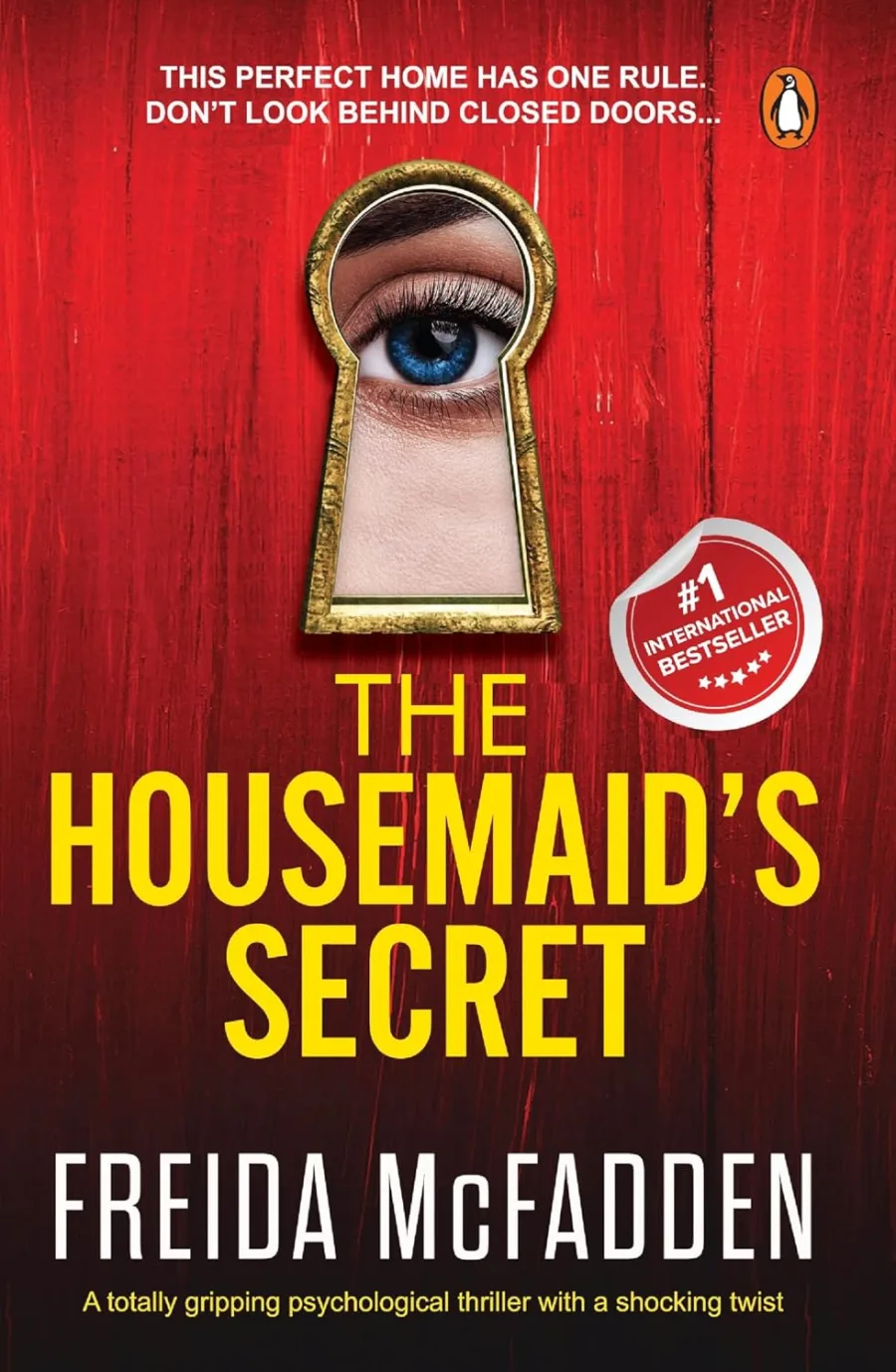
Download Cover Image
Do you want to download the full cover image for The Housemaid's Secret: An Absolutely Addictive Psychological Thriller with a Jaw-Dropping Twist?