
The God of Small Things: Winner of the Booker Prize (1997), English Fiction Novel by Award Winning A
Paperback
• 356 Pages
• ₹ 315.00
• English
• 9789794614020
No ratings yet
| Publisher | India Penguin |
|---|---|
| ISBN13 | 9789794614020 |
| ASIN/SKU | 014302857X |
| Book Format | Paperback |
| Language | English |
| Pages | 356 |
| List Price | ₹ 315.00 |
| Publishing Date | 01/01/2017 |
| Dimensions | 19.6 x 12.4 x 2.4 cm |
| Weight | 462 g |
| Book Code | BD00055048 |
Buy this Book
Amazon Stores
Ebook Stores
Other Stores
Discover The God of Small Things: Winner of the Booker Prize (1997), English Fiction Novel by Award Winning A by Arundhati Roy. This book is published by India Penguin in Paperback format, ISBN 9789794614020, ASIN 014302857X, under Literature and Fiction, Multicultural and Interracial Romance, Indian Writing.
Book Description
Arundhati Roy is the author of a number of books, including The God of Small Things, which won the Booker Prize in 1997 and has been translated into more than forty languages. She was born in 1959 in Shillong, India, and studied architecture in Delhi, where she now lives. She has also written several non-fiction books, including Field Notes on Democracy, Walking with the Comrades, Capitalism: A Ghost Story, The End of Imagination, and most recently Things That Can and Cannot Be Said, co-authored with John Cusack. Roy is the recipient of the 2002 Lannan Foundation Cultural Freedom Prize, the 2011 Norman Mailer Prize for Distinguished Writing, and the 2015 Ambedkar Sudar award.
Author Biography
Arundhati Roy is the author of a number of books, including The God of Small Things, which won the Booker Prize in 1997 and has been translated into more than forty languages. She was born in 1959 in Shillong, India, and studied architecture in Delhi, where she now lives. She has also written several non-fiction books, including Field Notes on Democracy, Walking with the Comrades, Capitalism: A Ghost Story, The End of Imagination, and most recently Things That Can and Cannot Be Said, co-authored with John Cusack. Roy is the recipient of the 2002 Lannan Foundation Cultural Freedom Prize, the 2011 Norman Mailer Prize for Distinguished Writing, and the 2015 Ambedkar Sudar award.
Editorial Reviews
Editorial Reviews will be added soon…
Book Summary
The story of Arundhati Roy’s debut novel revolves around the tragic destiny of the Ipe family, residing in the lush, humid town of Ayemenem in Kerala, India. The narrative weaves between two primary timelines: the late 1960s, leading up to a devastating family tragedy, and the early 1990s, when the shattered remnants of the family reunite. At the emotional center of this intricately structured tale are the fraternal twins, Esthappen (Estha) and Rahel. Their lives are forever altered by the strict, unspoken dictates of their society, referred to throughout the novel as the "Love Laws"—the laws that lay down who should be loved, and how, and how much.
The twins are the children of Ammu, a fiercely independent but deeply frustrated woman who fled an abusive marriage to a Bengali tea planter. Returning to her ancestral home in disgrace as a divorced woman, Ammu and her children occupy a precarious position in the Syrian Christian Ipe household. The family is dominated by an array of bitter and deeply flawed characters. There is Mammachi, the blind grandmother whose musical talents were suppressed by her violently jealous husband, Pappachi. There is Baby Kochamma, the twins’ grandaunt, whose unrequited love for an Irish priest long ago curdled into a lifelong, vindictive piety. And there is Chacko, Ammu’s brother, a former Rhodes scholar who returned from Oxford after a failed marriage to an English woman named Margaret. Chacko assumes control of Mammachi’s pickle factory and enjoys the patriarchal privileges denied to Ammu.
The catalyst for the family's ultimate collapse is the arrival of Sophie Mol, Chacko’s half-British daughter, and her mother, Margaret. The entire Ipe family, burdened by a post-colonial inferiority complex and deep anglophilia, goes into a frenzy of preparation to welcome the white visitors. Sophie Mol is treated like a delicate, cherished princess, highlighting the emotional neglect and second-class status endured by Estha and Rahel in their own home. Amidst this bustling preparation and the oppressive social hierarchy of Ayemenem, the true tragedy begins to quietly take shape in the shadows of the family's property.
Intersecting with the lives of the Ipe family is Velutha, an Untouchable (Paravan) carpenter and handyman who possesses an innate brilliance and a gentle, compassionate soul. Despite his immense talent, the rigid caste system of Kerala dictates that he is practically subhuman in the eyes of the upper-caste Christians. He must cover his mouth when speaking to his employers and is forbidden from touching them. Yet, Velutha is the only adult who treats Estha and Rahel with genuine affection and respect. He plays with them and helps them repair a small, leaky boat they found. Drawn to his warmth and kindness, the twins form a deep, loving bond with him. In secret, this bond extends to Ammu. Overcome by a lifetime of emotional starvation and drawn to Velutha’s quiet strength, Ammu begins an illicit, intensely passionate affair with him. In loving an Untouchable, Ammu breaks the most sacred and dangerous of the Love Laws.
The secret is inevitably discovered. Velutha’s own father, paralyzed by the internalized fear of the caste system, discovers the affair and reports it to Mammachi and Baby Kochamma. The family’s reaction is explosive and venomous. Mammachi spits in Velutha's face and banishes him, while Ammu is beaten, verbally abused, and locked in her bedroom. Desperate, terrified, and furious, Ammu lashes out at her children when they come to her door. In a moment of blind rage, she blames Estha and Rahel for all the misery in her life and tells them she wishes they had never been born. This rejection shatters the children's world.
Believing they are the cause of their mother’s suffering and that she no longer loves them, the twins decide to run away to the "History House," an abandoned colonial estate across the river where Velutha has also fled to hide. They convince their beloved cousin, Sophie Mol, to join them. In the dark of the night, the three children set out in their small, patched-up boat. However, the river’s currents are unusually strong. The boat capsizes in the turbulent water. Estha and Rahel manage to swim to the shore, but Sophie Mol is swept away and drowns.
The drowning of the beloved half-British niece sends shockwaves through the family, but the tragedy is immediately twisted into a weapon of malice. Baby Kochamma, terrified that her own minor misdeeds with the police might be exposed, seizes the opportunity to destroy Velutha and protect the family's honor. She goes to the local police—led by Inspector Thomas Mathew, who resents Velutha's political affiliations with the local Communist party—and weaves a horrific lie. She claims that Velutha kidnapped the children, raped Ammu, and is responsible for Sophie Mol's death.
The police hunt Velutha down at the History House. As the twins watch in paralyzed horror from the shadows, the police brutally beat Velutha, crushing his skull and breaking his bones until he is on the brink of death. The brutality is not just about a supposed crime; it is an exorcism of the societal terror of caste transgression. Following the beating, Baby Kochamma coerces the traumatized Estha into falsely identifying Velutha as their kidnapper, convincing the boy that doing so will save his mother from being sent to jail. Estha complies, sealing the fate of the innocent man who loved them most. Velutha dies alone in a jail cell.
The aftermath of these events irrevocably destroys the family. Ammu is cast out of the house by Chacko, with no money or resources. In a devastating act of separation, Estha is sent away to live with his father in Assam, leaving Rahel behind in Ayemenem. The twin soul is violently split in half. A few years later, Ammu dies alone in a grimy hotel room from an asthma attack, aged thirty-one. The twins grow up completely isolated, carrying the crushing weight of guilt, trauma, and unexpressed grief.
Decades later, the narrative returns to the present timeline. Rahel, after a drifting life and a failed marriage in America, returns to the decaying Ayemenem house. Estha has also been sent back, having stopped speaking entirely. He is a hollow shell, forever locked in the trauma of his childhood betrayal. The twins, broken and socially isolated, find comfort only in each other. In a final, desperate act of shared grief and an attempt to heal their fractured souls, they cross the ultimate boundary and commit incest. The novel does not end on this note of despair, however. Instead, it flashes back one last time to the night of Ammu and Velutha’s final tryst. Despite knowing the terrible danger that awaits them, they promise each other "Tomorrow," ending the novel on a poignant note of fragile, doomed hope, emphasizing that the beauty of their love existed, even if it was ultimately crushed by a merciless world.
Read best books’ summaries on Booksdata.org.
The twins are the children of Ammu, a fiercely independent but deeply frustrated woman who fled an abusive marriage to a Bengali tea planter. Returning to her ancestral home in disgrace as a divorced woman, Ammu and her children occupy a precarious position in the Syrian Christian Ipe household. The family is dominated by an array of bitter and deeply flawed characters. There is Mammachi, the blind grandmother whose musical talents were suppressed by her violently jealous husband, Pappachi. There is Baby Kochamma, the twins’ grandaunt, whose unrequited love for an Irish priest long ago curdled into a lifelong, vindictive piety. And there is Chacko, Ammu’s brother, a former Rhodes scholar who returned from Oxford after a failed marriage to an English woman named Margaret. Chacko assumes control of Mammachi’s pickle factory and enjoys the patriarchal privileges denied to Ammu.
The catalyst for the family's ultimate collapse is the arrival of Sophie Mol, Chacko’s half-British daughter, and her mother, Margaret. The entire Ipe family, burdened by a post-colonial inferiority complex and deep anglophilia, goes into a frenzy of preparation to welcome the white visitors. Sophie Mol is treated like a delicate, cherished princess, highlighting the emotional neglect and second-class status endured by Estha and Rahel in their own home. Amidst this bustling preparation and the oppressive social hierarchy of Ayemenem, the true tragedy begins to quietly take shape in the shadows of the family's property.
Intersecting with the lives of the Ipe family is Velutha, an Untouchable (Paravan) carpenter and handyman who possesses an innate brilliance and a gentle, compassionate soul. Despite his immense talent, the rigid caste system of Kerala dictates that he is practically subhuman in the eyes of the upper-caste Christians. He must cover his mouth when speaking to his employers and is forbidden from touching them. Yet, Velutha is the only adult who treats Estha and Rahel with genuine affection and respect. He plays with them and helps them repair a small, leaky boat they found. Drawn to his warmth and kindness, the twins form a deep, loving bond with him. In secret, this bond extends to Ammu. Overcome by a lifetime of emotional starvation and drawn to Velutha’s quiet strength, Ammu begins an illicit, intensely passionate affair with him. In loving an Untouchable, Ammu breaks the most sacred and dangerous of the Love Laws.
The secret is inevitably discovered. Velutha’s own father, paralyzed by the internalized fear of the caste system, discovers the affair and reports it to Mammachi and Baby Kochamma. The family’s reaction is explosive and venomous. Mammachi spits in Velutha's face and banishes him, while Ammu is beaten, verbally abused, and locked in her bedroom. Desperate, terrified, and furious, Ammu lashes out at her children when they come to her door. In a moment of blind rage, she blames Estha and Rahel for all the misery in her life and tells them she wishes they had never been born. This rejection shatters the children's world.
Believing they are the cause of their mother’s suffering and that she no longer loves them, the twins decide to run away to the "History House," an abandoned colonial estate across the river where Velutha has also fled to hide. They convince their beloved cousin, Sophie Mol, to join them. In the dark of the night, the three children set out in their small, patched-up boat. However, the river’s currents are unusually strong. The boat capsizes in the turbulent water. Estha and Rahel manage to swim to the shore, but Sophie Mol is swept away and drowns.
The drowning of the beloved half-British niece sends shockwaves through the family, but the tragedy is immediately twisted into a weapon of malice. Baby Kochamma, terrified that her own minor misdeeds with the police might be exposed, seizes the opportunity to destroy Velutha and protect the family's honor. She goes to the local police—led by Inspector Thomas Mathew, who resents Velutha's political affiliations with the local Communist party—and weaves a horrific lie. She claims that Velutha kidnapped the children, raped Ammu, and is responsible for Sophie Mol's death.
The police hunt Velutha down at the History House. As the twins watch in paralyzed horror from the shadows, the police brutally beat Velutha, crushing his skull and breaking his bones until he is on the brink of death. The brutality is not just about a supposed crime; it is an exorcism of the societal terror of caste transgression. Following the beating, Baby Kochamma coerces the traumatized Estha into falsely identifying Velutha as their kidnapper, convincing the boy that doing so will save his mother from being sent to jail. Estha complies, sealing the fate of the innocent man who loved them most. Velutha dies alone in a jail cell.
The aftermath of these events irrevocably destroys the family. Ammu is cast out of the house by Chacko, with no money or resources. In a devastating act of separation, Estha is sent away to live with his father in Assam, leaving Rahel behind in Ayemenem. The twin soul is violently split in half. A few years later, Ammu dies alone in a grimy hotel room from an asthma attack, aged thirty-one. The twins grow up completely isolated, carrying the crushing weight of guilt, trauma, and unexpressed grief.
Decades later, the narrative returns to the present timeline. Rahel, after a drifting life and a failed marriage in America, returns to the decaying Ayemenem house. Estha has also been sent back, having stopped speaking entirely. He is a hollow shell, forever locked in the trauma of his childhood betrayal. The twins, broken and socially isolated, find comfort only in each other. In a final, desperate act of shared grief and an attempt to heal their fractured souls, they cross the ultimate boundary and commit incest. The novel does not end on this note of despair, however. Instead, it flashes back one last time to the night of Ammu and Velutha’s final tryst. Despite knowing the terrible danger that awaits them, they promise each other "Tomorrow," ending the novel on a poignant note of fragile, doomed hope, emphasizing that the beauty of their love existed, even if it was ultimately crushed by a merciless world.
Read best books’ summaries on Booksdata.org.
Sample Chapters
Sample Chapters will be added soon…
Reader Reviews
No reviews yet.
The God of Small Things: Winner of the Booker Prize (1997), English Fiction Novel by Award Winning A
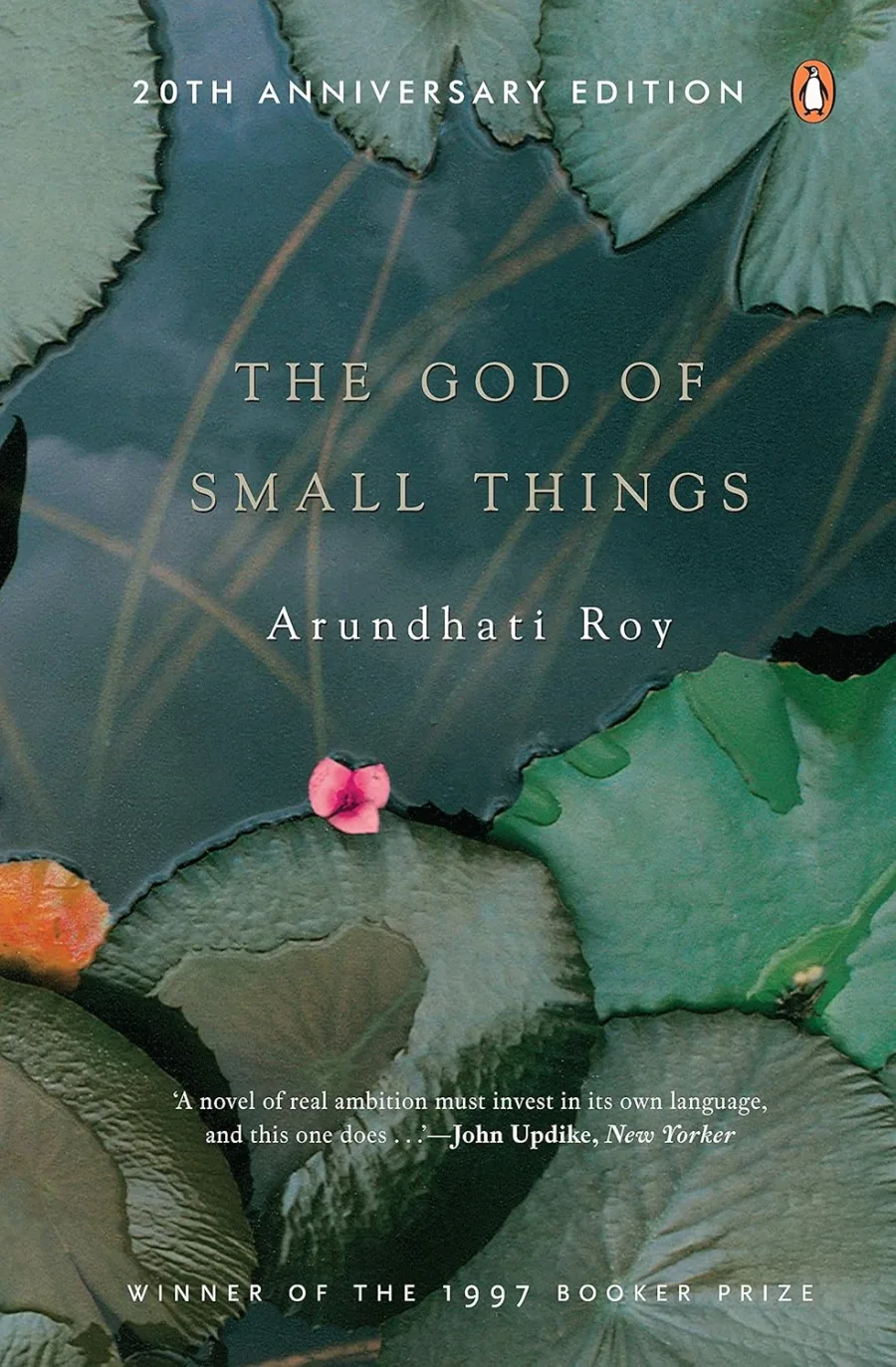
Download Cover Image
Do you want to download the full cover image for The God of Small Things: Winner of the Booker Prize (1997), English Fiction Novel by Award Winning A?