
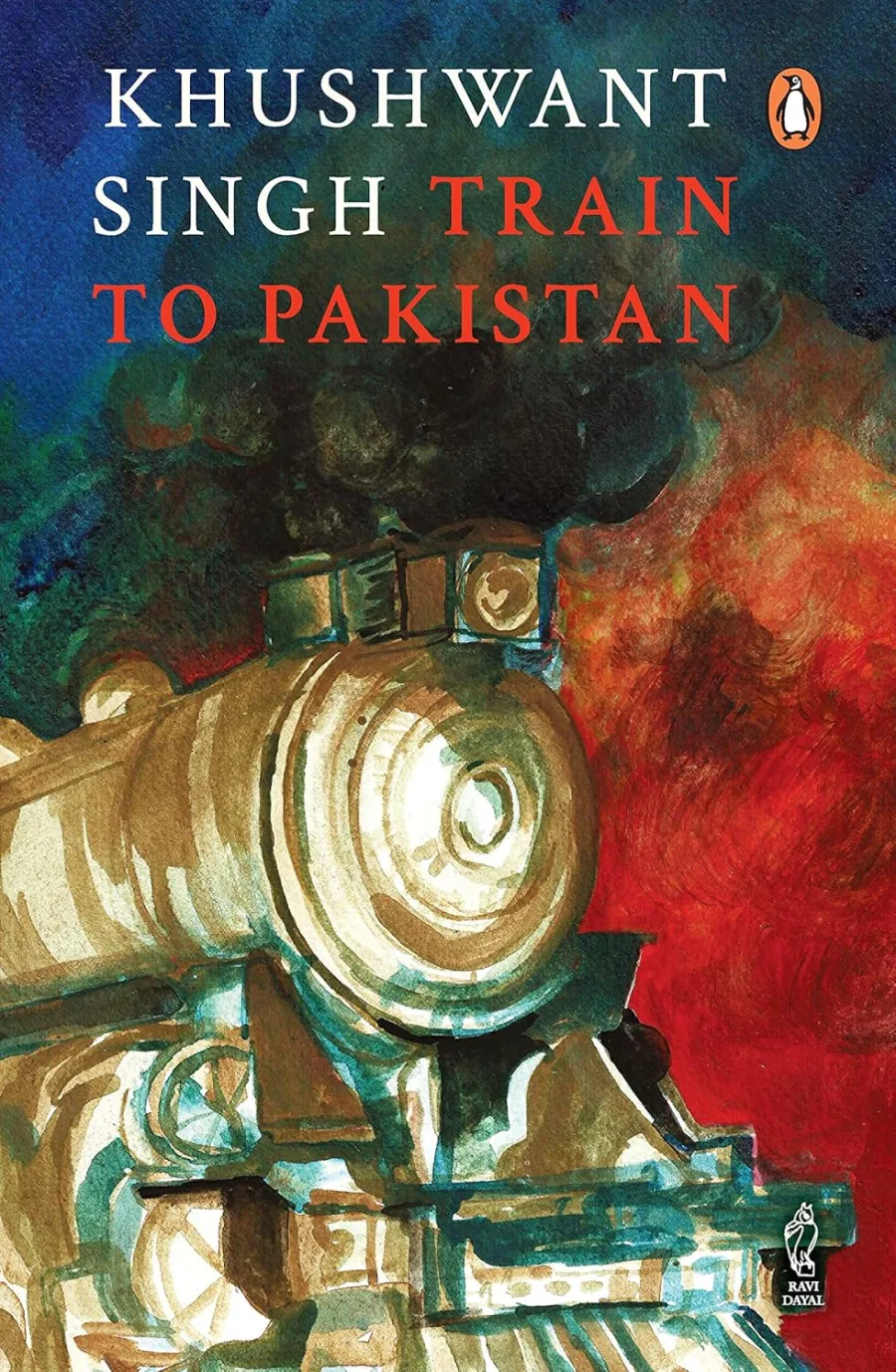
Train To Pakistan
Paperback
• 192 Pages
• ₹ 250.00
• English
• 9780143065883
No ratings yet
| Publisher | Penguin |
|---|---|
| ISBN13 | 9780143065883 |
| ASIN/SKU | 0143065882 |
| Book Format | Paperback |
| Language | English |
| Pages | 192 |
| List Price | ₹ 250.00 |
| Publishing Date | 01/02/2016 |
| Dimensions | 12.7 x 1.27 x 20.32 cm |
| Weight | 136 g |
| Book Code | BD00055029 |
Buy this Book
Amazon Stores
Ebook Stores
Other Stores
Discover Train To Pakistan by Khushwant Singh. This book is published by Penguin in Paperback format, ISBN 9780143065883, ASIN 0143065882, under Literature and Fiction, Anthologies, Historical Fiction.
Book Description
It is the summer of 1947. But Partition does not mean much to the Sikhs and Muslims of Mano Majra, a village on the border of India and Pakistan. Then, a local money-lender is murdered, and suspicion falls upon Juggut Singh, the village gangster who is in love with a Muslim girl. When a train arrives, carrying the bodies of dead Sikhs, the village is transformed into a battlefield, and neither the magistrate nor the police are able to stem the rising tide of violence. Amidst conflicting loyalties, it is left to Juggut Singh to redeem himself and reclaim peace for his village. First published in 1956, Train to Pakistan is a classic of modern Indian fiction.
Author Biography
Khushwant Singh was India’s best-known writer and columnist. He was founder-editor of Yojana and editor of The Illustrated Weekly of India, the National Herald and Hindustan Times. He was a member of Parliament from 1980 to 1986. He was awarded the Padma Bhushan in 1974 but returned the decoration in 19984 in protest against the storming of the Golden Temple in Amritsar by the Indian Army. In 2007 he was awarded the Padma Vibhushan.
He passed away in 2014 at the age of ninety-nine.
He passed away in 2014 at the age of ninety-nine.
Editorial Reviews
Editorial Reviews will be added soon…
Book Summary
Khushwant Singh’s historical novel "Train to Pakistan," published in 1956, is a harrowing, deeply human exploration of the Partition of India in 1947. Instead of focusing on the political negotiations in Delhi or the grand historical figures of the era, Singh zeroes in on the microcosm of Mano Majra, a fictional, tranquil village situated close to the newly drawn border between India and Pakistan. Mano Majra is unique; it is a place where Sikhs, Muslims, and a few Hindu families have lived together in harmony for generations, bound by shared customs, mutual respect, and a collective ignorance of the political storms brewing in the cities. The village is small and insignificant, known only for its railway station and the bridge that spans the Sutlej River. The rhythm of life in Mano Majra is dictated by the arrival and departure of the trains, a predictable and comforting schedule that grounds the villagers in a sense of timeless peace. However, as the summer of 1947 progresses, the outside world begins to intrude, and the horrors of Partition slowly creep into this idyllic sanctuary, ultimately forcing the villagers to confront the darkest aspects of human nature.
The narrative is set in motion by a violent crime that shatters the village’s quiet existence. Ram Lal, the local Hindu moneylender, is brutally murdered in his home by a gang of dacoits led by a man named Malli. During the robbery, the dacoits intentionally throw bangles into the courtyard of Juggut Singh, commonly known as Jugga, a local Sikh badmas (thug) with a history of crime. Jugga, however, is innocent of this particular crime. At the time of the murder, he is out in the fields engaged in a passionate, illicit rendezvous with Nooran, the daughter of the village’s Muslim weaver. Despite his rough exterior and criminal record, Jugga is a man of intense loyalty and raw, untamed passion, particularly when it comes to Nooran. Simultaneously, a stranger arrives in Mano Majra: Iqbal Singh, a young, western-educated, communist social worker from Delhi. Iqbal has come to the village to organize the peasants and preach about class struggle, but he is completely out of touch with the rural reality. The local police, operating under the cynical pragmatism of the district magistrate Hukum Chand, need suspects to appease the public. Consequently, they arrest both Jugga, the convenient local scapegoat, and Iqbal, the suspicious outsider, falsely implicating them in Ram Lal's murder.
As Jugga and Iqbal languish in jail, the true horror of the Partition finally arrives in Mano Majra, not through political decrees, but through the railway tracks. One morning, a train arrives from Pakistan at an unscheduled hour. It is eerily silent. The villagers soon discover that it is a "ghost train," filled entirely with the slaughtered corpses of Hindus and Sikhs who were trying to flee to India. The sudden, visceral reality of the sectarian violence paralyzes the village. The local police and military are forced to secretly burn the bodies at night, but the stench of burning flesh blankets Mano Majra, destroying its innocence. The trust that had existed between the Sikh and Muslim villagers for centuries begins to crack under the immense weight of fear, suspicion, and communal grief.
The situation escalates rapidly when the government decides that Mano Majra is no longer safe for its Muslim residents. The authorities order all Muslims to evacuate immediately to a refugee camp in Chandunnugger, promising that they will eventually be transported safely to Pakistan. The departure of the Muslims is one of the most heartbreaking sequences in the novel. Neighbors who have lived side by side, shared festivals, and supported one another through hardships are abruptly torn apart. The Muslim villagers are forced to abandon their ancestral homes, their livestock, and their possessions, leaving with only what they can carry. The parting is filled with tears and vows of safe keeping, but underneath the sorrow lies a dark, unspoken realization that they will likely never see each other again. Nooran, who has just discovered she is pregnant with Jugga’s child, is swept away in this forced exodus, leaving without being able to say goodbye to the imprisoned Jugga.
Shortly after the Muslims are evacuated, the Sutlej River swells with monsoon rains, bringing with it more gruesome evidence of the massacres upstream: the bloated, mutilated bodies of men, women, and children floating down the river. In the wake of this horrifying sight, a group of young, militant Sikh extremists arrives in Mano Majra. They prey on the grief and anger of the local Sikhs, mocking their manhood for allowing the Muslims to leave safely while their own people are being butchered in Pakistan. The extremists hatch a devastating plot: they plan to ambush the train that will transport the Mano Majra Muslims from the refugee camp to Pakistan. They string a thick rope across the first span of the bridge, exactly at the height of a man sitting on the roof of a train carriage. When the train passes in the dark, the rope will sweep the refugees off the roof to their deaths in the river below, while the armed men will shoot those trapped inside the carriages.
In a desperate bid to prevent the massacre, Hukum Chand, who has learned that a young Muslim prostitute named Hasina—whom he has developed a deep, paternal, and romantic affection for—will be on that very train, decides to release Jugga and Iqbal. Hukum Chand represents the paralyzed bureaucracy; he is a man of power who realizes that official channels are useless against the tide of communal madness. He hopes that either the intellectual Iqbal or the impulsive Jugga will find a way to stop the tragedy. Iqbal, the educated reformer, spends the crucial hours rationalizing his inaction. He drinks whiskey and philosophizes that in a world gone mad, the sacrifice of one man is meaningless. He convinces himself that true heroism requires an audience and a political purpose, ultimately doing nothing to stop the impending slaughter.
It is Jugga, the uneducated, rough-hewn criminal, who rises to the occasion. Driven not by grand political ideologies or religious fervor, but by a pure, primal love for Nooran and his unborn child, Jugga takes matters into his own hands. In the dead of night, as the train full of refugees approaches the bridge, Jugga climbs the steel structure. He pulls out his kirpan (a small dagger) and begins to hack desperately at the thick rope. The Sikh extremists, realizing someone is sabotaging their plan, begin to fire shots at him. Bullets strike Jugga, but he continues to slash at the rope with whatever strength he has left in his bleeding body. Just as the train’s headlights pierce the darkness and the engine roars onto the bridge, the rope finally snaps. Jugga falls from the bridge, and the train runs over his lifeless body, continuing its journey safely into Pakistan.
Khushwant Singh’s masterpiece ends with this profound act of sacrifice, offering a stark commentary on the nature of heroism and human morality. The politicians, the intellectuals, and the religious leaders all fail to stem the tide of violence; they are paralyzed by cowardice, ideology, or complicity. In the end, it is the village outcast, the so-called bad character, who performs the ultimate act of salvation. "Train to Pakistan" remains a brutal, unflinching portrait of a nation tearing itself apart, yet it concludes with a glimmer of redemption, suggesting that even in the darkest moments of human history, love and instinctive human decency can triumph over organized hatred.
The narrative is set in motion by a violent crime that shatters the village’s quiet existence. Ram Lal, the local Hindu moneylender, is brutally murdered in his home by a gang of dacoits led by a man named Malli. During the robbery, the dacoits intentionally throw bangles into the courtyard of Juggut Singh, commonly known as Jugga, a local Sikh badmas (thug) with a history of crime. Jugga, however, is innocent of this particular crime. At the time of the murder, he is out in the fields engaged in a passionate, illicit rendezvous with Nooran, the daughter of the village’s Muslim weaver. Despite his rough exterior and criminal record, Jugga is a man of intense loyalty and raw, untamed passion, particularly when it comes to Nooran. Simultaneously, a stranger arrives in Mano Majra: Iqbal Singh, a young, western-educated, communist social worker from Delhi. Iqbal has come to the village to organize the peasants and preach about class struggle, but he is completely out of touch with the rural reality. The local police, operating under the cynical pragmatism of the district magistrate Hukum Chand, need suspects to appease the public. Consequently, they arrest both Jugga, the convenient local scapegoat, and Iqbal, the suspicious outsider, falsely implicating them in Ram Lal's murder.
As Jugga and Iqbal languish in jail, the true horror of the Partition finally arrives in Mano Majra, not through political decrees, but through the railway tracks. One morning, a train arrives from Pakistan at an unscheduled hour. It is eerily silent. The villagers soon discover that it is a "ghost train," filled entirely with the slaughtered corpses of Hindus and Sikhs who were trying to flee to India. The sudden, visceral reality of the sectarian violence paralyzes the village. The local police and military are forced to secretly burn the bodies at night, but the stench of burning flesh blankets Mano Majra, destroying its innocence. The trust that had existed between the Sikh and Muslim villagers for centuries begins to crack under the immense weight of fear, suspicion, and communal grief.
The situation escalates rapidly when the government decides that Mano Majra is no longer safe for its Muslim residents. The authorities order all Muslims to evacuate immediately to a refugee camp in Chandunnugger, promising that they will eventually be transported safely to Pakistan. The departure of the Muslims is one of the most heartbreaking sequences in the novel. Neighbors who have lived side by side, shared festivals, and supported one another through hardships are abruptly torn apart. The Muslim villagers are forced to abandon their ancestral homes, their livestock, and their possessions, leaving with only what they can carry. The parting is filled with tears and vows of safe keeping, but underneath the sorrow lies a dark, unspoken realization that they will likely never see each other again. Nooran, who has just discovered she is pregnant with Jugga’s child, is swept away in this forced exodus, leaving without being able to say goodbye to the imprisoned Jugga.
Shortly after the Muslims are evacuated, the Sutlej River swells with monsoon rains, bringing with it more gruesome evidence of the massacres upstream: the bloated, mutilated bodies of men, women, and children floating down the river. In the wake of this horrifying sight, a group of young, militant Sikh extremists arrives in Mano Majra. They prey on the grief and anger of the local Sikhs, mocking their manhood for allowing the Muslims to leave safely while their own people are being butchered in Pakistan. The extremists hatch a devastating plot: they plan to ambush the train that will transport the Mano Majra Muslims from the refugee camp to Pakistan. They string a thick rope across the first span of the bridge, exactly at the height of a man sitting on the roof of a train carriage. When the train passes in the dark, the rope will sweep the refugees off the roof to their deaths in the river below, while the armed men will shoot those trapped inside the carriages.
In a desperate bid to prevent the massacre, Hukum Chand, who has learned that a young Muslim prostitute named Hasina—whom he has developed a deep, paternal, and romantic affection for—will be on that very train, decides to release Jugga and Iqbal. Hukum Chand represents the paralyzed bureaucracy; he is a man of power who realizes that official channels are useless against the tide of communal madness. He hopes that either the intellectual Iqbal or the impulsive Jugga will find a way to stop the tragedy. Iqbal, the educated reformer, spends the crucial hours rationalizing his inaction. He drinks whiskey and philosophizes that in a world gone mad, the sacrifice of one man is meaningless. He convinces himself that true heroism requires an audience and a political purpose, ultimately doing nothing to stop the impending slaughter.
It is Jugga, the uneducated, rough-hewn criminal, who rises to the occasion. Driven not by grand political ideologies or religious fervor, but by a pure, primal love for Nooran and his unborn child, Jugga takes matters into his own hands. In the dead of night, as the train full of refugees approaches the bridge, Jugga climbs the steel structure. He pulls out his kirpan (a small dagger) and begins to hack desperately at the thick rope. The Sikh extremists, realizing someone is sabotaging their plan, begin to fire shots at him. Bullets strike Jugga, but he continues to slash at the rope with whatever strength he has left in his bleeding body. Just as the train’s headlights pierce the darkness and the engine roars onto the bridge, the rope finally snaps. Jugga falls from the bridge, and the train runs over his lifeless body, continuing its journey safely into Pakistan.
Khushwant Singh’s masterpiece ends with this profound act of sacrifice, offering a stark commentary on the nature of heroism and human morality. The politicians, the intellectuals, and the religious leaders all fail to stem the tide of violence; they are paralyzed by cowardice, ideology, or complicity. In the end, it is the village outcast, the so-called bad character, who performs the ultimate act of salvation. "Train to Pakistan" remains a brutal, unflinching portrait of a nation tearing itself apart, yet it concludes with a glimmer of redemption, suggesting that even in the darkest moments of human history, love and instinctive human decency can triumph over organized hatred.
Sample Chapters
Sample Chapters will be added soon…
Reader Reviews
No reviews yet.
Train To Pakistan
Download Cover Image
Do you want to download the full cover image for Train To Pakistan?