
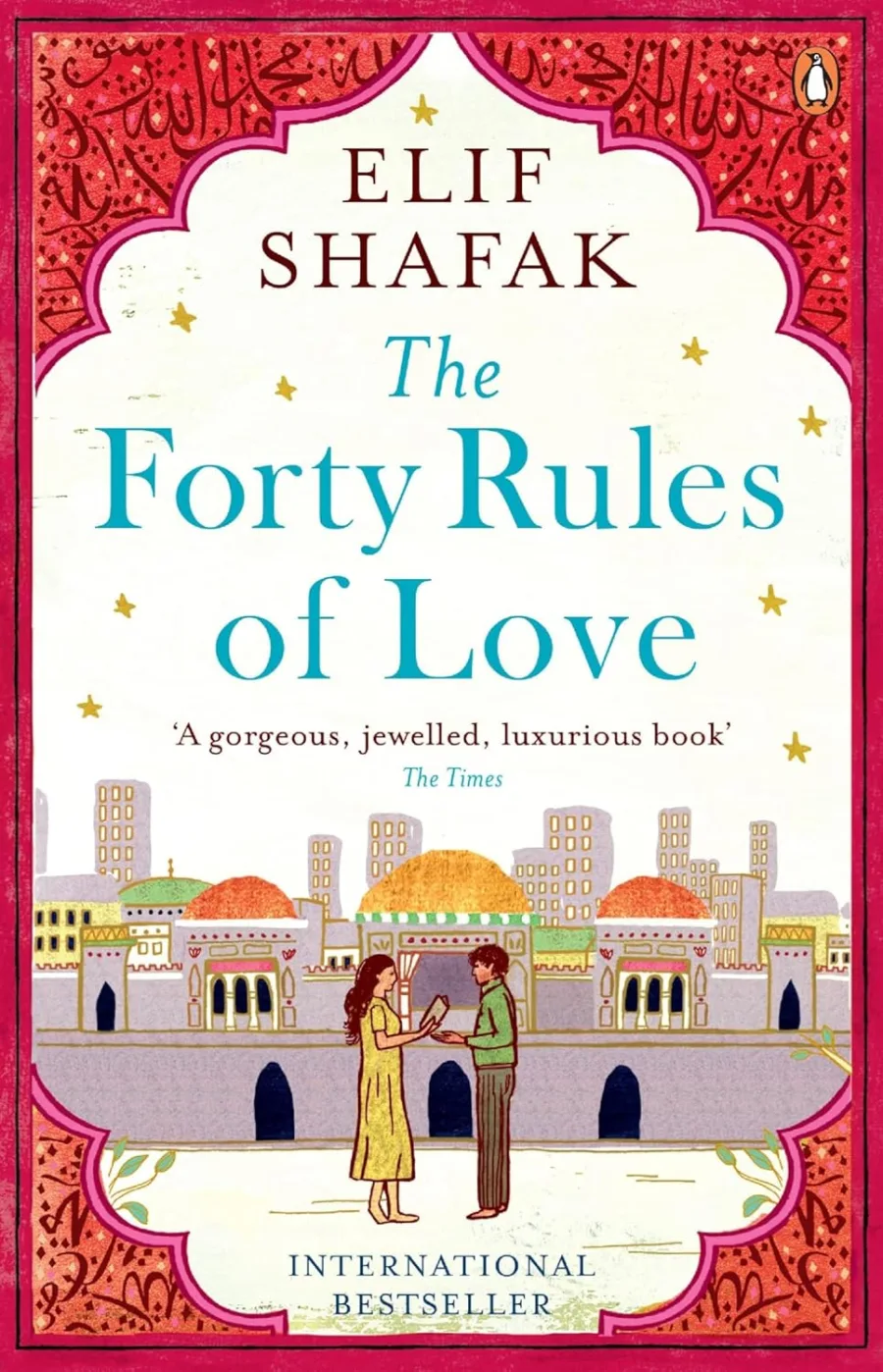
The Forty Rules of Love: A Journey of Love, Faith, and Transformation
Paperback
• 368 Pages
• ₹ 370.00
• English
• 9780241972939
No ratings yet
| Publisher | Penguin |
|---|---|
| ISBN13 | 9780241972939 |
| ASIN/SKU | 0241972930 |
| Book Format | Paperback |
| Language | English |
| Pages | 368 |
| List Price | ₹ 370.00 |
| Publishing Date | 01/01/2015 |
| Dimensions | 12.8 x 2.1 x 19.7 cm |
| Weight | 255 g |
| Book Code | BD00055027 |
Buy this Book
Amazon Stores
Ebook Stores
Other Stores
Discover The Forty Rules of Love: A Journey of Love, Faith, and Transformation by Elif Shafak. This book is published by Penguin in Paperback format, ISBN 9780241972939, ASIN 0241972930, under Literature and Fiction, African History, Historical Fiction.
Book Description
The international bestseller from the author of the Booker-shortlisted novel, 10 Minutes 38 Seconds in this Strange World
* One of the BBC's '100 Novels that Shaped the World'*
"Every true love and friendship is a story of unexpected transformation. If we are the same person before and after we loved, that means we haven't loved enough..."
Ella Rubinstein has a husband, three teenage children, and a pleasant home. Everything that should make her confident and fulfilled. Yet there is an emptiness at the heart of Ella's life - an emptiness once filled by love.
So when Ella reads a manuscript about the thirteenth-century Sufi poet Rumi and his mentor Shams of Tabriz, and his forty rules of life and love, she is ready to look at her life anew. Compelled to embrace change, she embarks on a journey to meet the mysterious author. It is a quest infused with Sufi mysticism and verse, taking Ella and us into a faraway world where faith and doubt are heartbreakingly explored. The Forty Rules of Love is a mesmerising tale of discovery, language, truth and, of course, love itself.
'Enlightening, enthralling. An affecting paean to faith and love' Metro
'Colourfully woven and beguilingly intelligent' Daily Telegraph
'The past and present fit together beautifully in a passionate defence of passion itself' The Times
ELIF SHAFAK'S NEW NOVEL, THERE ARE RIVERS IN THE SKY, IS AVAILABLE NOW
* One of the BBC's '100 Novels that Shaped the World'*
"Every true love and friendship is a story of unexpected transformation. If we are the same person before and after we loved, that means we haven't loved enough..."
Ella Rubinstein has a husband, three teenage children, and a pleasant home. Everything that should make her confident and fulfilled. Yet there is an emptiness at the heart of Ella's life - an emptiness once filled by love.
So when Ella reads a manuscript about the thirteenth-century Sufi poet Rumi and his mentor Shams of Tabriz, and his forty rules of life and love, she is ready to look at her life anew. Compelled to embrace change, she embarks on a journey to meet the mysterious author. It is a quest infused with Sufi mysticism and verse, taking Ella and us into a faraway world where faith and doubt are heartbreakingly explored. The Forty Rules of Love is a mesmerising tale of discovery, language, truth and, of course, love itself.
'Enlightening, enthralling. An affecting paean to faith and love' Metro
'Colourfully woven and beguilingly intelligent' Daily Telegraph
'The past and present fit together beautifully in a passionate defence of passion itself' The Times
ELIF SHAFAK'S NEW NOVEL, THERE ARE RIVERS IN THE SKY, IS AVAILABLE NOW
Author Biography
Elif Shafak is an award-winning British Turkish novelist, whose work has been translated into fifty-eight languages. The author of twenty books, thirteen of which are novels, she is a bestselling author in many countries around the world. Shafak’s novel 10 Minutes 38 Seconds in this Strange World was shortlisted for the Booker Prize and the RSL Ondaatje Prize. The Island of Missing Trees was a Sunday Times bestseller, and was shortlisted for the Costa Novel Award and the Women’s Prize for Fiction. There are Rivers in the Sky, which won an Edward Stanford Award for Fiction, is her latest novel.
Editorial Reviews
A gorgeous, jeweled, luxurious book ― The Times
With its timely, thought-provoking message . . . The Forty Rules of Love deserves to be a global publishing phenomenon ― Independent
Enlightening, enthralling. An affecting paean to faith and love ― Metro
Colourfully woven and beguilingly intelligent
― Daily Telegraph
The past and present fit together beautifully in a passionate defence of passion itself ― The Times
Shafak will challenge Paulo Coelho's dominance. With its timely, thought-provoking message . . . The Forty Rules of Love deserves to be a global publishing phenomenon ― Independent
Colourfully woven and beguilingly intelligent ― Daily Telegraph
With its timely, thought-provoking message . . . The Forty Rules of Love deserves to be a global publishing phenomenon ― Independent
Enlightening, enthralling. An affecting paean to faith and love ― Metro
Colourfully woven and beguilingly intelligent
― Daily Telegraph
The past and present fit together beautifully in a passionate defence of passion itself ― The Times
Shafak will challenge Paulo Coelho's dominance. With its timely, thought-provoking message . . . The Forty Rules of Love deserves to be a global publishing phenomenon ― Independent
Colourfully woven and beguilingly intelligent ― Daily Telegraph
Book Summary
The Forty Rules of Love by Elif Shafak is a deeply emotional and philosophical novel about love, spirituality, faith, personal transformation, and the courage to change one's life. First published in 2009, the novel brings together two stories separated by nearly eight centuries. One takes place in the contemporary world and follows Ella Rubinstein, a forty-year-old woman trapped in an unhappy marriage. The other takes place in thirteenth-century Anatolia and tells the story of the extraordinary relationship between the Sufi mystic Shams of Tabriz and the celebrated scholar and poet Rumi. Through these parallel stories, Shafak explores how encounters with love can challenge established beliefs and transform the way a person understands life.
Ella Rubinstein appears to have a comfortable life from the outside. She has a husband, three children, a home, and financial security. Yet beneath this appearance of stability, she feels emotionally empty. Her marriage has become routine, and her husband David has repeatedly been unfaithful. Ella has spent years accepting an unhappy situation rather than confronting it directly. She has become accustomed to putting the needs and expectations of her family before her own feelings. As she approaches forty, she begins to realize that simply maintaining an orderly life is not the same as actually living a fulfilling one.
Ella's life begins to change when she takes a temporary job with a literary agency. Her first assignment is to read a manuscript called Sweet Blasphemy, written by an unfamiliar author named Aziz Zahara. The manuscript tells the story of Shams of Tabriz and his encounter with Rumi. At first, Ella has little interest in the subject, but she soon becomes fascinated by the story and by Shams's unusual philosophy of love. The manuscript contains forty spiritual lessons, or “rules,” that challenge conventional ideas about religion, identity, love, and human relationships.
The historical story begins with Shams, a wandering Sufi dervish who has spent much of his life searching for a spiritual companion who can help him fulfill his purpose. Shams is very different from the respected religious scholars around him. He is unconventional, fearless, and willing to challenge established ideas. He does not judge people simply according to social status, appearance, wealth, or reputation. Instead, he believes that the divine can be found through love, compassion, humility, and a willingness to look beyond superficial divisions.
Shams eventually travels to Konya, where he meets Jalaluddin Rumi, a highly respected Islamic scholar and preacher. Rumi is already successful and admired by his community, but Shams senses that something is missing from his life. Rumi possesses knowledge, status, and influence, yet his spiritual life has become comfortable and predictable. The meeting between the two men changes both of them. Shams becomes the catalyst who pushes Rumi beyond intellectual knowledge and toward a more personal and mystical understanding of love.
Their relationship is one of the central elements of the novel. Shams and Rumi spend long periods discussing spirituality, religion, God, love, and the nature of human existence. Shams encourages Rumi to question assumptions that he has previously accepted without examination. He teaches that genuine spiritual understanding cannot come only from books or formal religious status. It requires inner transformation.
Rumi's transformation is welcomed by some people but deeply resented by others. His family and community become suspicious of Shams because the dervish disrupts the established order. People who once respected Rumi begin to fear that Shams is influencing him in unacceptable ways. Rumi's son Aladdin becomes particularly hostile toward Shams. The conflict demonstrates one of the novel's recurring ideas: people often fear those who challenge familiar beliefs because change can threaten their sense of security and identity.
Shams's teachings are expressed through the forty rules of love. These rules are less like ordinary instructions and more like spiritual reflections. They encourage people to move beyond judgment, pride, fear, rigid divisions, and attachment to appearances. One of the central ideas is that love should not be restricted by labels. Love can be romantic, spiritual, familial, or universal, but at its deepest level it creates connection rather than division.
The novel repeatedly contrasts external religion with inner spirituality. Shams does not reject faith; instead, he challenges a narrow understanding of faith that becomes focused entirely on rules, reputation, and outward behavior. For him, genuine spirituality should transform the heart. A person who claims to be religious but remains cruel, arrogant, or judgmental has not truly understood the essence of faith.
These ideas also begin transforming Ella. As she reads Sweet Blasphemy, she starts comparing Rumi's life with her own. She recognizes that she has spent years accepting a life that no longer makes her happy. She has been afraid of disrupting her family, afraid of being judged, and afraid of what might happen if she chose herself. The story of Shams and Rumi makes her question whether security without love is enough.
Ella also begins communicating with Aziz Zahara, the author of the manuscript. Their correspondence gradually becomes more personal. At first, Ella is simply interested in the ideas in his book, but she soon realizes that she feels emotionally connected to him. Aziz encourages her to look honestly at her own life. Their relationship becomes another example of how an encounter with another person can awaken feelings and possibilities that have remained hidden for years.
Meanwhile, the historical story becomes increasingly tragic. Shams's presence continues to provoke hostility, and his enemies eventually arrange his murder. He is killed, leaving Rumi devastated. The loss transforms Rumi's grief into poetry and spiritual expression. Rather than ending his spiritual journey, Shams's death becomes another stage in Rumi's transformation. His love for Shams continues even after Shams is physically gone, suggesting that genuine spiritual connection can survive separation and death.
Ella's contemporary story also moves toward a dramatic decision. She confronts the emptiness of her marriage and finally acknowledges her feelings for Aziz. When they meet, she learns that Aziz is seriously ill and has limited time left to live. Despite the uncertainty and pain involved, Ella chooses to follow him. She leaves behind the familiar life she has spent years maintaining and begins a completely different chapter.
Ella and Aziz travel to Konya, connecting her modern journey directly with the historical world of Rumi and Shams. Their relationship, however, is also touched by loss. Aziz dies after becoming ill during their journey. Ella is devastated, but his death does not return her to her former life. Instead, she carries forward the transformation that began when she first opened Sweet Blasphemy.
This is one of the most important messages of the novel: transformation does not necessarily mean achieving a permanently happy ending. Love can bring joy, but it can also bring pain, uncertainty, and loss. What matters is how the experience changes the person. Ella does not receive the simple romantic future she might once have imagined, yet she becomes more honest, courageous, and alive.
The novel also emphasizes the difference between appearances and reality. Ella's marriage looks successful from the outside, but it is emotionally empty. Rumi appears to be a satisfied religious scholar, but internally he is ready for transformation. Shams appears strange and disruptive to outsiders, yet he becomes the person who helps Rumi discover his deeper spiritual identity. Shafak repeatedly suggests that surface appearances can hide important truths.
Another major theme is the connection between love and personal freedom. The novel does not present love as simply finding another person who completes us. Instead, love becomes a force that encourages people to become more truthful versions of themselves. Shams pushes Rumi to abandon the comfortable identity others have created for him. Aziz encourages Ella to question the life she has accepted. In both cases, love becomes an invitation to change.
The book also explores tolerance and the dangers of rigid judgment. Shams encounters people from different social backgrounds, including individuals who are rejected or looked down upon by respectable society. His philosophy teaches that every person deserves compassion and that no human being can be reduced to a social label. The novel therefore connects spiritual love with acceptance of human diversity.
Ella Rubinstein appears to have a comfortable life from the outside. She has a husband, three children, a home, and financial security. Yet beneath this appearance of stability, she feels emotionally empty. Her marriage has become routine, and her husband David has repeatedly been unfaithful. Ella has spent years accepting an unhappy situation rather than confronting it directly. She has become accustomed to putting the needs and expectations of her family before her own feelings. As she approaches forty, she begins to realize that simply maintaining an orderly life is not the same as actually living a fulfilling one.
Ella's life begins to change when she takes a temporary job with a literary agency. Her first assignment is to read a manuscript called Sweet Blasphemy, written by an unfamiliar author named Aziz Zahara. The manuscript tells the story of Shams of Tabriz and his encounter with Rumi. At first, Ella has little interest in the subject, but she soon becomes fascinated by the story and by Shams's unusual philosophy of love. The manuscript contains forty spiritual lessons, or “rules,” that challenge conventional ideas about religion, identity, love, and human relationships.
The historical story begins with Shams, a wandering Sufi dervish who has spent much of his life searching for a spiritual companion who can help him fulfill his purpose. Shams is very different from the respected religious scholars around him. He is unconventional, fearless, and willing to challenge established ideas. He does not judge people simply according to social status, appearance, wealth, or reputation. Instead, he believes that the divine can be found through love, compassion, humility, and a willingness to look beyond superficial divisions.
Shams eventually travels to Konya, where he meets Jalaluddin Rumi, a highly respected Islamic scholar and preacher. Rumi is already successful and admired by his community, but Shams senses that something is missing from his life. Rumi possesses knowledge, status, and influence, yet his spiritual life has become comfortable and predictable. The meeting between the two men changes both of them. Shams becomes the catalyst who pushes Rumi beyond intellectual knowledge and toward a more personal and mystical understanding of love.
Their relationship is one of the central elements of the novel. Shams and Rumi spend long periods discussing spirituality, religion, God, love, and the nature of human existence. Shams encourages Rumi to question assumptions that he has previously accepted without examination. He teaches that genuine spiritual understanding cannot come only from books or formal religious status. It requires inner transformation.
Rumi's transformation is welcomed by some people but deeply resented by others. His family and community become suspicious of Shams because the dervish disrupts the established order. People who once respected Rumi begin to fear that Shams is influencing him in unacceptable ways. Rumi's son Aladdin becomes particularly hostile toward Shams. The conflict demonstrates one of the novel's recurring ideas: people often fear those who challenge familiar beliefs because change can threaten their sense of security and identity.
Shams's teachings are expressed through the forty rules of love. These rules are less like ordinary instructions and more like spiritual reflections. They encourage people to move beyond judgment, pride, fear, rigid divisions, and attachment to appearances. One of the central ideas is that love should not be restricted by labels. Love can be romantic, spiritual, familial, or universal, but at its deepest level it creates connection rather than division.
The novel repeatedly contrasts external religion with inner spirituality. Shams does not reject faith; instead, he challenges a narrow understanding of faith that becomes focused entirely on rules, reputation, and outward behavior. For him, genuine spirituality should transform the heart. A person who claims to be religious but remains cruel, arrogant, or judgmental has not truly understood the essence of faith.
These ideas also begin transforming Ella. As she reads Sweet Blasphemy, she starts comparing Rumi's life with her own. She recognizes that she has spent years accepting a life that no longer makes her happy. She has been afraid of disrupting her family, afraid of being judged, and afraid of what might happen if she chose herself. The story of Shams and Rumi makes her question whether security without love is enough.
Ella also begins communicating with Aziz Zahara, the author of the manuscript. Their correspondence gradually becomes more personal. At first, Ella is simply interested in the ideas in his book, but she soon realizes that she feels emotionally connected to him. Aziz encourages her to look honestly at her own life. Their relationship becomes another example of how an encounter with another person can awaken feelings and possibilities that have remained hidden for years.
Meanwhile, the historical story becomes increasingly tragic. Shams's presence continues to provoke hostility, and his enemies eventually arrange his murder. He is killed, leaving Rumi devastated. The loss transforms Rumi's grief into poetry and spiritual expression. Rather than ending his spiritual journey, Shams's death becomes another stage in Rumi's transformation. His love for Shams continues even after Shams is physically gone, suggesting that genuine spiritual connection can survive separation and death.
Ella's contemporary story also moves toward a dramatic decision. She confronts the emptiness of her marriage and finally acknowledges her feelings for Aziz. When they meet, she learns that Aziz is seriously ill and has limited time left to live. Despite the uncertainty and pain involved, Ella chooses to follow him. She leaves behind the familiar life she has spent years maintaining and begins a completely different chapter.
Ella and Aziz travel to Konya, connecting her modern journey directly with the historical world of Rumi and Shams. Their relationship, however, is also touched by loss. Aziz dies after becoming ill during their journey. Ella is devastated, but his death does not return her to her former life. Instead, she carries forward the transformation that began when she first opened Sweet Blasphemy.
This is one of the most important messages of the novel: transformation does not necessarily mean achieving a permanently happy ending. Love can bring joy, but it can also bring pain, uncertainty, and loss. What matters is how the experience changes the person. Ella does not receive the simple romantic future she might once have imagined, yet she becomes more honest, courageous, and alive.
The novel also emphasizes the difference between appearances and reality. Ella's marriage looks successful from the outside, but it is emotionally empty. Rumi appears to be a satisfied religious scholar, but internally he is ready for transformation. Shams appears strange and disruptive to outsiders, yet he becomes the person who helps Rumi discover his deeper spiritual identity. Shafak repeatedly suggests that surface appearances can hide important truths.
Another major theme is the connection between love and personal freedom. The novel does not present love as simply finding another person who completes us. Instead, love becomes a force that encourages people to become more truthful versions of themselves. Shams pushes Rumi to abandon the comfortable identity others have created for him. Aziz encourages Ella to question the life she has accepted. In both cases, love becomes an invitation to change.
The book also explores tolerance and the dangers of rigid judgment. Shams encounters people from different social backgrounds, including individuals who are rejected or looked down upon by respectable society. His philosophy teaches that every person deserves compassion and that no human being can be reduced to a social label. The novel therefore connects spiritual love with acceptance of human diversity.
Sample Chapters
Sample Chapters will be added soon…
Reader Reviews
No reviews yet.
The Forty Rules of Love: A Journey of Love, Faith, and Transformation
Download Cover Image
Do you want to download the full cover image for The Forty Rules of Love: A Journey of Love, Faith, and Transformation?