
Animal Farm by George Orwell – A Riveting Tale of Revolution and Betrayal | Satire on Dictatorship
Paperback
• 120 Pages
• ₹ 99.00
• English
• 9788172344399
No ratings yet
| Publisher | Fingerprint! Publishing |
|---|---|
| ISBN13 | 9788172344399 |
| ASIN/SKU | 8172344392 |
| Book Format | Paperback |
| Language | English |
| Pages | 120 |
| List Price | ₹ 99.00 |
| Publishing Date | 01/01/2012 |
| Weight | 100 g |
| Book Code | BD00055024 |
Buy this Book
Amazon Stores
Ebook Stores
Other Stores
Discover Animal Farm by George Orwell – A Riveting Tale of Revolution and Betrayal | Satire on Dictatorship by George Orwell. This book is published by Fingerprint! Publishing in Paperback format, ISBN 9788172344399, ASIN 8172344392, under Literature and Fiction, Contemporary Fiction.
Book Description
What happens when ill-treated farm animals gang up to throw out their lazy, corrupt and power-drunk rulers? Animal Farm is born. As humans get ousted from Manor Farm and animals take control, their utopian fantasy of running a farm on the basis of equality soon begins to crumble before their eyes. The rebellion of the animals, led by the two pigs, Napoleon and Snowball, gives way to corrupt practices that lead to unthinkable consequences. A resounding fable on totalitarianism and power-gone-corrupt, Animal Farm is an allegorical novella that took the publishing world by storm when it was first published and hasn't stopped doing so ever since. The ultimate satire on fascism, Animal Farm finds relevance even in present-day world. A must-read!
Author Biography
George Orwell is one of England's most famous writers and social commentators. Among his works are the classic political satire Animal Farm and the dystopian nightmare vision Nineteen Eighty-Four. Orwell was also a prolific essayist, and it is for these works that he was perhaps best known during his lifetime. They include Why I Write and Politics and the English Language. His writing is at once insightful, poignant and entertaining, and continues to be read widely all over the world.
Eric Arthur Blair (George Orwell) was born in 1903 in India, where his father worked for the Civil Service. The family moved to England in 1907 and in 1917 Orwell entered Eton, where he contributed regularly to the various college magazines. From 1922 to 1927 he served with the Indian Imperial Police in Burma, an experience that inspired his first novel, Burmese Days (1934). Several years of poverty followed. He lived in Paris for two years before returning to England, where he worked successively as a private tutor, schoolteacher and bookshop assistant, and contributed reviews and articles to a number of periodicals. Down and Out in Paris and London was published in 1933. In 1936 he was commissioned by Victor Gollancz to visit areas of mass unemployment in Lancashire and Yorkshire, and The Road to Wigan Pier (1937) is a powerful description of the poverty he saw there.
At the end of 1936 Orwell went to Spain to fight for the Republicans and was wounded. Homage to Catalonia is his account of the civil war. He was admitted to a sanatorium in 1938 and from then on was never fully fit. He spent six months in Morocco and there wrote Coming Up for Air. During the Second World War he served in the Home Guard and worked for the BBC Eastern Service from 1941 to 1943. As literary editor of the Tribune he contributed a regular page of political and literary commentary, and he also wrote for the Observer and later for the Manchester Evening News. His unique political allegory, Animal Farm was published in 1945, and it was this novel, together with Nineteen Eighty-Four (1949), which brought him world-wide fame.
It was around this time that Orwell's unique political allegory Animal Farm (1945) was published. The novel is recognised as a classic of modern political satire and is simultaneously an engaging story and convincing allegory. It was this novel, together with Nineteen Eighty-Four (1949), which finally brought him world-wide fame. Nineteen Eighty-Four's ominous depiction of a repressive, totalitarian regime shocked contemporary readers, but ensures that the book remains perhaps the preeminent dystopian novel of modern literature.
Eric Arthur Blair (George Orwell) was born in 1903 in India, where his father worked for the Civil Service. The family moved to England in 1907 and in 1917 Orwell entered Eton, where he contributed regularly to the various college magazines. From 1922 to 1927 he served with the Indian Imperial Police in Burma, an experience that inspired his first novel, Burmese Days (1934). Several years of poverty followed. He lived in Paris for two years before returning to England, where he worked successively as a private tutor, schoolteacher and bookshop assistant, and contributed reviews and articles to a number of periodicals. Down and Out in Paris and London was published in 1933. In 1936 he was commissioned by Victor Gollancz to visit areas of mass unemployment in Lancashire and Yorkshire, and The Road to Wigan Pier (1937) is a powerful description of the poverty he saw there.
At the end of 1936 Orwell went to Spain to fight for the Republicans and was wounded. Homage to Catalonia is his account of the civil war. He was admitted to a sanatorium in 1938 and from then on was never fully fit. He spent six months in Morocco and there wrote Coming Up for Air. During the Second World War he served in the Home Guard and worked for the BBC Eastern Service from 1941 to 1943. As literary editor of the Tribune he contributed a regular page of political and literary commentary, and he also wrote for the Observer and later for the Manchester Evening News. His unique political allegory, Animal Farm was published in 1945, and it was this novel, together with Nineteen Eighty-Four (1949), which brought him world-wide fame.
It was around this time that Orwell's unique political allegory Animal Farm (1945) was published. The novel is recognised as a classic of modern political satire and is simultaneously an engaging story and convincing allegory. It was this novel, together with Nineteen Eighty-Four (1949), which finally brought him world-wide fame. Nineteen Eighty-Four's ominous depiction of a repressive, totalitarian regime shocked contemporary readers, but ensures that the book remains perhaps the preeminent dystopian novel of modern literature.
Editorial Reviews
Select Guide Rating
Book Summary
Mr. Jones is the human owner of Manor Farm. He is a cruel master. He drinks too much alcohol. One night, he forgets to lock the farm doors. Old Major is an old, wise pig. He calls all the farm animals to a secret meeting. He tells them about a dream. Animals live free from human control in his dream. He teaches the animals an old song. The song is called "Beasts of England." Old Major tells them to prepare for a rebellion. He dies peacefully three days later.
The pigs are the smartest animals on the farm. Three pigs take the lead. Their names are Snowball, Napoleon, and Squealer. They create a strict system of rules. They call this system Animalism. The rebellion happens very quickly. Mr. Jones forgets to feed the animals for days. The hungry animals break into the feed storehouse. Mr. Jones and his men try to whip the animals. The animals fight back with great anger. They chase the humans away from the property forever.
The farm now belongs to the animals. They change the name to Animal Farm. The pigs paint the Seven Commandments of Animalism on the barn wall. The most important law is about complete equality. The animals promise to never wear clothes. They promise to never sleep in beds. The animals work very hard to harvest the hay. A large cart horse named Boxer is the hardest worker. He has incredible strength. His personal motto is "I will work harder."
Life is very good for a while. Every Sunday, the animals hold a meeting. They vote on plans for the farm. Snowball and Napoleon disagree on almost everything. Napoleon secretly takes a litter of puppies away from their mother. He hides them in a loft. Soon, Mr. Jones returns to the farm. He brings other men with guns and sticks. Snowball leads the animals in a brilliant defense. The animals fight bravely. They defeat the men. They name this the Battle of the Cowshed.
A big conflict arises between Snowball and Napoleon. Snowball wants to build a windmill on a hill. He wants the windmill to generate electricity. Napoleon strongly opposes the windmill plan. The day comes to vote on the windmill. Snowball gives a beautiful, convincing speech. Suddenly, Napoleon stands up. He makes a loud noise. Nine massive, vicious dogs run into the barn. These are the puppies from the loft. The dogs chase Snowball off the farm. Snowball is never seen again. Napoleon quickly ends the Sunday voting meetings. He gives the pigs all the decision power. A few weeks later, Napoleon announces a plan to build the windmill. Squealer lies to the farm. He calls the windmill Napoleon's original idea.
Building the windmill is exhausting work. The animals work long hours. They receive less food. The pigs do not do any physical work. They only direct the others. The pigs soon move into the human farmhouse. They start sleeping in human beds. This breaks one of the Seven Commandments. Squealer secretly paints new words on the barn wall at night. The rule allows sleeping in beds without sheets. A terrible storm knocks down the half-built windmill. Napoleon blames Snowball for the destruction. Napoleon orders the animals to start over.
Food is strictly rationed for the working animals. The pigs and dogs get plenty of food. Napoleon becomes a cruel dictator. He forces several animals to confess to crimes. The victims admit to helping Snowball. The dogs instantly kill them in front of everyone. This breaks another commandment. Squealer changes the wall again. The new rule allows killing with cause. Boxer just works even harder. He adopts a second motto. He repeats, "Napoleon is always right."
Napoleon begins trading with neighboring human farmers. He sells wood to a farmer named Frederick. Frederick pays with fake paper money. Then, Frederick and his men attack Animal Farm with guns. They blow the newly finished windmill into pieces. The animals charge at the men with great rage. They win the battle. Almost every animal gets injured. Boxer hurts his leg very badly. The pigs celebrate by drinking Mr. Jones's whiskey. They change another rule on the wall. The new rule bans drinking alcohol to excess.
Boxer refuses to rest his injured leg. One day, his lungs give out. He collapses in the stone quarry. Napoleon promises to send Boxer to a human hospital. A van arrives a few days later. Benjamin is a grumpy old donkey. He can read words perfectly. He reads the words painted on the van. The van belongs to a horse slaughterer. The animals scream for Boxer to break the doors. Boxer kicks weakly. He has no strength left. He goes to his death for profit. Squealer invents a fake story. He describes Boxer dying happily in a hospital bed. The pigs use the money from Boxer's death. They buy more whiskey.
Years pass on the farm. Most of the original animals die. The farm gets bigger and richer. The pigs and dogs live in luxury. The other animals work all day. They still have very little to eat. One day, the pigs walk out of the farmhouse. They walk on their two hind legs. They carry whips in their trotters. The sheep start bleating loudly. They sing, "Four legs good, two legs better." The Seven Commandments disappear from the wall. Only a single rule remains there. It says, "All animals are equal, but some animals are more equal than others."
The pigs begin wearing human clothes. One night, they invite human farmers over for a dinner party. Napoleon announces an end to the name Animal Farm. The farm takes back the name Manor Farm. A loud argument breaks out over a card game. The animals outside look through the glass window. They look at the faces of the pigs. They look at the faces of the humans. The pigs look exactly like the men. It is impossible to tell them apart. The animals feel like slaves to cruel masters once again.
Read best books’ summaries on Booksdata.org.
The pigs are the smartest animals on the farm. Three pigs take the lead. Their names are Snowball, Napoleon, and Squealer. They create a strict system of rules. They call this system Animalism. The rebellion happens very quickly. Mr. Jones forgets to feed the animals for days. The hungry animals break into the feed storehouse. Mr. Jones and his men try to whip the animals. The animals fight back with great anger. They chase the humans away from the property forever.
The farm now belongs to the animals. They change the name to Animal Farm. The pigs paint the Seven Commandments of Animalism on the barn wall. The most important law is about complete equality. The animals promise to never wear clothes. They promise to never sleep in beds. The animals work very hard to harvest the hay. A large cart horse named Boxer is the hardest worker. He has incredible strength. His personal motto is "I will work harder."
Life is very good for a while. Every Sunday, the animals hold a meeting. They vote on plans for the farm. Snowball and Napoleon disagree on almost everything. Napoleon secretly takes a litter of puppies away from their mother. He hides them in a loft. Soon, Mr. Jones returns to the farm. He brings other men with guns and sticks. Snowball leads the animals in a brilliant defense. The animals fight bravely. They defeat the men. They name this the Battle of the Cowshed.
A big conflict arises between Snowball and Napoleon. Snowball wants to build a windmill on a hill. He wants the windmill to generate electricity. Napoleon strongly opposes the windmill plan. The day comes to vote on the windmill. Snowball gives a beautiful, convincing speech. Suddenly, Napoleon stands up. He makes a loud noise. Nine massive, vicious dogs run into the barn. These are the puppies from the loft. The dogs chase Snowball off the farm. Snowball is never seen again. Napoleon quickly ends the Sunday voting meetings. He gives the pigs all the decision power. A few weeks later, Napoleon announces a plan to build the windmill. Squealer lies to the farm. He calls the windmill Napoleon's original idea.
Building the windmill is exhausting work. The animals work long hours. They receive less food. The pigs do not do any physical work. They only direct the others. The pigs soon move into the human farmhouse. They start sleeping in human beds. This breaks one of the Seven Commandments. Squealer secretly paints new words on the barn wall at night. The rule allows sleeping in beds without sheets. A terrible storm knocks down the half-built windmill. Napoleon blames Snowball for the destruction. Napoleon orders the animals to start over.
Food is strictly rationed for the working animals. The pigs and dogs get plenty of food. Napoleon becomes a cruel dictator. He forces several animals to confess to crimes. The victims admit to helping Snowball. The dogs instantly kill them in front of everyone. This breaks another commandment. Squealer changes the wall again. The new rule allows killing with cause. Boxer just works even harder. He adopts a second motto. He repeats, "Napoleon is always right."
Napoleon begins trading with neighboring human farmers. He sells wood to a farmer named Frederick. Frederick pays with fake paper money. Then, Frederick and his men attack Animal Farm with guns. They blow the newly finished windmill into pieces. The animals charge at the men with great rage. They win the battle. Almost every animal gets injured. Boxer hurts his leg very badly. The pigs celebrate by drinking Mr. Jones's whiskey. They change another rule on the wall. The new rule bans drinking alcohol to excess.
Boxer refuses to rest his injured leg. One day, his lungs give out. He collapses in the stone quarry. Napoleon promises to send Boxer to a human hospital. A van arrives a few days later. Benjamin is a grumpy old donkey. He can read words perfectly. He reads the words painted on the van. The van belongs to a horse slaughterer. The animals scream for Boxer to break the doors. Boxer kicks weakly. He has no strength left. He goes to his death for profit. Squealer invents a fake story. He describes Boxer dying happily in a hospital bed. The pigs use the money from Boxer's death. They buy more whiskey.
Years pass on the farm. Most of the original animals die. The farm gets bigger and richer. The pigs and dogs live in luxury. The other animals work all day. They still have very little to eat. One day, the pigs walk out of the farmhouse. They walk on their two hind legs. They carry whips in their trotters. The sheep start bleating loudly. They sing, "Four legs good, two legs better." The Seven Commandments disappear from the wall. Only a single rule remains there. It says, "All animals are equal, but some animals are more equal than others."
The pigs begin wearing human clothes. One night, they invite human farmers over for a dinner party. Napoleon announces an end to the name Animal Farm. The farm takes back the name Manor Farm. A loud argument breaks out over a card game. The animals outside look through the glass window. They look at the faces of the pigs. They look at the faces of the humans. The pigs look exactly like the men. It is impossible to tell them apart. The animals feel like slaves to cruel masters once again.
Read best books’ summaries on Booksdata.org.
Sample Chapters
Sample Chapters will be added soon…
Reader Reviews
No reviews yet.
Animal Farm by George Orwell – A Riveting Tale of Revolution and Betrayal | Satire on Dictatorship
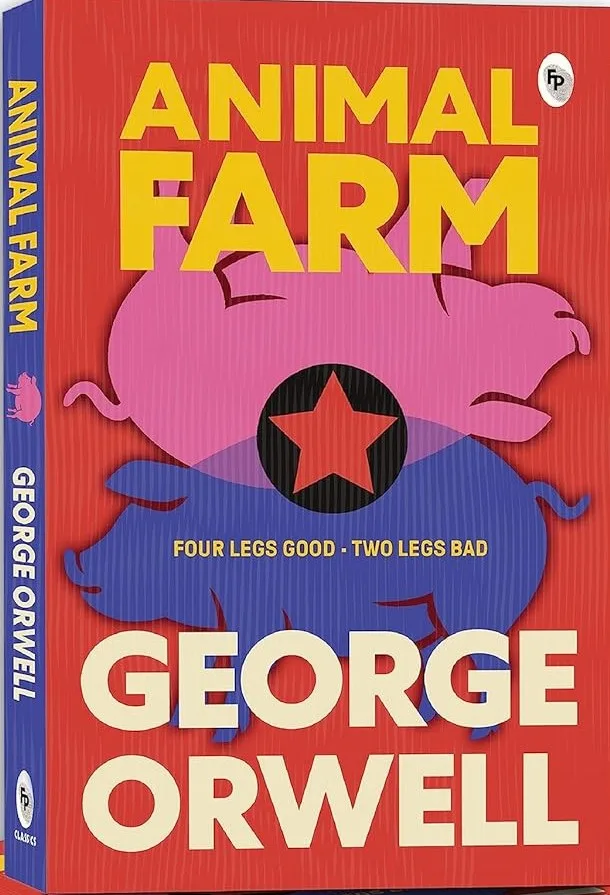
Download Cover Image
Do you want to download the full cover image for Animal Farm by George Orwell – A Riveting Tale of Revolution and Betrayal | Satire on Dictatorship?