
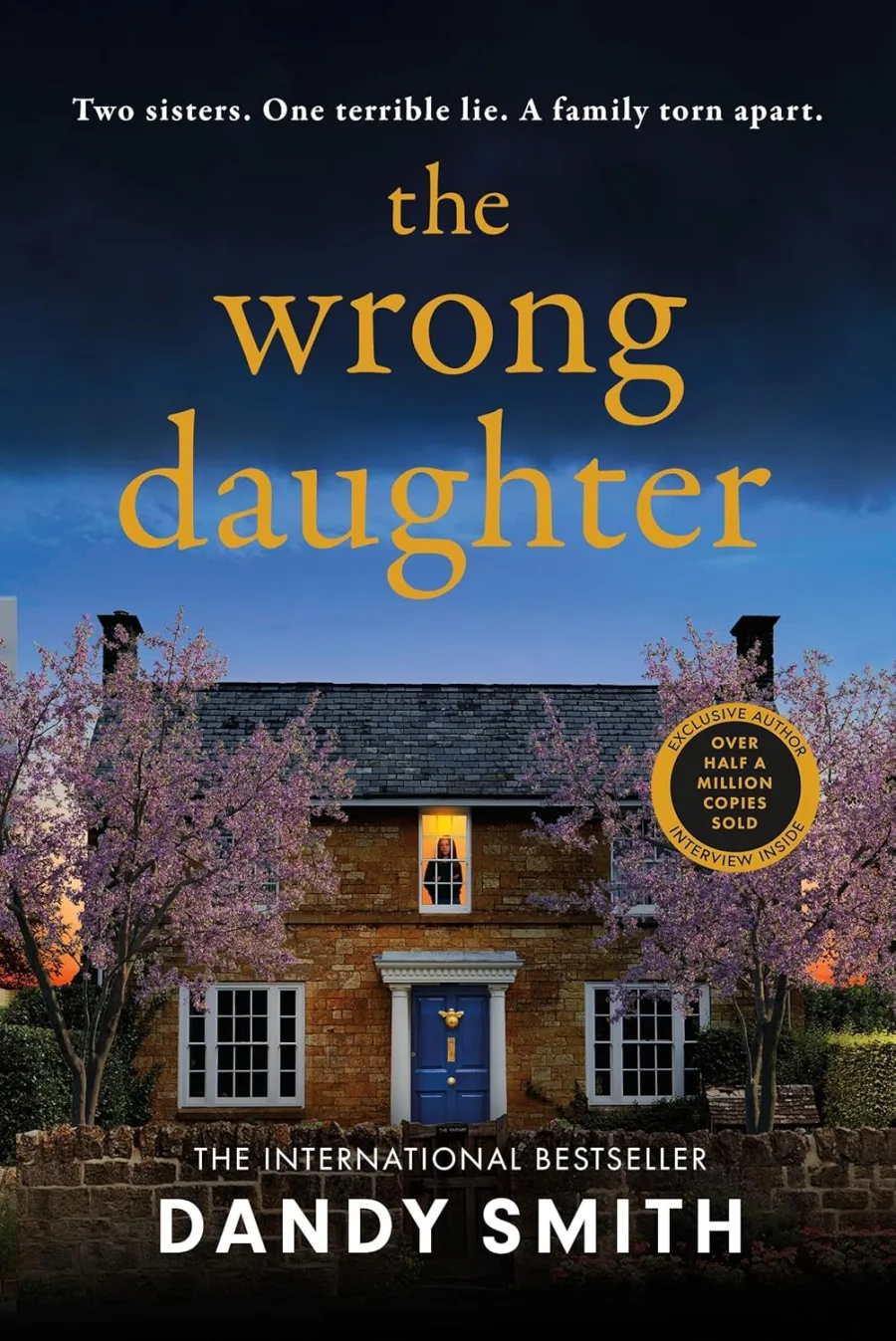
The Wrong Daughter: The Absolutely Unputdownable Psychological Thriller With a Jaw-Dropping Twist
eBook
• 353 Pages
• ₹ 789.68
• English
• 9781471414633
No ratings yet
| Publisher | Embla Books |
|---|---|
| ISBN13 | 9781471414633 |
| ASIN/SKU | B0CKRHJZ6P |
| Book Format | eBook |
| Language | English |
| Pages | 353 |
| List Price | ₹ 789.68 |
| Publishing Date | 08/02/2024 |
| Book Code | BD00055020 |
Buy this Book
Amazon Stores
Ebook Stores
Other Stores
Discover The Wrong Daughter: The Absolutely Unputdownable Psychological Thriller With a Jaw-Dropping Twist by Dandy Smith. This book is published by Embla Books in eBook format, ISBN 9781471414633, ASIN B0CKRHJZ6P, under Literature and Fiction, True Accounts, Crime, Thriller and Mystery.
Book Description
DANDY SMITH'S BRAND-NEW PSYCHOLOGICAL THRILLER, THE WEDDING VOW, IS OUT NOW!
Over 400,000 copies sold!
'Oh. My. God. Do I dare say up there as one of the best books I've ever read?! I was genuinely hooked from the first page until the last and every chapter floored me. Wowwwww I'm speechless' Reader review, 5 stars
Two Sisters.
Caitlin and Olivia are excited to finally be old enough to stay home alone. But, when they fall asleep, someone turns the handle of the back door and nothing is ever the same again.
A Missing Daughter.
When their parents return, they find Olivia's bed empty. Their eldest daughter gone... until now.
One Terrible Lie.
Sixteen years later, Olivia is back, and everyone is desperate to believe the nightmare is over. But Caitlin doesn't trust the woman who claims to be her sister. Their memories of that night don't match, and they are both hiding secrets that could tear their family apart...
What if they trust the wrong daughter?
The absolutely gripping and page-turning new psychological thriller from bestselling author Dandy Smith, with a killer twist you won't see coming.
Readers are obsessed with The Wrong Daughter!
'Wow! Just wow!! I'm mind blown by this book! Soooo good! The twists the turns! I love a good psychological thriller that keeps you guessing' Reader review, 5 stars
'Excuse me while I try to salvage what little remains of my edges because they were SNATCHED reading this book!' Reader review, 5 stars
'OMG!!! This book is so good! A true thriller, and so addictive, I could not stop reading... BRILLIANT!' Reader review 5 stars
'WOW!! Fantastic... this is a MUST read book if you like psychological thrillers with twists and turns and a truly fantastic major twist at the end' NetGalley review, 5 stars
'OMG! WHAT IN THE WORLD! This book is so addictive... will stay with me for a while' NetGalley review, 5 stars
'Wow!!!!! That ending pulled on all my heartstrings... totally speechless and in shock' NetGalley reviewer, 5 stars
'I could not put this book down... will grip you like a vice' NetGalley reviewer, 5 stars
Over 400,000 copies sold!
'Oh. My. God. Do I dare say up there as one of the best books I've ever read?! I was genuinely hooked from the first page until the last and every chapter floored me. Wowwwww I'm speechless' Reader review, 5 stars
Two Sisters.
Caitlin and Olivia are excited to finally be old enough to stay home alone. But, when they fall asleep, someone turns the handle of the back door and nothing is ever the same again.
A Missing Daughter.
When their parents return, they find Olivia's bed empty. Their eldest daughter gone... until now.
One Terrible Lie.
Sixteen years later, Olivia is back, and everyone is desperate to believe the nightmare is over. But Caitlin doesn't trust the woman who claims to be her sister. Their memories of that night don't match, and they are both hiding secrets that could tear their family apart...
What if they trust the wrong daughter?
The absolutely gripping and page-turning new psychological thriller from bestselling author Dandy Smith, with a killer twist you won't see coming.
Readers are obsessed with The Wrong Daughter!
'Wow! Just wow!! I'm mind blown by this book! Soooo good! The twists the turns! I love a good psychological thriller that keeps you guessing' Reader review, 5 stars
'Excuse me while I try to salvage what little remains of my edges because they were SNATCHED reading this book!' Reader review, 5 stars
'OMG!!! This book is so good! A true thriller, and so addictive, I could not stop reading... BRILLIANT!' Reader review 5 stars
'WOW!! Fantastic... this is a MUST read book if you like psychological thrillers with twists and turns and a truly fantastic major twist at the end' NetGalley review, 5 stars
'OMG! WHAT IN THE WORLD! This book is so addictive... will stay with me for a while' NetGalley review, 5 stars
'Wow!!!!! That ending pulled on all my heartstrings... totally speechless and in shock' NetGalley reviewer, 5 stars
'I could not put this book down... will grip you like a vice' NetGalley reviewer, 5 stars
Author Biography
Dandy Smith lives in the Somerset market town of Frome with her husband and two cocker spaniels. She has an undergraduate and master’s degree in Creative Writing from Bath Spa University and enjoys all things aerial fitness, true-crime and Gilmore Girls.
Instagram: @DandySmithAuthor
Twitter: @DandySmith
Instagram: @DandySmithAuthor
Twitter: @DandySmith
Editorial Reviews
Editorial Reviews will be added soon…
Book Summary
The Wrong Daughter by Dandy Smith is a fast-paced psychological thriller about family, trauma, identity, deception, and the devastating consequences of secrets kept for too long. At the center of the story are two sisters, Caitlin and Olivia Arden, whose lives are permanently changed one summer night when Olivia disappears from their childhood home. Sixteen years later, Olivia suddenly returns—but instead of bringing only happiness and closure, her return forces Caitlin to question everything she remembers about the night her sister vanished.
The story begins when Caitlin and Olivia are still children. Olivia, the older sister, is thirteen, while Caitlin is ten. Their parents leave them alone at home one evening, believing that the girls are old enough to look after themselves. The atmosphere initially feels safe and ordinary. They spend time together, go to bed, and expect their parents to return later that night.
But someone is watching the house.
During the night, a masked intruder enters. Caitlin wakes and sees the horrifying scene unfold: Olivia is being taken from the house. Caitlin is terrified and hides rather than intervening. When her parents return, Olivia is gone.
The disappearance becomes the defining event of Caitlin's life. The police investigate, but Olivia cannot be found. The family is left with grief, unanswered questions, and the unbearable knowledge that someone entered their home and took their daughter.
For Caitlin, however, there is another burden: guilt.
She cannot forget what she saw that night. She believes she should have done more to save Olivia. She continually revisits the moment in her mind, wondering whether she could have prevented the kidnapping. The fact that she survived while her beloved older sister disappeared creates a complicated emotional wound that never completely heals.
Sixteen years pass.
Caitlin has grown into an adult, but Olivia's disappearance still shapes her existence. She has built a life close to the place where she grew up and has never entirely escaped the emotional consequences of the tragedy. The missing sister remains an absence around which the family has organized its memories and hopes.
Then, unexpectedly, Olivia comes home.
For Caitlin's family, the return should be a miracle. After sixteen years of uncertainty, their daughter and sister is apparently alive. The family desperately wants to believe that the nightmare is finally over. They want to welcome Olivia back, recover lost years, and begin rebuilding the relationship that was stolen from them.
But Caitlin cannot simply accept the woman who has returned.
Something feels wrong.
The woman knows details about Olivia's past, and she appears to possess information that only the real Olivia could reasonably know. Yet Caitlin notices subtle inconsistencies. Her memories of that terrible night do not seem to fit perfectly with what she is now being told. The more she examines the situation, the more uncomfortable she becomes.
The central question of the novel therefore emerges: Has Olivia really returned, or has someone else taken her place?
This question gives the novel its powerful psychological foundation. Caitlin is caught between two impossible possibilities. If the woman truly is Olivia, then Caitlin's doubts could destroy the family's long-awaited reunion. But if she is an impostor, then Caitlin may be the only person capable of recognizing the danger.
The psychological pressure becomes intense because Caitlin is not entirely confident in her own judgment. She has lived for years with trauma and guilt, and the people around her do not necessarily share her suspicions. As she tries to convince others that something is wrong, she begins to fear that they may see her as unstable or obsessed.
This creates an atmosphere of gaslighting and uncertainty. Caitlin must determine whether other people are deliberately making her doubt herself or whether her own memories have become unreliable. The novel repeatedly encourages the reader to question what is true and what is merely perceived.
Smith strengthens this uncertainty through a second storyline involving Elinor and Heath, two siblings living on a secluded country estate with their uncle Robert. Their circumstances initially appear unrelated to Caitlin's story. Their lives are surrounded by secrecy, family dysfunction, inheritance, and a disturbing atmosphere within the large manor house.
The presence of this second narrative creates another mystery. Why are readers being shown the lives of Elinor and Heath when Caitlin is trying to discover the truth about Olivia? What connects the isolated estate with the missing-child case from sixteen years earlier?
For much of the novel, the relationship between the two storylines remains deliberately unclear. This structure encourages readers to search for connections while simultaneously creating uncertainty about which characters can be trusted. A review of the novel notes that the two narrative strands eventually reveal a strong connection during the resolution of the story.
The second storyline also introduces a darker, more gothic atmosphere. The secluded manor, complicated family relationships, secrets surrounding inheritance, and unsettling behavior of several characters give the novel a sense of menace beyond the central kidnapping mystery.
This gothic quality complements the psychological thriller elements. The story is not simply about discovering who Olivia really is. It is also about the dark environments and relationships that allow deception to flourish.
One of the novel's strongest themes is the unreliability of memory. Caitlin's entire understanding of herself is connected to what she remembers seeing that night. But memories are not perfect recordings. They are influenced by fear, trauma, emotion, and the stories people repeatedly tell themselves afterward.
This makes Caitlin's situation especially painful. Her memories are the foundation of her suspicion, but they are also the very thing she is forced to question.
The novel also examines how trauma can become part of a person's identity. Caitlin has spent years defining herself partly through the loss of her sister. Olivia's disappearance affected her relationships, ambitions, choices, and sense of responsibility. When Olivia returns, Caitlin must confront not only the possibility that her sister is alive but also the possibility that the life she built around Olivia's absence may have been based on an incomplete understanding of the past.
The relationship between the sisters is another major element. Before the kidnapping, Caitlin idolized Olivia. Her older sister represented confidence, beauty, and qualities Caitlin admired. This deep emotional bond makes the disappearance especially devastating.
But the passage of time complicates that bond. Olivia is no longer the thirteen-year-old girl Caitlin remembers. She is an adult who has lived through experiences Caitlin cannot know. Even if she truly is Olivia, the two sisters cannot simply return to the relationship they had as children.
This raises an important question about identity: How much of a person remains the same after sixteen years?
The novel uses this question to make the mystery more complicated. Recognizing someone is not simply a matter of appearance. It involves memories, habits, personality, relationships, and shared experiences. Caitlin therefore has to decide whether the woman in front of her is truly the sister she lost—or someone who has learned enough about Olivia to imitate her.
Secrets are everywhere in the novel. Characters conceal information because they are afraid of consequences, protecting themselves, protecting someone else, or attempting to control the situation. The result is a network of deception in which one lie creates another.
This is why the title The Wrong Daughter works on several levels. It refers directly to the central mystery surrounding Olivia's return, but it also points toward the larger problem of mistaken identity, distorted memory, family expectations, and the danger of believing the wrong version of events.
The story's pacing is another important feature. Smith keeps the narrative moving through short revelations, suspicious behavior, unanswered questions, and shifts between different perspectives. The structure is designed to make readers continually reassess their assumptions.
The second narrative especially contributes to this effect. At first, it can seem like a completely separate story, but its sinister atmosphere encourages readers to search for hidden connections. Eventually, the relationship between the two threads becomes part of the novel's larger mystery.
The book also explores the destructive power of secrets within families. Families often protect themselves by refusing to discuss painful events. But silence does not necessarily make trauma disappear. Instead, unspoken truths can influence relationships for years.
Caitlin's family has lived with the disappearance of Olivia for sixteen years. When Olivia returns, all the old emotions are suddenly reopened. Hope, grief, suspicion, guilt, and fear exist simultaneously. The family must therefore confront questions they may have avoided for years.
Another important theme is the difference between truth and the story people need to believe. Caitlin's family desperately wants Olivia's return to be real. After sixteen years of suffering, they want the simplest possible explanation: their missing daughter has finally come home.
Caitlin's doubts threaten that comforting story.
This conflict makes her position particularly lonely. If she is wrong, she risks damaging her family during the happiest moment they have experienced in years. If she is right, however, trusting the wrong person could put everyone in danger.
Smith builds much of the suspense from this emotional dilemma rather than relying solely on physical danger. Caitlin's problem is not merely discovering the truth. It is deciding whether she can afford to believe it.
The novel's psychological tension eventually becomes increasingly dark as hidden relationships and long-buried secrets begin to surface. What first appears to be a simple kidnapping story becomes a much more complicated web involving deception, manipulation, trauma, and identity.
The book also uses gothic elements to deepen its atmosphere. The secluded estate, family secrets, masked figures, imprisonment, psychological manipulation, and disturbing relationships create an unsettling sense that the characters are trapped not only by physical circumstances but also by the histories they cannot escape.
At the center of everything remains Caitlin. Her journey is ultimately a struggle to trust her own instincts. She must decide whether to listen to the doubts that have been growing inside her or surrender to the comforting explanation everyone else seems willing to accept.
As the various pieces of the story come together, the reader is forced to reconsider earlier assumptions. Details that initially seem insignificant acquire new meaning, while characters who appear straightforward reveal hidden motives. The narrative deliberately creates a feeling of disorientation before gradually explaining how its different elements fit together.
The final revelations are intended to transform the reader's understanding of what came before. Rather than treating the mystery as a simple question of whether Olivia is genuine, the story ultimately reveals a much larger pattern of deception and manipulation.
What makes The Wrong Daughter particularly effective as a psychological thriller is that its greatest threat is uncertainty. The reader is never entirely sure which memories are reliable, which relationships are genuine, or which characters are telling the truth.
Ultimately, The Wrong Daughter is a story about what happens when the person you have spent years longing for finally comes home—and you cannot be certain that she is who she claims to be.
It is a novel about sisters, but also about identity. It is about family, but also about the secrets that can destroy families. It is about memory, but also about how easily memory can become a source of doubt. Above all, it is about the dangerous space between what we desperately want to believe and what may actually be true.
Dandy Smith turns a missing-child mystery into an emotionally charged psychological thriller by making Caitlin's own mind part of the mystery. The reader follows her search for answers while constantly wondering whether she is uncovering a terrible truth or being pulled deeper into a carefully constructed deception.
In the end, The Wrong Daughter leaves readers with an unsettling thought: sometimes the most dangerous lie is not the one someone tells you—it is the one you desperately want to believe. The novel's combination of family drama, psychological suspense, gothic atmosphere, hidden identities, and escalating revelations makes it a compelling choice for readers who enjoy twist-driven domestic thrillers.
The story begins when Caitlin and Olivia are still children. Olivia, the older sister, is thirteen, while Caitlin is ten. Their parents leave them alone at home one evening, believing that the girls are old enough to look after themselves. The atmosphere initially feels safe and ordinary. They spend time together, go to bed, and expect their parents to return later that night.
But someone is watching the house.
During the night, a masked intruder enters. Caitlin wakes and sees the horrifying scene unfold: Olivia is being taken from the house. Caitlin is terrified and hides rather than intervening. When her parents return, Olivia is gone.
The disappearance becomes the defining event of Caitlin's life. The police investigate, but Olivia cannot be found. The family is left with grief, unanswered questions, and the unbearable knowledge that someone entered their home and took their daughter.
For Caitlin, however, there is another burden: guilt.
She cannot forget what she saw that night. She believes she should have done more to save Olivia. She continually revisits the moment in her mind, wondering whether she could have prevented the kidnapping. The fact that she survived while her beloved older sister disappeared creates a complicated emotional wound that never completely heals.
Sixteen years pass.
Caitlin has grown into an adult, but Olivia's disappearance still shapes her existence. She has built a life close to the place where she grew up and has never entirely escaped the emotional consequences of the tragedy. The missing sister remains an absence around which the family has organized its memories and hopes.
Then, unexpectedly, Olivia comes home.
For Caitlin's family, the return should be a miracle. After sixteen years of uncertainty, their daughter and sister is apparently alive. The family desperately wants to believe that the nightmare is finally over. They want to welcome Olivia back, recover lost years, and begin rebuilding the relationship that was stolen from them.
But Caitlin cannot simply accept the woman who has returned.
Something feels wrong.
The woman knows details about Olivia's past, and she appears to possess information that only the real Olivia could reasonably know. Yet Caitlin notices subtle inconsistencies. Her memories of that terrible night do not seem to fit perfectly with what she is now being told. The more she examines the situation, the more uncomfortable she becomes.
The central question of the novel therefore emerges: Has Olivia really returned, or has someone else taken her place?
This question gives the novel its powerful psychological foundation. Caitlin is caught between two impossible possibilities. If the woman truly is Olivia, then Caitlin's doubts could destroy the family's long-awaited reunion. But if she is an impostor, then Caitlin may be the only person capable of recognizing the danger.
The psychological pressure becomes intense because Caitlin is not entirely confident in her own judgment. She has lived for years with trauma and guilt, and the people around her do not necessarily share her suspicions. As she tries to convince others that something is wrong, she begins to fear that they may see her as unstable or obsessed.
This creates an atmosphere of gaslighting and uncertainty. Caitlin must determine whether other people are deliberately making her doubt herself or whether her own memories have become unreliable. The novel repeatedly encourages the reader to question what is true and what is merely perceived.
Smith strengthens this uncertainty through a second storyline involving Elinor and Heath, two siblings living on a secluded country estate with their uncle Robert. Their circumstances initially appear unrelated to Caitlin's story. Their lives are surrounded by secrecy, family dysfunction, inheritance, and a disturbing atmosphere within the large manor house.
The presence of this second narrative creates another mystery. Why are readers being shown the lives of Elinor and Heath when Caitlin is trying to discover the truth about Olivia? What connects the isolated estate with the missing-child case from sixteen years earlier?
For much of the novel, the relationship between the two storylines remains deliberately unclear. This structure encourages readers to search for connections while simultaneously creating uncertainty about which characters can be trusted. A review of the novel notes that the two narrative strands eventually reveal a strong connection during the resolution of the story.
The second storyline also introduces a darker, more gothic atmosphere. The secluded manor, complicated family relationships, secrets surrounding inheritance, and unsettling behavior of several characters give the novel a sense of menace beyond the central kidnapping mystery.
This gothic quality complements the psychological thriller elements. The story is not simply about discovering who Olivia really is. It is also about the dark environments and relationships that allow deception to flourish.
One of the novel's strongest themes is the unreliability of memory. Caitlin's entire understanding of herself is connected to what she remembers seeing that night. But memories are not perfect recordings. They are influenced by fear, trauma, emotion, and the stories people repeatedly tell themselves afterward.
This makes Caitlin's situation especially painful. Her memories are the foundation of her suspicion, but they are also the very thing she is forced to question.
The novel also examines how trauma can become part of a person's identity. Caitlin has spent years defining herself partly through the loss of her sister. Olivia's disappearance affected her relationships, ambitions, choices, and sense of responsibility. When Olivia returns, Caitlin must confront not only the possibility that her sister is alive but also the possibility that the life she built around Olivia's absence may have been based on an incomplete understanding of the past.
The relationship between the sisters is another major element. Before the kidnapping, Caitlin idolized Olivia. Her older sister represented confidence, beauty, and qualities Caitlin admired. This deep emotional bond makes the disappearance especially devastating.
But the passage of time complicates that bond. Olivia is no longer the thirteen-year-old girl Caitlin remembers. She is an adult who has lived through experiences Caitlin cannot know. Even if she truly is Olivia, the two sisters cannot simply return to the relationship they had as children.
This raises an important question about identity: How much of a person remains the same after sixteen years?
The novel uses this question to make the mystery more complicated. Recognizing someone is not simply a matter of appearance. It involves memories, habits, personality, relationships, and shared experiences. Caitlin therefore has to decide whether the woman in front of her is truly the sister she lost—or someone who has learned enough about Olivia to imitate her.
Secrets are everywhere in the novel. Characters conceal information because they are afraid of consequences, protecting themselves, protecting someone else, or attempting to control the situation. The result is a network of deception in which one lie creates another.
This is why the title The Wrong Daughter works on several levels. It refers directly to the central mystery surrounding Olivia's return, but it also points toward the larger problem of mistaken identity, distorted memory, family expectations, and the danger of believing the wrong version of events.
The story's pacing is another important feature. Smith keeps the narrative moving through short revelations, suspicious behavior, unanswered questions, and shifts between different perspectives. The structure is designed to make readers continually reassess their assumptions.
The second narrative especially contributes to this effect. At first, it can seem like a completely separate story, but its sinister atmosphere encourages readers to search for hidden connections. Eventually, the relationship between the two threads becomes part of the novel's larger mystery.
The book also explores the destructive power of secrets within families. Families often protect themselves by refusing to discuss painful events. But silence does not necessarily make trauma disappear. Instead, unspoken truths can influence relationships for years.
Caitlin's family has lived with the disappearance of Olivia for sixteen years. When Olivia returns, all the old emotions are suddenly reopened. Hope, grief, suspicion, guilt, and fear exist simultaneously. The family must therefore confront questions they may have avoided for years.
Another important theme is the difference between truth and the story people need to believe. Caitlin's family desperately wants Olivia's return to be real. After sixteen years of suffering, they want the simplest possible explanation: their missing daughter has finally come home.
Caitlin's doubts threaten that comforting story.
This conflict makes her position particularly lonely. If she is wrong, she risks damaging her family during the happiest moment they have experienced in years. If she is right, however, trusting the wrong person could put everyone in danger.
Smith builds much of the suspense from this emotional dilemma rather than relying solely on physical danger. Caitlin's problem is not merely discovering the truth. It is deciding whether she can afford to believe it.
The novel's psychological tension eventually becomes increasingly dark as hidden relationships and long-buried secrets begin to surface. What first appears to be a simple kidnapping story becomes a much more complicated web involving deception, manipulation, trauma, and identity.
The book also uses gothic elements to deepen its atmosphere. The secluded estate, family secrets, masked figures, imprisonment, psychological manipulation, and disturbing relationships create an unsettling sense that the characters are trapped not only by physical circumstances but also by the histories they cannot escape.
At the center of everything remains Caitlin. Her journey is ultimately a struggle to trust her own instincts. She must decide whether to listen to the doubts that have been growing inside her or surrender to the comforting explanation everyone else seems willing to accept.
As the various pieces of the story come together, the reader is forced to reconsider earlier assumptions. Details that initially seem insignificant acquire new meaning, while characters who appear straightforward reveal hidden motives. The narrative deliberately creates a feeling of disorientation before gradually explaining how its different elements fit together.
The final revelations are intended to transform the reader's understanding of what came before. Rather than treating the mystery as a simple question of whether Olivia is genuine, the story ultimately reveals a much larger pattern of deception and manipulation.
What makes The Wrong Daughter particularly effective as a psychological thriller is that its greatest threat is uncertainty. The reader is never entirely sure which memories are reliable, which relationships are genuine, or which characters are telling the truth.
Ultimately, The Wrong Daughter is a story about what happens when the person you have spent years longing for finally comes home—and you cannot be certain that she is who she claims to be.
It is a novel about sisters, but also about identity. It is about family, but also about the secrets that can destroy families. It is about memory, but also about how easily memory can become a source of doubt. Above all, it is about the dangerous space between what we desperately want to believe and what may actually be true.
Dandy Smith turns a missing-child mystery into an emotionally charged psychological thriller by making Caitlin's own mind part of the mystery. The reader follows her search for answers while constantly wondering whether she is uncovering a terrible truth or being pulled deeper into a carefully constructed deception.
In the end, The Wrong Daughter leaves readers with an unsettling thought: sometimes the most dangerous lie is not the one someone tells you—it is the one you desperately want to believe. The novel's combination of family drama, psychological suspense, gothic atmosphere, hidden identities, and escalating revelations makes it a compelling choice for readers who enjoy twist-driven domestic thrillers.
Sample Chapters
Sample Chapters will be added soon…
Reader Reviews
No reviews yet.
The Wrong Daughter: The Absolutely Unputdownable Psychological Thriller With a Jaw-Dropping Twist
Download Cover Image
Do you want to download the full cover image for The Wrong Daughter: The Absolutely Unputdownable Psychological Thriller With a Jaw-Dropping Twist?