
Can We be Strangers Again?: A National Bestseller
Paperback
• 232 Pages
• USD 219.00
• English
• 9780143475927
No ratings yet
| Publisher | Penguin eBury Press |
|---|---|
| ISBN13 | 9780143475927 |
| ASIN/SKU | 0143475924 |
| Book Format | Paperback |
| Language | English |
| Pages | 232 |
| List Price | USD 219.00 |
| Publishing Date | 20/03/2025 |
| Dimensions | 19.8 x 12.9 x 1.3 cm |
| Weight | 172 g |
| Book Code | BD00055017 |
Buy this Book
Amazon Stores
Ebook Stores
Other Stores
Discover Can We be Strangers Again?: A National Bestseller by Shrijeet Shandilya. This book is published by Penguin eBury Press in Paperback format, ISBN 9780143475927, ASIN 0143475924, under Literature and Fiction, Clean and Wholesome Romance, New Adult and College Romance.
Book Description
In the electric haze of college life, three friends are bound by laughter, late-night talks and unspoken promises. But when two of them cross the line from friendship into love, everything changes. Betrayal shatters their world, leaving one friend to pick up the pieces while navigating her own complicated feelings. As friendships fracture and love grows tangled, hearts are broken, and choices become irreversible. Caught between the ache of lost friendship and the bittersweet pull of love, Dev must decide if he’s willing to risk everything―again.
Author Biography
Shrijeet Shandilya is a writer who discovers stories in the smallest moments: lingering discussions, spoken silences, and memories that refuse to fade. He finished his undergraduate studies at Christ University and is now pursuing his MBA at Goa Institute of Management. Somewhere between surviving deadlines and making sense of life, he discovered his love for writing. His writing incorporates comedy, nostalgia, and passion, portraying the bittersweetness of growing up, moving on, and everything in between. His debut novel, Can We Be Strangers Again?, is a reflection of these emotions―of love, loss, and the spaces in between them. You may reach him via email at [email protected].
Editorial Reviews
Editorial Reviews will be added soon…
Book Summary
Can We Be Strangers Again? by Shrijeet Shandilya is a contemporary romance about love, friendship, betrayal, heartbreak, and the painful process of letting go. The story revolves around three college friends—Dev, Avantika, and Tanishka—whose close friendship gradually becomes complicated when romantic feelings enter their lives. Set against the backdrop of college life and the unusual circumstances of the pandemic, the novel explores how relationships can change when friendship and love begin to overlap. At its heart, the book asks a difficult question: after sharing so much with someone, can two people ever truly become strangers again?
The story begins with the atmosphere of college life, where friendships often develop through casual conversations, group chats, late-night discussions, jokes, and shared experiences. Dev becomes connected with Avantika and Tanishka, and the three form a close bond. Their relationship initially appears uncomplicated. They are friends who enjoy each other's company and gradually become important parts of one another's lives. But, as often happens in relationships, emotions begin to change, and what was once simple friendship becomes more complicated.
Dev is the central character of the novel. His emotional journey drives much of the story. He finds himself attracted to Avantika and eventually enters a romantic relationship with her. At first, the relationship brings excitement and the feeling of discovering something new. The conversations become longer, the emotional attachment becomes stronger, and Dev begins to imagine a future with her. Their relationship reflects the intensity of young love, where even small conversations and ordinary moments can feel extremely important.
However, beneath the romance is another relationship that becomes increasingly significant. Tanishka, Avantika's close friend, shares a strong emotional connection with Dev. Their friendship develops through conversations, understanding, and the feeling that they can communicate easily with each other. Dev does not immediately recognize the full importance of this connection. As his relationship with Avantika progresses, his bond with Tanishka creates an emotional complication that eventually changes the lives of all three characters. Reviews of the novel identify Dev, Avantika, and Tanishka as the central trio and describe the story as an exploration of friendship, attraction, heartbreak, and the difference between infatuation and deeper love.
One of the most important themes is the difference between love and infatuation. When people are young and entering relationships, it can be difficult to know whether what they feel is lasting love or simply excitement and attraction. Dev experiences this confusion himself. He has genuine feelings, but he does not always understand what those feelings mean or how they affect the people around him. His uncertainty becomes one of the main sources of conflict.
The novel shows that relationships are rarely as simple as choosing between two people. Feelings can develop slowly and unexpectedly. A person may be romantically involved with someone while simultaneously feeling emotionally connected to another person. This does not automatically make the situation easy to understand or justify, but it reflects the confusion that can occur when people are still learning about themselves and relationships.
Avantika's character is important because she represents the emotional consequences of these choices. Her relationship with Dev is not simply a romantic storyline; it is also about trust. When trust is damaged, love alone may not be enough to repair the relationship. The story explores how even small doubts, misunderstandings, and emotional distances can gradually create cracks between two people.
Tanishka's position is perhaps the most complicated. She is not merely a third person in a conventional love triangle. She is also a friend who has her own emotions, expectations, and vulnerabilities. Her closeness with Dev makes the situation more painful because friendship and romantic feelings become difficult to separate. The novel asks whether a friendship can survive when one person begins to want something more.
The college setting gives the story a familiar atmosphere for young readers. College friendships can be intense because people spend a great deal of time together while simultaneously trying to understand who they are becoming. Friend groups can feel like families, and relationships can become central to a person's identity. When those relationships break, the emotional consequences can therefore feel enormous.
The pandemic setting adds another unusual dimension. Much of the early relationship develops through online communication, including college group chats and conversations. The physical distance created by the pandemic changes the way people meet and communicate. Instead of traditional college interactions, digital conversations become an important part of forming friendships and relationships. Reviews of the book specifically mention the pandemic period, when classes, examinations, relationships, arguments, and breakups were taking place largely through online interactions.
This makes the story particularly connected to a generation that experienced relationships through phones and social media. A simple message can begin a friendship, while a delayed reply can create anxiety. Conversations can continue late into the night, creating a sense of intimacy even when people are physically separated. The novel captures this modern form of connection.
Another major theme is betrayal. Betrayal in the novel is not presented as a single dramatic act. It develops through emotional choices, hidden feelings, misunderstandings, and decisions that hurt people who trusted one another. The official description states that betrayal shatters the friends' world and leaves them dealing with the consequences of choices that cannot easily be reversed.
The story therefore asks whether love can survive after trust has been damaged. Even when two people still care about each other, resentment and disappointment can make returning to the old relationship almost impossible. Sometimes the emotional connection remains, but the relationship itself cannot return to what it was.
This leads to the central question of the title: Can we be strangers again? At first, the question sounds simple. If two people break up, perhaps they can simply move on and behave as though they never knew each other. But the novel suggests that this is much harder than it sounds. Once someone has become part of your memories, habits, emotions, and personal history, they cannot easily be erased.
Being strangers means knowing nothing about one another. But after a deep relationship, both people know too much. They know each other's fears, favorite things, habits, insecurities, dreams, and weaknesses. Even if they stop speaking, those memories remain. The book therefore presents separation not as a clean ending but as a complicated process of learning how to live with what remains.
Letting go becomes one of the book's most important lessons. Letting go does not necessarily mean forgetting someone or pretending that the relationship never mattered. It can mean accepting that a relationship has reached its end and allowing both people to move forward. The official description calls the novel a tale of love, loyalty, and the bittersweet beauty of letting go.
Dev's biggest challenge is learning that not every relationship can be saved simply because feelings still exist. Sometimes people make choices that create consequences they cannot undo. The desire to go back to the past can become another form of suffering because the past cannot be recreated exactly as it was.
The novel also explores loyalty. Friendship creates its own responsibilities, and romantic relationships create different expectations. When these two forms of loyalty collide, characters are forced to decide what matters most. The story shows how difficult it can be to remain loyal to someone while also being honest about one's own emotions.
Another important theme is growing up. The characters are not simply dealing with romance; they are learning how relationships work. They discover that attraction is not the same as commitment, that communication does not always prevent misunderstandings, and that love does not automatically guarantee a happy ending. These painful experiences become part of their emotional maturity.
The novel also reflects on memory and nostalgia. College relationships often become powerful memories because they are connected with a particular stage of life. Years later, people may remember conversations, places, messages, and small moments that seemed insignificant at the time.
The story begins with the atmosphere of college life, where friendships often develop through casual conversations, group chats, late-night discussions, jokes, and shared experiences. Dev becomes connected with Avantika and Tanishka, and the three form a close bond. Their relationship initially appears uncomplicated. They are friends who enjoy each other's company and gradually become important parts of one another's lives. But, as often happens in relationships, emotions begin to change, and what was once simple friendship becomes more complicated.
Dev is the central character of the novel. His emotional journey drives much of the story. He finds himself attracted to Avantika and eventually enters a romantic relationship with her. At first, the relationship brings excitement and the feeling of discovering something new. The conversations become longer, the emotional attachment becomes stronger, and Dev begins to imagine a future with her. Their relationship reflects the intensity of young love, where even small conversations and ordinary moments can feel extremely important.
However, beneath the romance is another relationship that becomes increasingly significant. Tanishka, Avantika's close friend, shares a strong emotional connection with Dev. Their friendship develops through conversations, understanding, and the feeling that they can communicate easily with each other. Dev does not immediately recognize the full importance of this connection. As his relationship with Avantika progresses, his bond with Tanishka creates an emotional complication that eventually changes the lives of all three characters. Reviews of the novel identify Dev, Avantika, and Tanishka as the central trio and describe the story as an exploration of friendship, attraction, heartbreak, and the difference between infatuation and deeper love.
One of the most important themes is the difference between love and infatuation. When people are young and entering relationships, it can be difficult to know whether what they feel is lasting love or simply excitement and attraction. Dev experiences this confusion himself. He has genuine feelings, but he does not always understand what those feelings mean or how they affect the people around him. His uncertainty becomes one of the main sources of conflict.
The novel shows that relationships are rarely as simple as choosing between two people. Feelings can develop slowly and unexpectedly. A person may be romantically involved with someone while simultaneously feeling emotionally connected to another person. This does not automatically make the situation easy to understand or justify, but it reflects the confusion that can occur when people are still learning about themselves and relationships.
Avantika's character is important because she represents the emotional consequences of these choices. Her relationship with Dev is not simply a romantic storyline; it is also about trust. When trust is damaged, love alone may not be enough to repair the relationship. The story explores how even small doubts, misunderstandings, and emotional distances can gradually create cracks between two people.
Tanishka's position is perhaps the most complicated. She is not merely a third person in a conventional love triangle. She is also a friend who has her own emotions, expectations, and vulnerabilities. Her closeness with Dev makes the situation more painful because friendship and romantic feelings become difficult to separate. The novel asks whether a friendship can survive when one person begins to want something more.
The college setting gives the story a familiar atmosphere for young readers. College friendships can be intense because people spend a great deal of time together while simultaneously trying to understand who they are becoming. Friend groups can feel like families, and relationships can become central to a person's identity. When those relationships break, the emotional consequences can therefore feel enormous.
The pandemic setting adds another unusual dimension. Much of the early relationship develops through online communication, including college group chats and conversations. The physical distance created by the pandemic changes the way people meet and communicate. Instead of traditional college interactions, digital conversations become an important part of forming friendships and relationships. Reviews of the book specifically mention the pandemic period, when classes, examinations, relationships, arguments, and breakups were taking place largely through online interactions.
This makes the story particularly connected to a generation that experienced relationships through phones and social media. A simple message can begin a friendship, while a delayed reply can create anxiety. Conversations can continue late into the night, creating a sense of intimacy even when people are physically separated. The novel captures this modern form of connection.
Another major theme is betrayal. Betrayal in the novel is not presented as a single dramatic act. It develops through emotional choices, hidden feelings, misunderstandings, and decisions that hurt people who trusted one another. The official description states that betrayal shatters the friends' world and leaves them dealing with the consequences of choices that cannot easily be reversed.
The story therefore asks whether love can survive after trust has been damaged. Even when two people still care about each other, resentment and disappointment can make returning to the old relationship almost impossible. Sometimes the emotional connection remains, but the relationship itself cannot return to what it was.
This leads to the central question of the title: Can we be strangers again? At first, the question sounds simple. If two people break up, perhaps they can simply move on and behave as though they never knew each other. But the novel suggests that this is much harder than it sounds. Once someone has become part of your memories, habits, emotions, and personal history, they cannot easily be erased.
Being strangers means knowing nothing about one another. But after a deep relationship, both people know too much. They know each other's fears, favorite things, habits, insecurities, dreams, and weaknesses. Even if they stop speaking, those memories remain. The book therefore presents separation not as a clean ending but as a complicated process of learning how to live with what remains.
Letting go becomes one of the book's most important lessons. Letting go does not necessarily mean forgetting someone or pretending that the relationship never mattered. It can mean accepting that a relationship has reached its end and allowing both people to move forward. The official description calls the novel a tale of love, loyalty, and the bittersweet beauty of letting go.
Dev's biggest challenge is learning that not every relationship can be saved simply because feelings still exist. Sometimes people make choices that create consequences they cannot undo. The desire to go back to the past can become another form of suffering because the past cannot be recreated exactly as it was.
The novel also explores loyalty. Friendship creates its own responsibilities, and romantic relationships create different expectations. When these two forms of loyalty collide, characters are forced to decide what matters most. The story shows how difficult it can be to remain loyal to someone while also being honest about one's own emotions.
Another important theme is growing up. The characters are not simply dealing with romance; they are learning how relationships work. They discover that attraction is not the same as commitment, that communication does not always prevent misunderstandings, and that love does not automatically guarantee a happy ending. These painful experiences become part of their emotional maturity.
The novel also reflects on memory and nostalgia. College relationships often become powerful memories because they are connected with a particular stage of life. Years later, people may remember conversations, places, messages, and small moments that seemed insignificant at the time.
Sample Chapters
Sample Chapters will be added soon…
Reader Reviews
No reviews yet.
Can We be Strangers Again?: A National Bestseller
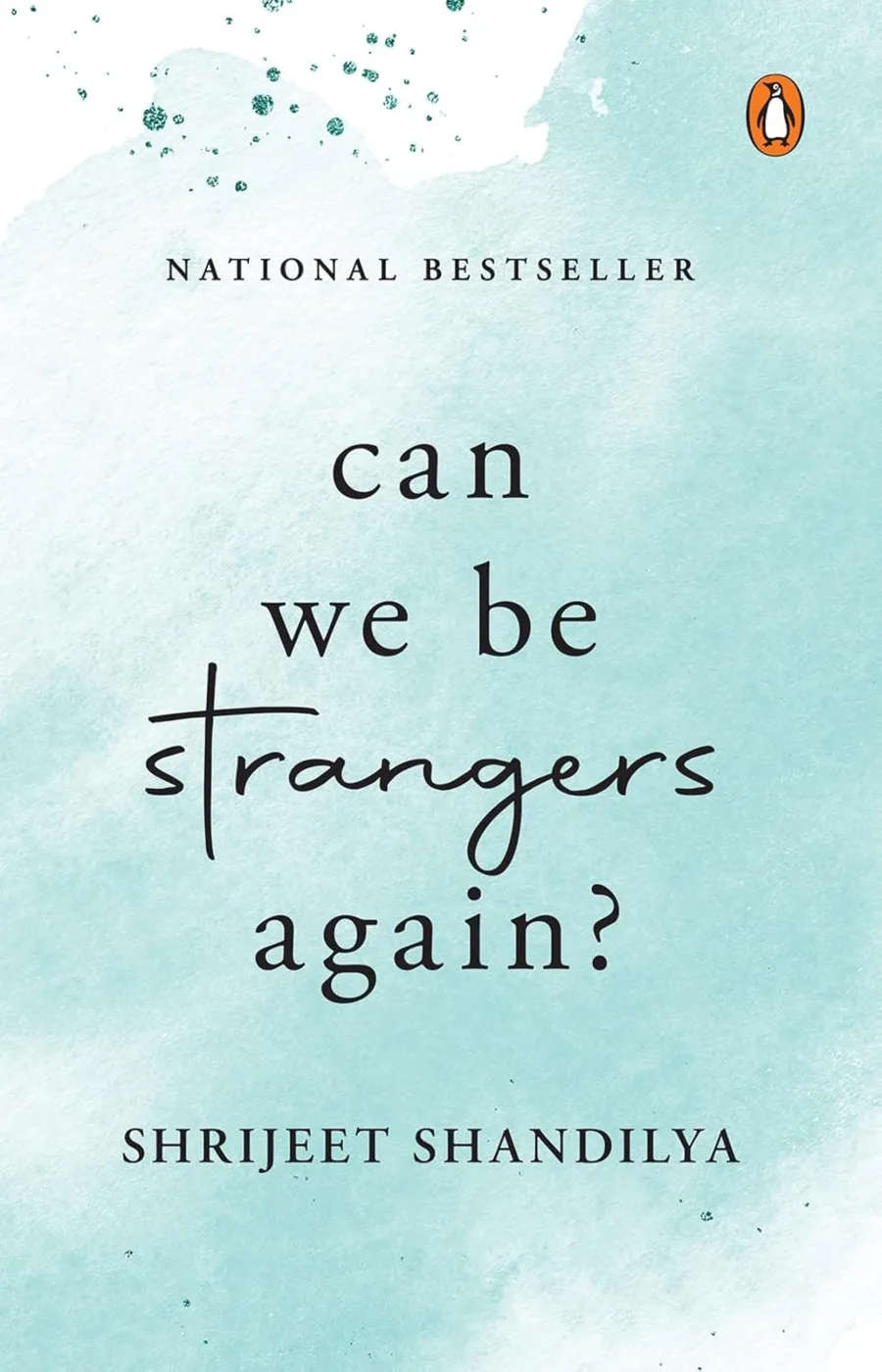
Download Cover Image
Do you want to download the full cover image for Can We be Strangers Again?: A National Bestseller?