
The Housemaid: An Absolutely Addictive Psychological Thriller with a Jaw-Dropping Twist
Paperback
• 336 Pages
• ₹ 345.00
• English
• 9780143461159
No ratings yet
| Publisher | Penguin |
|---|---|
| ISBN13 | 9780143461159 |
| ASIN/SKU | 014346115X |
| Book Format | Paperback |
| Language | English |
| Pages | 336 |
| List Price | ₹ 345.00 |
| Publishing Date | 25/04/2023 |
| Dimensions | 12.9 x 2.4 x 19.8 cm |
| Weight | 260 Grams |
| Book Code | BD00055015 |
Buy this Book
Amazon Stores
Ebook Stores
Other Stores
Discover The Housemaid: An Absolutely Addictive Psychological Thriller with a Jaw-Dropping Twist by The Housemaid Freida McFadden. This book is published by Penguin in Paperback format, ISBN 9780143461159, ASIN 014346115X, under Literature and Fiction, Thrillers and Suspense, Action and Adventure.
Book Description
"Welcome to the family," Nina Winchester says as I shake her elegant, manicured hand. I smile politely, gazing around the marble hallway.
Working here is my last chance to start fresh. I can pretend to be whoever I like.
Every day I clean the Winchesters' beautiful house top to bottom. I collect their daughter from school. I cook a delicious meal for the whole family before heading up to eat alone in my tiny room on the top floor.
I try to ignore how Nina makes a mess just to watch me clean it up. How she tells strange lies about her own daughter. And how Andrew, her husband, seems more broken every day.
But as I look into Andrew's handsome brown eyes, so full of pain, it's hard not to imagine what it would be like to live Nina's life. The walk-in closet, the fancy car, the perfect husband.
I soon learn that the Winchesters' secrets are far more dangerous than my own...
I try on one of Nina's pristine white dresses once. Just to see what it's like. But she soon found out...and by the time I realize my attic bedroom door only locks from the outside, it's far too late.
I reassure myself though: the Winchesters don't know who I really am.
They don't know what I'm capable of...
An unbelievably twisty read that will have you glued to the pages late into the night. Anyone who loves The Woman in the Window, The Wife Between Us and The Girl on the Train won't be able to put this down!
Working here is my last chance to start fresh. I can pretend to be whoever I like.
Every day I clean the Winchesters' beautiful house top to bottom. I collect their daughter from school. I cook a delicious meal for the whole family before heading up to eat alone in my tiny room on the top floor.
I try to ignore how Nina makes a mess just to watch me clean it up. How she tells strange lies about her own daughter. And how Andrew, her husband, seems more broken every day.
But as I look into Andrew's handsome brown eyes, so full of pain, it's hard not to imagine what it would be like to live Nina's life. The walk-in closet, the fancy car, the perfect husband.
I soon learn that the Winchesters' secrets are far more dangerous than my own...
I try on one of Nina's pristine white dresses once. Just to see what it's like. But she soon found out...and by the time I realize my attic bedroom door only locks from the outside, it's far too late.
I reassure myself though: the Winchesters don't know who I really am.
They don't know what I'm capable of...
An unbelievably twisty read that will have you glued to the pages late into the night. Anyone who loves The Woman in the Window, The Wife Between Us and The Girl on the Train won't be able to put this down!
Author Biography
#1 New York Times, Amazon Charts, USA Today, Washington Post, Wall Street Journal, Sunday Times, and Publisher's Weekly bestselling author Freida McFadden is a physician who has penned multiple bestselling psychological thrillers and medical humor novels. Freida is the winner of the International Thriller Writer Award for Best Paperback Original, the Goodreads Choice Award for Best Thriller, and was honored as one of TIME 100’s most influential people in the world for 2026. Her novels have been translated into more than 45 languages.
Freida lives with her family and cat in a centuries-old three-story home overlooking the ocean, with staircases that creak and moan with each step, and nobody could hear you if you scream. Unless you scream really loudly, maybe.
To hear Freida talk about herself more in the third person, check out her website freidamcfadden dot com.
Freida lives with her family and cat in a centuries-old three-story home overlooking the ocean, with staircases that creak and moan with each step, and nobody could hear you if you scream. Unless you scream really loudly, maybe.
To hear Freida talk about herself more in the third person, check out her website freidamcfadden dot com.
Editorial Reviews
Editorial Reviews will be added soon…
Book Summary
The Housemaid by Freida McFadden is a fast-paced psychological thriller about secrets, manipulation, class differences, marriage, power, and the dangerous gap between appearances and reality. The novel follows Millie Calloway, a young woman who desperately needs a fresh start and accepts a live-in housekeeping job with the wealthy Winchester family.
What initially looks like a fortunate opportunity quickly becomes deeply unsettling.
The Winchester household appears perfect from the outside. They have a beautiful home, money, social status, and a seemingly comfortable family life. But as Millie begins working for them, she discovers that the house contains secrets that are far darker than she could have imagined.
The novel is built around a simple but gripping question:
Who is really in control of the Winchester household?
As the story develops, the answer becomes increasingly complicated.
Millie Calloway
Millie is the central character and the person through whose experiences much of the story unfolds.
She is in a difficult position when she accepts the housekeeping job. She needs employment and stability, and the Winchester family appears to offer exactly that.
The position comes with an attractive opportunity: Millie will live in the family's large home, clean the house, help with household responsibilities, and receive a chance to rebuild her life.
For someone desperate for a second chance, the job seems almost too good to refuse.
But Millie soon realizes that the Winchester household has unusual rules and unsettling dynamics.
The family's behavior does not match the image of perfection they present to the outside world.
The Winchester Family
The Winchester family initially appears to represent wealth and privilege.
Nina Winchester is wealthy, sophisticated, and unpredictable. Her behavior toward Millie can change dramatically, leaving Millie uncertain about what she has done wrong.
Andrew Winchester, Nina's husband, appears much more controlled and sympathetic. His behavior creates a completely different impression of the household.
Their daughter Cecelia adds another dimension to the family dynamic.
As Millie spends more time with them, she begins to wonder what is really happening behind the family's carefully maintained image.
The contrast between their public appearance and private behavior becomes one of the novel's central sources of tension.
A Dream Job Turns Into a Nightmare
Millie initially believes she has found the opportunity she needs.
But strange incidents begin to accumulate.
The job comes with unexpected restrictions.
The family behaves strangely.
Nina's actions become increasingly difficult to understand.
Millie begins noticing things that do not make sense.
The more she learns, the less certain she becomes about whom she can trust.
This gradual transformation—from opportunity to threat—is one of the novel's most effective features.
The house that initially represents safety and financial security slowly begins to feel like a trap.
The Bedroom and the Attic
The physical structure of the Winchester house becomes an important part of the suspense.
Millie's living arrangements include a small room that is separated from the rest of the house. She also discovers an attic space that raises disturbing questions.
The house therefore becomes more than a setting.
It becomes a reflection of the secrets inside the family.
Beautiful rooms and expensive surroundings conceal things that the outside world never sees.
The contrast between appearance and reality is central to the novel.
Secrets Behind a Perfect Life
The Winchester family appears to have everything.
Money.
A beautiful house.
A stable marriage.
A comfortable lifestyle.
But the novel gradually reveals that wealth does not guarantee happiness or safety.
Behind the polished exterior are conflicts and secrets.
This theme is particularly effective because it challenges the assumption that people with apparently perfect lives are necessarily happy.
The novel repeatedly asks readers to look beyond appearances.
What happens inside a wealthy home may be completely different from what neighbors, friends, or strangers imagine.
The Theme of Power
Power is one of the most important themes in The Housemaid.
Millie enters the Winchester household as an employee. This immediately creates an imbalance.
The family has money.
They have social status.
They control the conditions of her employment.
Millie needs the job.
This gives the Winchester family considerable power over her.
But the balance of power does not remain simple.
As the story develops, Millie discovers information that changes the dynamics between the characters.
Knowledge becomes a form of power.
Secrets become weapons.
And the person who appears vulnerable may not be as powerless as they initially seem.
Class and Social Status
The novel also explores differences between wealthy employers and people who work for them.
Millie's economic circumstances are very different from those of the Winchester family.
She needs employment and cannot afford to make careless decisions.
The Winchesters, by contrast, have financial security and social influence.
This difference affects how the characters interact.
Millie's position makes her vulnerable, but it also gives her access to parts of the household that outsiders never see.
As a housemaid, she enters private spaces and witnesses private behavior.
Her job therefore gives her an unusual perspective.
She sees the family when they are no longer performing for society.
The Housemaid as an Observer
Millie's role as a housemaid is particularly effective from a storytelling perspective.
She is physically present in the home but socially invisible.
She cleans rooms.
She prepares parts of the household.
She observes conversations.
She sees the aftermath of arguments.
She enters spaces that guests may never see.
This makes her an ideal observer of the family's hidden life.
The novel uses this position to reveal secrets gradually.
Millie is close enough to see what is happening, but she does not initially understand how all the pieces fit together.
Nina Winchester
Nina is one of the most complicated characters in the story.
Her behavior toward Millie is often unpredictable.
At times she appears vulnerable.
At other times she seems manipulative.
She can be charming and unsettling almost simultaneously.
This ambiguity encourages the reader to question her motives.
Is Nina genuinely unstable?
Is she deliberately manipulating people?
Is she hiding something?
Or is there another explanation for her behavior?
The uncertainty surrounding Nina is one of the major engines of suspense.
Andrew Winchester
Andrew initially appears very different from Nina.
He seems calm, reasonable, and sympathetic.
From Millie's perspective, he can appear like someone who understands her situation better than his wife does.
This creates a powerful emotional dynamic.
The reader, like Millie, is encouraged to form opinions about the members of the family.
But psychological thrillers depend on the possibility that first impressions may be wrong.
As the story progresses, the reader is forced to reconsider the assumptions formed earlier.
Trust and Manipulation
Trust is one of the novel's central concerns.
Millie enters the Winchester home without fully understanding the people she will be working for.
She must decide whom to trust based on limited information.
But every new discovery makes that decision more difficult.
The story demonstrates how easily people can manipulate one another when they control information.
A person who knows more can influence someone who knows less.
A convincing story can make a victim doubt their own judgment.
A carefully maintained appearance can hide a completely different reality.
This is what makes the novel psychologically unsettling.
The Importance of Appearances
The Housemaid repeatedly plays with appearances.
Characters do not always behave the way they initially seem.
A person who looks cruel may have a different story.
Someone who appears kind may have hidden motives.
A family that appears perfect may be deeply troubled.
This creates a central question for the reader:
Can we trust what we see?
The novel's answer is essentially that appearances can be dangerously misleading.
The Psychological Thriller Element
Although the book contains elements of domestic suspense and mystery, its strongest appeal comes from its psychological tension.
The danger does not come only from physical threats.
It comes from uncertainty.
Millie does not know whom she can trust.
She does not know which version of events is true.
She does not know what the people around her are hiding.
And she gradually realizes that her own assumptions may have been manipulated.
This psychological uncertainty creates a sense of claustrophobia even though the story takes place in a large house.
The Twist
The Housemaid is particularly well known for its major plot twist.
Because the revelation fundamentally changes how earlier events can be understood, readers who have not read the novel are better off experiencing it without spoilers.
The book deliberately encourages readers to form an interpretation of the characters and their relationships before challenging that interpretation.
This is one of the reasons the novel has become so popular among readers who enjoy twist-heavy psychological thrillers.
The best experience comes from allowing the story to reveal its secrets in its own order.
Why the Book Is So Addictive
One of the strongest characteristics of The Housemaid is its pacing.
The chapters are generally short and designed to end with questions, revelations, or new complications.
This creates a strong “one more chapter” effect.
The reader wants to know what happens next.
Then another secret is revealed.
Then another question appears.
Then the reader's understanding changes again.
This structure makes the novel particularly attractive to readers who enjoy fast-paced, binge-worthy thrillers rather than slow, atmospheric mysteries.
Marriage and Domestic Suspense
Marriage is at the heart of the story.
From the outside, the Winchester marriage appears stable.
But the private reality is far more complicated.
The novel explores how relationships can conceal power struggles, resentment, manipulation, and fear.
The home becomes a particularly effective setting because it is traditionally associated with safety.
In The Housemaid, that assumption is challenged.
The place that should provide comfort becomes the place where the greatest secrets are hidden.
The Meaning of the Title
The title The Housemaid focuses attention on Millie's social position.
She is hired to clean someone else's home, but her role gives her access to the family's private world.
The title therefore has a deeper meaning.
Millie is not simply a worker.
She becomes an observer.
She sees things that other people do not.
And as she learns more, her position inside the house becomes increasingly important to the story.
Who Should Read The Housemaid?
This novel is especially suitable for readers who enjoy:
Psychological thrillers
Domestic suspense
Mystery novels with major twists
Fast-paced fiction
Books about secrets and lies
Marriage thrillers
Wealth-and-class suspense
Stories about manipulation and deception
Unpredictable characters
Books with short chapters and cliffhangers
Psychological mysteries
Contemporary suspense fiction
Freida McFadden's other thrillers
It is particularly appealing to readers looking for a quick, addictive psychological thriller with a shocking twist.
Final Thoughts
The Housemaid by Freida McFadden is a psychological thriller built around one deceptively simple situation: a woman accepts a job working for a wealthy family and discovers that their beautiful home hides dangerous secrets.
Millie's financial vulnerability places her in a difficult position from the beginning. She needs the job, which means she cannot simply walk away whenever something feels wrong.
As she becomes more familiar with the Winchester household, however, she begins to realize that the people around her may not be who they appear to be.
The novel's greatest strength is its ability to manipulate the reader's assumptions.
Just as Millie forms opinions about the people around her, the reader does the same. The story then gradually introduces information that challenges those opinions.
This makes trust the central psychological battleground.
Who deserves sympathy?
Who is telling the truth?
Who is manipulating whom?
And who actually has control?
The novel also explores broader themes of class, wealth, power, marriage, domestic abuse, secrecy, manipulation, survival, and the difference between public appearance and private reality.
Its rapid pacing and frequent revelations make it especially suitable for readers who want an entertaining thriller that is difficult to put down.
For readers searching for The Housemaid by Freida McFadden, The Housemaid book summary, The Housemaid review, The Housemaid thriller, Freida McFadden books, books like The Housemaid, psychological thriller books, domestic thriller novels, books with shocking twists, addictive thriller books, marriage suspense novels, books about secrets and lies, psychological mystery novels, or fast-paced suspense fiction, The Housemaid offers a compelling combination of mystery, psychological tension, deception, and dramatic revelations.
Ultimately, the novel's most unsettling idea is that a perfect-looking home can hide a deeply imperfect reality.
The beautiful house, wealthy family, and seemingly ordinary employment opportunity are all part of an appearance that slowly begins to unravel.
And once Millie starts looking beneath that appearance, there is no easy way to return to the life she thought she had entered.
What initially looks like a fortunate opportunity quickly becomes deeply unsettling.
The Winchester household appears perfect from the outside. They have a beautiful home, money, social status, and a seemingly comfortable family life. But as Millie begins working for them, she discovers that the house contains secrets that are far darker than she could have imagined.
The novel is built around a simple but gripping question:
Who is really in control of the Winchester household?
As the story develops, the answer becomes increasingly complicated.
Millie Calloway
Millie is the central character and the person through whose experiences much of the story unfolds.
She is in a difficult position when she accepts the housekeeping job. She needs employment and stability, and the Winchester family appears to offer exactly that.
The position comes with an attractive opportunity: Millie will live in the family's large home, clean the house, help with household responsibilities, and receive a chance to rebuild her life.
For someone desperate for a second chance, the job seems almost too good to refuse.
But Millie soon realizes that the Winchester household has unusual rules and unsettling dynamics.
The family's behavior does not match the image of perfection they present to the outside world.
The Winchester Family
The Winchester family initially appears to represent wealth and privilege.
Nina Winchester is wealthy, sophisticated, and unpredictable. Her behavior toward Millie can change dramatically, leaving Millie uncertain about what she has done wrong.
Andrew Winchester, Nina's husband, appears much more controlled and sympathetic. His behavior creates a completely different impression of the household.
Their daughter Cecelia adds another dimension to the family dynamic.
As Millie spends more time with them, she begins to wonder what is really happening behind the family's carefully maintained image.
The contrast between their public appearance and private behavior becomes one of the novel's central sources of tension.
A Dream Job Turns Into a Nightmare
Millie initially believes she has found the opportunity she needs.
But strange incidents begin to accumulate.
The job comes with unexpected restrictions.
The family behaves strangely.
Nina's actions become increasingly difficult to understand.
Millie begins noticing things that do not make sense.
The more she learns, the less certain she becomes about whom she can trust.
This gradual transformation—from opportunity to threat—is one of the novel's most effective features.
The house that initially represents safety and financial security slowly begins to feel like a trap.
The Bedroom and the Attic
The physical structure of the Winchester house becomes an important part of the suspense.
Millie's living arrangements include a small room that is separated from the rest of the house. She also discovers an attic space that raises disturbing questions.
The house therefore becomes more than a setting.
It becomes a reflection of the secrets inside the family.
Beautiful rooms and expensive surroundings conceal things that the outside world never sees.
The contrast between appearance and reality is central to the novel.
Secrets Behind a Perfect Life
The Winchester family appears to have everything.
Money.
A beautiful house.
A stable marriage.
A comfortable lifestyle.
But the novel gradually reveals that wealth does not guarantee happiness or safety.
Behind the polished exterior are conflicts and secrets.
This theme is particularly effective because it challenges the assumption that people with apparently perfect lives are necessarily happy.
The novel repeatedly asks readers to look beyond appearances.
What happens inside a wealthy home may be completely different from what neighbors, friends, or strangers imagine.
The Theme of Power
Power is one of the most important themes in The Housemaid.
Millie enters the Winchester household as an employee. This immediately creates an imbalance.
The family has money.
They have social status.
They control the conditions of her employment.
Millie needs the job.
This gives the Winchester family considerable power over her.
But the balance of power does not remain simple.
As the story develops, Millie discovers information that changes the dynamics between the characters.
Knowledge becomes a form of power.
Secrets become weapons.
And the person who appears vulnerable may not be as powerless as they initially seem.
Class and Social Status
The novel also explores differences between wealthy employers and people who work for them.
Millie's economic circumstances are very different from those of the Winchester family.
She needs employment and cannot afford to make careless decisions.
The Winchesters, by contrast, have financial security and social influence.
This difference affects how the characters interact.
Millie's position makes her vulnerable, but it also gives her access to parts of the household that outsiders never see.
As a housemaid, she enters private spaces and witnesses private behavior.
Her job therefore gives her an unusual perspective.
She sees the family when they are no longer performing for society.
The Housemaid as an Observer
Millie's role as a housemaid is particularly effective from a storytelling perspective.
She is physically present in the home but socially invisible.
She cleans rooms.
She prepares parts of the household.
She observes conversations.
She sees the aftermath of arguments.
She enters spaces that guests may never see.
This makes her an ideal observer of the family's hidden life.
The novel uses this position to reveal secrets gradually.
Millie is close enough to see what is happening, but she does not initially understand how all the pieces fit together.
Nina Winchester
Nina is one of the most complicated characters in the story.
Her behavior toward Millie is often unpredictable.
At times she appears vulnerable.
At other times she seems manipulative.
She can be charming and unsettling almost simultaneously.
This ambiguity encourages the reader to question her motives.
Is Nina genuinely unstable?
Is she deliberately manipulating people?
Is she hiding something?
Or is there another explanation for her behavior?
The uncertainty surrounding Nina is one of the major engines of suspense.
Andrew Winchester
Andrew initially appears very different from Nina.
He seems calm, reasonable, and sympathetic.
From Millie's perspective, he can appear like someone who understands her situation better than his wife does.
This creates a powerful emotional dynamic.
The reader, like Millie, is encouraged to form opinions about the members of the family.
But psychological thrillers depend on the possibility that first impressions may be wrong.
As the story progresses, the reader is forced to reconsider the assumptions formed earlier.
Trust and Manipulation
Trust is one of the novel's central concerns.
Millie enters the Winchester home without fully understanding the people she will be working for.
She must decide whom to trust based on limited information.
But every new discovery makes that decision more difficult.
The story demonstrates how easily people can manipulate one another when they control information.
A person who knows more can influence someone who knows less.
A convincing story can make a victim doubt their own judgment.
A carefully maintained appearance can hide a completely different reality.
This is what makes the novel psychologically unsettling.
The Importance of Appearances
The Housemaid repeatedly plays with appearances.
Characters do not always behave the way they initially seem.
A person who looks cruel may have a different story.
Someone who appears kind may have hidden motives.
A family that appears perfect may be deeply troubled.
This creates a central question for the reader:
Can we trust what we see?
The novel's answer is essentially that appearances can be dangerously misleading.
The Psychological Thriller Element
Although the book contains elements of domestic suspense and mystery, its strongest appeal comes from its psychological tension.
The danger does not come only from physical threats.
It comes from uncertainty.
Millie does not know whom she can trust.
She does not know which version of events is true.
She does not know what the people around her are hiding.
And she gradually realizes that her own assumptions may have been manipulated.
This psychological uncertainty creates a sense of claustrophobia even though the story takes place in a large house.
The Twist
The Housemaid is particularly well known for its major plot twist.
Because the revelation fundamentally changes how earlier events can be understood, readers who have not read the novel are better off experiencing it without spoilers.
The book deliberately encourages readers to form an interpretation of the characters and their relationships before challenging that interpretation.
This is one of the reasons the novel has become so popular among readers who enjoy twist-heavy psychological thrillers.
The best experience comes from allowing the story to reveal its secrets in its own order.
Why the Book Is So Addictive
One of the strongest characteristics of The Housemaid is its pacing.
The chapters are generally short and designed to end with questions, revelations, or new complications.
This creates a strong “one more chapter” effect.
The reader wants to know what happens next.
Then another secret is revealed.
Then another question appears.
Then the reader's understanding changes again.
This structure makes the novel particularly attractive to readers who enjoy fast-paced, binge-worthy thrillers rather than slow, atmospheric mysteries.
Marriage and Domestic Suspense
Marriage is at the heart of the story.
From the outside, the Winchester marriage appears stable.
But the private reality is far more complicated.
The novel explores how relationships can conceal power struggles, resentment, manipulation, and fear.
The home becomes a particularly effective setting because it is traditionally associated with safety.
In The Housemaid, that assumption is challenged.
The place that should provide comfort becomes the place where the greatest secrets are hidden.
The Meaning of the Title
The title The Housemaid focuses attention on Millie's social position.
She is hired to clean someone else's home, but her role gives her access to the family's private world.
The title therefore has a deeper meaning.
Millie is not simply a worker.
She becomes an observer.
She sees things that other people do not.
And as she learns more, her position inside the house becomes increasingly important to the story.
Who Should Read The Housemaid?
This novel is especially suitable for readers who enjoy:
Psychological thrillers
Domestic suspense
Mystery novels with major twists
Fast-paced fiction
Books about secrets and lies
Marriage thrillers
Wealth-and-class suspense
Stories about manipulation and deception
Unpredictable characters
Books with short chapters and cliffhangers
Psychological mysteries
Contemporary suspense fiction
Freida McFadden's other thrillers
It is particularly appealing to readers looking for a quick, addictive psychological thriller with a shocking twist.
Final Thoughts
The Housemaid by Freida McFadden is a psychological thriller built around one deceptively simple situation: a woman accepts a job working for a wealthy family and discovers that their beautiful home hides dangerous secrets.
Millie's financial vulnerability places her in a difficult position from the beginning. She needs the job, which means she cannot simply walk away whenever something feels wrong.
As she becomes more familiar with the Winchester household, however, she begins to realize that the people around her may not be who they appear to be.
The novel's greatest strength is its ability to manipulate the reader's assumptions.
Just as Millie forms opinions about the people around her, the reader does the same. The story then gradually introduces information that challenges those opinions.
This makes trust the central psychological battleground.
Who deserves sympathy?
Who is telling the truth?
Who is manipulating whom?
And who actually has control?
The novel also explores broader themes of class, wealth, power, marriage, domestic abuse, secrecy, manipulation, survival, and the difference between public appearance and private reality.
Its rapid pacing and frequent revelations make it especially suitable for readers who want an entertaining thriller that is difficult to put down.
For readers searching for The Housemaid by Freida McFadden, The Housemaid book summary, The Housemaid review, The Housemaid thriller, Freida McFadden books, books like The Housemaid, psychological thriller books, domestic thriller novels, books with shocking twists, addictive thriller books, marriage suspense novels, books about secrets and lies, psychological mystery novels, or fast-paced suspense fiction, The Housemaid offers a compelling combination of mystery, psychological tension, deception, and dramatic revelations.
Ultimately, the novel's most unsettling idea is that a perfect-looking home can hide a deeply imperfect reality.
The beautiful house, wealthy family, and seemingly ordinary employment opportunity are all part of an appearance that slowly begins to unravel.
And once Millie starts looking beneath that appearance, there is no easy way to return to the life she thought she had entered.
Sample Chapters
Sample Chapters will be added soon…
Reader Reviews
No reviews yet.
The Housemaid: An Absolutely Addictive Psychological Thriller with a Jaw-Dropping Twist
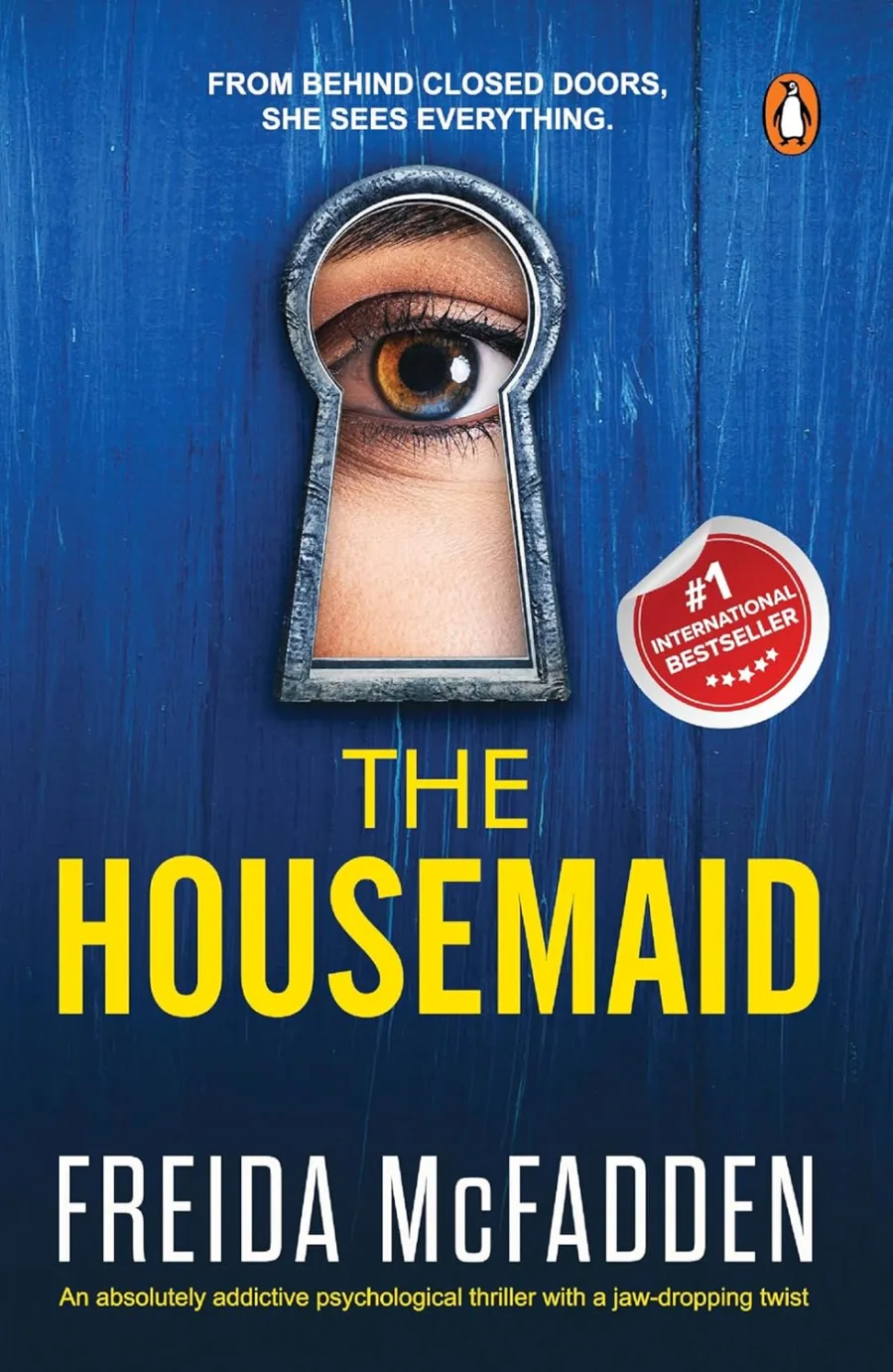
Download Cover Image
Do you want to download the full cover image for The Housemaid: An Absolutely Addictive Psychological Thriller with a Jaw-Dropping Twist?