
The Palace of Illusions: 15th Anniversary Edition
Paperback
• 384 Pages
• ₹ 499.00
• English
• 9789386215963
No ratings yet
| Publisher | Pan Macmillan India |
|---|---|
| ISBN13 | 9789386215963 |
| ASIN/SKU | 9386215969 |
| Book Format | Paperback |
| Language | English |
| Pages | 384 |
| List Price | ₹ 499.00 |
| Publishing Date | 24/05/2019 |
| Dimensions | 2.2 x 12.9 x 19.81 cm |
| Weight | 0.34 g |
| Book Code | BD00055012 |
Buy this Book
Amazon Stores
Ebook Stores
Other Stores
Discover The Palace of Illusions: 15th Anniversary Edition by Chitra Banerjee Divakaruni. This book is published by Pan Macmillan India in Paperback format, ISBN 9789386215963, ASIN 9386215969, under Literature and Fiction, Literary Theory, History and Criticism, Myths, Legends and Sagas.
Book Description
"Be taken back to a time that is half history, half myth, and wholly magical ?
First published in 2008, Chitra Banerjee Divakaruni's The Palace of Illusions has received wide acclaim for giving a woman's take on the timeless tale that is the Mahabharata. Narrated by Panchaali, wife of the five Pandava brothers, the novel traces her life from fiery birth and lonely childhood, where her beloved brother is her only true companion; through her complicated friendship with the enigmatic Krishna; to marriage, motherhood and her secret attraction to the mysterious man who is her husbands? most dangerous enemy. This tenth anniversary edition, complete with a new author?s note, celebrates once again a remarkable and deeply human story about a woman born into a man?s world."
First published in 2008, Chitra Banerjee Divakaruni's The Palace of Illusions has received wide acclaim for giving a woman's take on the timeless tale that is the Mahabharata. Narrated by Panchaali, wife of the five Pandava brothers, the novel traces her life from fiery birth and lonely childhood, where her beloved brother is her only true companion; through her complicated friendship with the enigmatic Krishna; to marriage, motherhood and her secret attraction to the mysterious man who is her husbands? most dangerous enemy. This tenth anniversary edition, complete with a new author?s note, celebrates once again a remarkable and deeply human story about a woman born into a man?s world."
Author Biography
Chitra Banerjee Divakaruni’s books include the bestselling novels The Mistress of Spices (longlisted for the Orange Prize), Queen of Dreams and Sister of My Heart, the prizewinning story collections Arranged Marriage and The Unknown Errors of Our Lives, and the ‘Conch Bearer’ series for children. She teaches creative writing at the University of Houston.
Editorial Reviews
‘By rendering the women characters as complexly as the men ... Divakaruni’s historic and transporting variation adds new and truly revelatory psychological and social dimensions to the great epic’s indelible story of sacrifice and spiritual awakening’ Booklist ‘An epic story ... poignantly told’ Hindustan Times ‘A radiant entree into an ancient mythology ... Remarkable’ Houston Chronicle ‘The Palace of Illusions is unique, amongst Divakaruni’s very best ... A creative, illuminating feminist work’ India Currents
‘An intimate, feminine portrait that is both contemporary and timeless’ Kirkus Reviews ‘Divakaruni has taken a male-centred story and breathed new life into its female characters, giving us a rich tale of passion and love, power and weakness, honour and humiliation ... entertaining, insightful and suspenseful’ Library Journal‘A mythic tale brimming with warriors, magic and treachery ... Divakaruni’s sentences dazzle; the images she creates are masterful’ Los Angeles Times ‘Enchanting ... Divakaruni’s storytelling talents put her right up there with the best’ Miami Herald ‘Divakaruni’s prose is as spirited as Panchaali herself, written with energy and humour’ Milwaukee Journal-Sentinel
‘Vivid and inventive ... Divakaruni’s rich, action-filled narrative contrasts well with the complex psychological portrait of a mythic princess’ Publishers Weekly ‘Complex, beautifully wrought ... Divakaruni’s feminist reading of Indian lore offers readers a magical lens into the political interplay of gender, castes, birthright and life in the monarchy’ Rocky Mountain News
‘The Palace of Illusions is not only an exciting, action-packed read, but also an educating one, and will likely encourage those curious enough to delve into the original Mahabharata’ Toronto Star
‘A daring novel ... inhabited by kings, queens, villains and sorcerers’ Vogue India
‘An intimate, feminine portrait that is both contemporary and timeless’ Kirkus Reviews ‘Divakaruni has taken a male-centred story and breathed new life into its female characters, giving us a rich tale of passion and love, power and weakness, honour and humiliation ... entertaining, insightful and suspenseful’ Library Journal‘A mythic tale brimming with warriors, magic and treachery ... Divakaruni’s sentences dazzle; the images she creates are masterful’ Los Angeles Times ‘Enchanting ... Divakaruni’s storytelling talents put her right up there with the best’ Miami Herald ‘Divakaruni’s prose is as spirited as Panchaali herself, written with energy and humour’ Milwaukee Journal-Sentinel
‘Vivid and inventive ... Divakaruni’s rich, action-filled narrative contrasts well with the complex psychological portrait of a mythic princess’ Publishers Weekly ‘Complex, beautifully wrought ... Divakaruni’s feminist reading of Indian lore offers readers a magical lens into the political interplay of gender, castes, birthright and life in the monarchy’ Rocky Mountain News
‘The Palace of Illusions is not only an exciting, action-packed read, but also an educating one, and will likely encourage those curious enough to delve into the original Mahabharata’ Toronto Star
‘A daring novel ... inhabited by kings, queens, villains and sorcerers’ Vogue India
Book Summary
The Palace of Illusions by Chitra Banerjee Divakaruni is a remarkable retelling of the Indian epic Mahabharata, narrated from the perspective of Panchaali (Draupadi), one of the most powerful yet often overlooked female characters in the epic. The 15th Anniversary Edition includes a new author's note celebrating the enduring popularity of the novel, which has been widely appreciated for presenting the Mahabharata through a woman's voice and offering a fresh, deeply human interpretation of one of India's greatest stories.
The story begins with the extraordinary birth of Panchaali. She and her twin brother, Dhrishtadyumna, emerge from a sacred fire during a royal sacrifice performed by King Drupada. From the moment of her birth, Panchaali is burdened with a prophecy that her life will change the destiny of kingdoms and lead to a great war. Although she is born a princess, she soon realizes that being a woman in a patriarchal society limits her freedom. She longs to make her own choices instead of merely fulfilling the expectations placed upon her by family, society, and destiny.
As Panchaali grows up, she develops into an intelligent, curious, and independent young woman. She questions traditions that treat women as possessions and refuses to accept injustice without reflection. Unlike many traditional versions of the Mahabharata, this novel allows readers to enter Panchaali's thoughts, fears, dreams, and frustrations. Through her narration, the author transforms a legendary figure into a deeply relatable human being who struggles with love, ambition, loneliness, and identity.
One of the central events in the novel is Panchaali's swayamvara, where princes from across India compete to win her hand in marriage. Arjuna succeeds in the difficult archery challenge and wins her. However, due to an unexpected command from Kunti, the Pandavas' mother, Panchaali becomes the wife of all five Pandava brothers. This unusual marriage becomes one of the defining aspects of her life. While she fulfills her duties with dignity and intelligence, she constantly wrestles with emotional conflicts and the challenge of giving equal attention to five very different husbands.
The novel explores each of the Pandava brothers through Panchaali's eyes. Yudhishthira is wise but sometimes excessively attached to duty. Bhima is strong, loyal, and deeply protective. Arjuna remains the object of Panchaali's greatest affection, although his frequent absences and divided loyalties leave her emotionally unfulfilled. Nakula and Sahadeva, though less prominent, contribute kindness and support. Through these relationships, the novel examines the complexities of marriage, sacrifice, and emotional loneliness.
One of the most compelling aspects of the book is Panchaali's relationship with Krishna. Rather than portraying him only as a divine figure, the novel presents him as Panchaali's trusted friend, spiritual guide, and confidant. Krishna offers wisdom during moments of despair and helps her understand the larger purpose behind events that often appear cruel or unjust. Their conversations add philosophical depth to the story and encourage readers to think about destiny, free will, and the meaning of righteousness.
Another significant emotional thread is Panchaali's silent admiration for Karna, the great warrior who fights for the Kauravas. Although circumstances place them on opposite sides, Panchaali feels a powerful but unspoken connection with him. Their relationship is one of longing, regret, and missed possibilities rather than fulfilled romance. The author uses this emotional tension to explore how personal desires often conflict with social duties and the unavoidable demands of fate. This reinterpretation adds a new psychological dimension to familiar characters without altering the central events of the Mahabharata.
The novel reaches a turning point during the infamous game of dice. Yudhishthira loses everything, including his kingdom, his brothers, and finally Panchaali herself. She is dragged into the royal court and publicly humiliated in one of the most painful scenes in Indian literature. Divakaruni portrays this episode through Panchaali's own emotions, allowing readers to experience her anger, humiliation, courage, and determination firsthand. Rather than accepting victimhood, Panchaali emerges stronger, and her demand for justice becomes one of the driving forces behind the eventual Kurukshetra War.
The years of exile that follow provide Panchaali with opportunities for reflection and personal growth. She learns resilience, develops deeper spiritual understanding, and recognizes that strength comes not only from power but also from patience and endurance. The exile transforms her from an ambitious princess into a mature woman who better understands the complexities of human relationships and the heavy price of revenge.
The Kurukshetra War forms the emotional climax of the novel. Although victory ultimately belongs to the Pandavas, the triumph feels hollow because of the immense destruction it causes. Countless warriors lose their lives, families are shattered, and even the victors experience profound grief. Through Panchaali's eyes, the novel emphasizes that war rarely produces true winners. Revenge may satisfy wounded pride temporarily, but it often leaves lasting sorrow and emptiness.
Throughout the story, the author skillfully blends mythology with psychological realism. Familiar epic heroes are portrayed as ordinary human beings with flaws, doubts, ambitions, and vulnerabilities. The novel also highlights the voices of women who are often overlooked in traditional retellings, showing how their lives are shaped by decisions made largely by men. Themes such as gender inequality, identity, love, power, loyalty, destiny, sacrifice, and forgiveness run consistently throughout the narrative.
The writing style is elegant, poetic, and accessible. Even readers who are unfamiliar with the Mahabharata can follow the story because the author explains events through Panchaali's personal experiences rather than relying on extensive knowledge of the epic. The emotional depth of the narration makes ancient characters feel remarkably modern, allowing readers to connect with their struggles and choices.
In conclusion, The Palace of Illusions: 15th Anniversary Edition is much more than a retelling of the Mahabharata. It is a thoughtful exploration of a woman's search for identity, dignity, love, and purpose in a world dominated by power and tradition. By giving Panchaali her own voice, Chitra Banerjee Divakaruni transforms a timeless epic into a deeply moving story about humanity, courage, and the enduring strength of women. The novel encourages readers to revisit familiar myths from a fresh perspective and reminds them that history often becomes richer when it is told through voices that were once left unheard.
The story begins with the extraordinary birth of Panchaali. She and her twin brother, Dhrishtadyumna, emerge from a sacred fire during a royal sacrifice performed by King Drupada. From the moment of her birth, Panchaali is burdened with a prophecy that her life will change the destiny of kingdoms and lead to a great war. Although she is born a princess, she soon realizes that being a woman in a patriarchal society limits her freedom. She longs to make her own choices instead of merely fulfilling the expectations placed upon her by family, society, and destiny.
As Panchaali grows up, she develops into an intelligent, curious, and independent young woman. She questions traditions that treat women as possessions and refuses to accept injustice without reflection. Unlike many traditional versions of the Mahabharata, this novel allows readers to enter Panchaali's thoughts, fears, dreams, and frustrations. Through her narration, the author transforms a legendary figure into a deeply relatable human being who struggles with love, ambition, loneliness, and identity.
One of the central events in the novel is Panchaali's swayamvara, where princes from across India compete to win her hand in marriage. Arjuna succeeds in the difficult archery challenge and wins her. However, due to an unexpected command from Kunti, the Pandavas' mother, Panchaali becomes the wife of all five Pandava brothers. This unusual marriage becomes one of the defining aspects of her life. While she fulfills her duties with dignity and intelligence, she constantly wrestles with emotional conflicts and the challenge of giving equal attention to five very different husbands.
The novel explores each of the Pandava brothers through Panchaali's eyes. Yudhishthira is wise but sometimes excessively attached to duty. Bhima is strong, loyal, and deeply protective. Arjuna remains the object of Panchaali's greatest affection, although his frequent absences and divided loyalties leave her emotionally unfulfilled. Nakula and Sahadeva, though less prominent, contribute kindness and support. Through these relationships, the novel examines the complexities of marriage, sacrifice, and emotional loneliness.
One of the most compelling aspects of the book is Panchaali's relationship with Krishna. Rather than portraying him only as a divine figure, the novel presents him as Panchaali's trusted friend, spiritual guide, and confidant. Krishna offers wisdom during moments of despair and helps her understand the larger purpose behind events that often appear cruel or unjust. Their conversations add philosophical depth to the story and encourage readers to think about destiny, free will, and the meaning of righteousness.
Another significant emotional thread is Panchaali's silent admiration for Karna, the great warrior who fights for the Kauravas. Although circumstances place them on opposite sides, Panchaali feels a powerful but unspoken connection with him. Their relationship is one of longing, regret, and missed possibilities rather than fulfilled romance. The author uses this emotional tension to explore how personal desires often conflict with social duties and the unavoidable demands of fate. This reinterpretation adds a new psychological dimension to familiar characters without altering the central events of the Mahabharata.
The novel reaches a turning point during the infamous game of dice. Yudhishthira loses everything, including his kingdom, his brothers, and finally Panchaali herself. She is dragged into the royal court and publicly humiliated in one of the most painful scenes in Indian literature. Divakaruni portrays this episode through Panchaali's own emotions, allowing readers to experience her anger, humiliation, courage, and determination firsthand. Rather than accepting victimhood, Panchaali emerges stronger, and her demand for justice becomes one of the driving forces behind the eventual Kurukshetra War.
The years of exile that follow provide Panchaali with opportunities for reflection and personal growth. She learns resilience, develops deeper spiritual understanding, and recognizes that strength comes not only from power but also from patience and endurance. The exile transforms her from an ambitious princess into a mature woman who better understands the complexities of human relationships and the heavy price of revenge.
The Kurukshetra War forms the emotional climax of the novel. Although victory ultimately belongs to the Pandavas, the triumph feels hollow because of the immense destruction it causes. Countless warriors lose their lives, families are shattered, and even the victors experience profound grief. Through Panchaali's eyes, the novel emphasizes that war rarely produces true winners. Revenge may satisfy wounded pride temporarily, but it often leaves lasting sorrow and emptiness.
Throughout the story, the author skillfully blends mythology with psychological realism. Familiar epic heroes are portrayed as ordinary human beings with flaws, doubts, ambitions, and vulnerabilities. The novel also highlights the voices of women who are often overlooked in traditional retellings, showing how their lives are shaped by decisions made largely by men. Themes such as gender inequality, identity, love, power, loyalty, destiny, sacrifice, and forgiveness run consistently throughout the narrative.
The writing style is elegant, poetic, and accessible. Even readers who are unfamiliar with the Mahabharata can follow the story because the author explains events through Panchaali's personal experiences rather than relying on extensive knowledge of the epic. The emotional depth of the narration makes ancient characters feel remarkably modern, allowing readers to connect with their struggles and choices.
In conclusion, The Palace of Illusions: 15th Anniversary Edition is much more than a retelling of the Mahabharata. It is a thoughtful exploration of a woman's search for identity, dignity, love, and purpose in a world dominated by power and tradition. By giving Panchaali her own voice, Chitra Banerjee Divakaruni transforms a timeless epic into a deeply moving story about humanity, courage, and the enduring strength of women. The novel encourages readers to revisit familiar myths from a fresh perspective and reminds them that history often becomes richer when it is told through voices that were once left unheard.
Sample Chapters
Sample Chapters will be added soon…
Reader Reviews
No reviews yet.
The Palace of Illusions: 15th Anniversary Edition
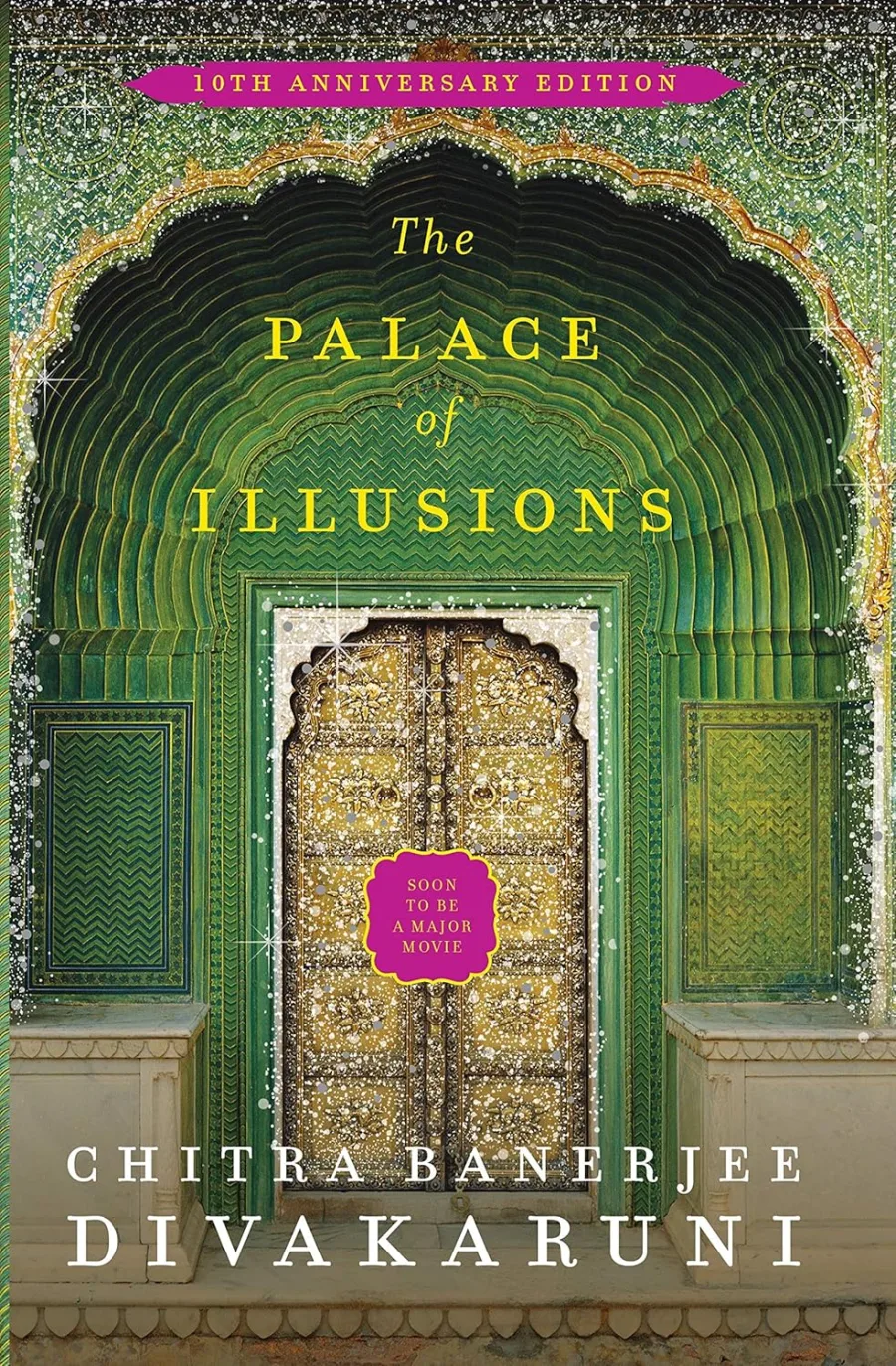
Download Cover Image
Do you want to download the full cover image for The Palace of Illusions: 15th Anniversary Edition?