
Why I am an Atheist and Other Works | Letters & Jail Diary of Bhagat Singh on Revolution
Paperback
• 136 Pages
• ₹ 110.00
• English
• 9789387022812
No ratings yet
| Publisher | Srishti Publishers & Distributors |
|---|---|
| ISBN13 | 9789387022812 |
| ASIN/SKU | 9387022811 |
| Book Format | Paperback |
| Language | English |
| Pages | 136 |
| List Price | ₹ 110.00 |
| Publishing Date | 11/11/2019 |
| Dimensions | 21.59 x 13.97 x 2.54 cm |
| Weight | 141 g |
| Book Code | BD00054691 |
Buy this Book
Amazon Stores
Ebook Stores
Other Stores
Discover Why I am an Atheist and Other Works | Letters and Jail Diary of Bhagat Singh on Revolution by Bhagat Singh. This book is published by Srishti Publishers and Distributors in Paperback format, ISBN 9789387022812, ASIN 9387022811, under Biographies and Memoirs, Biographies.
Book Description
Bhagat Singh is a name that became synonymous with revolution in India’s struggle for independence. This young boy brought about a change in the way people thought about freedom. He was well read and fought extensively for rights – his own, his comrades’ and his countrymen’s. A discussion with a friend soon turned into a matter of self-assessment for Bhagat Singh, leading to a discourse on why he chose to be an atheist. Even in the face of death at a very young age, his uncanny observation leads to his putting forth some pertinent questions. On another occasion, he was disappointed with his father’s plea in Court for his innocence and chose to write a letter to him. This book is a collection of eighteen of his valued writings from within the walls of prison and outside it, which show us the resolve in his words, and the bravery in his acts subsequently.
Author Biography
Author Biography will be added soon…
Editorial Reviews
Editorial Reviews will be added soon…
Book Summary
Why I Am an Atheist and Other Works is a collection of writings by Bhagat Singh that reveals a side of him that is often less visible than the revolutionary image associated with his name. The book brings together essays, letters, political statements, jail writings, and reflections that show Singh not simply as a freedom fighter prepared to sacrifice his life, but as a young intellectual deeply interested in reason, social justice, revolution, religion, politics, sacrifice, and the responsibilities of young people. Collections under this title vary somewhat in their selection of writings, but they commonly include Why I Am an Atheist, letters to family and comrades, jail-related writings, court statements, and other political works.
The most famous piece in the collection is Why I Am an Atheist, written by Bhagat Singh in Lahore Central Jail in October 1930. He wrote it partly in response to suggestions from acquaintances that his rejection of God was the result of vanity or pride. Singh takes the accusation seriously and uses the essay to explain how his views developed. Rather than presenting atheism as a fashionable attitude or a rejection of religion simply for the sake of rebellion, he describes it as the result of a long process of questioning and intellectual development.
Singh explains that he had not always been an atheist. He had grown up in a religious environment and had once accepted religious ideas more readily. As he became involved in revolutionary politics and began reading widely, however, his thinking changed. He started questioning beliefs that he had previously accepted and became increasingly committed to reason and independent thought. His journey illustrates an important principle running throughout his writings: ideas should be examined rather than accepted merely because they have been inherited from family, society, or tradition.
The essay is not simply a discussion about whether God exists. Singh uses the question of religion to explore a much broader issue: how a person should think when faced with difficult questions about life, suffering, morality, and death. He is especially interested in whether people should rely on supernatural explanations or take responsibility for understanding the world through reason and human action.
One of the strongest aspects of Singh's argument is his willingness to examine his own position critically. He does not present himself as someone who is incapable of error. Instead, he acknowledges ordinary human weaknesses and then explains why he nevertheless remains convinced of his position. This makes the essay more reflective than merely argumentative. His atheism is presented as a conclusion reached through thought rather than as an identity adopted without examination.
The question of death is particularly important. Singh was writing while imprisoned and facing the possibility of execution, so his reflections on death carry unusual seriousness. He considers what it means to face death without relying on the promise of an afterlife. For him, courage means accepting the consequences of one's beliefs without seeking supernatural comfort. His position connects closely with his broader revolutionary philosophy: a person should be prepared to accept personal sacrifice for a cause they consider just.
The collection therefore moves naturally from religion to revolution. Singh's writings show that he did not understand revolution simply as violence or the overthrow of one government. He associated revolution with fundamental social and political transformation. His idea of revolution involved freedom from exploitation, inequality, oppression, and injustice. His political writings repeatedly demonstrate that independence from British rule was important, but it was not necessarily the final objective. A free India also needed to address economic and social inequality.
His famous revolutionary slogan and political writings reflect this broader understanding. Singh believed that political freedom should ultimately benefit ordinary people rather than merely replace foreign rulers with a new privileged class. His interest in socialism is therefore significant. He wanted society to move toward greater equality and believed that political change had to be connected with economic and social justice.
The letters included in such collections provide a more personal perspective. Singh wrote to family members and fellow revolutionaries during periods of imprisonment and uncertainty. These letters show his affection for his family, his concern for his comrades, and his determination to remain focused on the larger political struggle. The emotional side of Singh is especially visible in these writings because they reveal that his revolutionary commitment did not mean that he was indifferent to personal relationships.
His letters also show remarkable discipline. Even while facing severe personal circumstances, he continued to think about political organization, public opinion, prisoners' rights, and the future of the revolutionary movement. His writings from jail demonstrate that imprisonment did not stop his intellectual activity. The surviving archive includes letters, hunger-strike demands, political statements, court documents, and messages to young political workers.
The jail writings are particularly important because they challenge the idea that imprisonment simply silenced revolutionaries. Bhagat Singh and his fellow prisoners used hunger strikes, statements, letters, and legal proceedings to draw attention to the treatment of political prisoners. Their demands were connected to the principle that people imprisoned for political activities should not necessarily be treated in the same way as ordinary criminals.
The hunger-strike writings reveal another side of Singh's understanding of sacrifice. Sacrifice, in his view, was not valuable simply because suffering itself was admirable. It could become meaningful when used to draw attention to injustice and mobilize public opinion. The prisoners' actions therefore had both political and symbolic importance.
His court statements also demonstrate how he used legal proceedings as platforms for political communication. Rather than treating the courtroom solely as a place to defend himself, Singh and his comrades used public statements to explain their motives and criticize colonial rule. The surviving collection of his writings includes statements before the Lahore High Court, reasons for refusing to attend court, hunger-strikers' demands, and other political documents.
Another important theme is the meaning of revolution itself. Singh understood revolution as a process of changing the conditions that produce injustice. This is why his writings often move beyond nationalism into questions of class, labour, exploitation, and social organization. His political thinking was influenced by socialist and revolutionary literature, and he increasingly saw the struggle for independence as part of a larger struggle for human equality.
The essay To Young Political Workers, written shortly before his execution, is particularly revealing in this respect. Singh addresses the younger generation and emphasizes the need for political clarity and disciplined thinking. He wanted young activists to move beyond emotional enthusiasm and develop a serious understanding of political and social conditions. The message is that revolutionary work requires intellectual preparation as well as courage. The surviving archive dates this piece to February 2, 1931.
This emphasis on intellectual development is one of the most striking aspects of the collection. Singh was still very young, yet his writings repeatedly encourage reading, questioning, analysis, and self-education. He believed that revolutionaries needed more than bravery. They needed knowledge, political understanding, discipline, and the ability to distinguish genuine social transformation from temporary excitement.
The book also challenges the idea that patriotism should mean unquestioning loyalty. Singh's nationalism was closely connected with critical thought. He could love his country while questioning religious divisions, social inequality, political authority, and established traditions. For him, genuine patriotism involved working toward a society in which people could live with greater freedom and dignity.
Religion is treated in a similarly critical manner. Singh's atheism should not be reduced to hostility toward individual believers. His argument is primarily about intellectual freedom and the right to question religious claims. He is concerned with blind faith and with the tendency to accept ideas without examining evidence or reasoning. His own position is presented as an attempt to live according to reason even when doing so is difficult.
The most famous piece in the collection is Why I Am an Atheist, written by Bhagat Singh in Lahore Central Jail in October 1930. He wrote it partly in response to suggestions from acquaintances that his rejection of God was the result of vanity or pride. Singh takes the accusation seriously and uses the essay to explain how his views developed. Rather than presenting atheism as a fashionable attitude or a rejection of religion simply for the sake of rebellion, he describes it as the result of a long process of questioning and intellectual development.
Singh explains that he had not always been an atheist. He had grown up in a religious environment and had once accepted religious ideas more readily. As he became involved in revolutionary politics and began reading widely, however, his thinking changed. He started questioning beliefs that he had previously accepted and became increasingly committed to reason and independent thought. His journey illustrates an important principle running throughout his writings: ideas should be examined rather than accepted merely because they have been inherited from family, society, or tradition.
The essay is not simply a discussion about whether God exists. Singh uses the question of religion to explore a much broader issue: how a person should think when faced with difficult questions about life, suffering, morality, and death. He is especially interested in whether people should rely on supernatural explanations or take responsibility for understanding the world through reason and human action.
One of the strongest aspects of Singh's argument is his willingness to examine his own position critically. He does not present himself as someone who is incapable of error. Instead, he acknowledges ordinary human weaknesses and then explains why he nevertheless remains convinced of his position. This makes the essay more reflective than merely argumentative. His atheism is presented as a conclusion reached through thought rather than as an identity adopted without examination.
The question of death is particularly important. Singh was writing while imprisoned and facing the possibility of execution, so his reflections on death carry unusual seriousness. He considers what it means to face death without relying on the promise of an afterlife. For him, courage means accepting the consequences of one's beliefs without seeking supernatural comfort. His position connects closely with his broader revolutionary philosophy: a person should be prepared to accept personal sacrifice for a cause they consider just.
The collection therefore moves naturally from religion to revolution. Singh's writings show that he did not understand revolution simply as violence or the overthrow of one government. He associated revolution with fundamental social and political transformation. His idea of revolution involved freedom from exploitation, inequality, oppression, and injustice. His political writings repeatedly demonstrate that independence from British rule was important, but it was not necessarily the final objective. A free India also needed to address economic and social inequality.
His famous revolutionary slogan and political writings reflect this broader understanding. Singh believed that political freedom should ultimately benefit ordinary people rather than merely replace foreign rulers with a new privileged class. His interest in socialism is therefore significant. He wanted society to move toward greater equality and believed that political change had to be connected with economic and social justice.
The letters included in such collections provide a more personal perspective. Singh wrote to family members and fellow revolutionaries during periods of imprisonment and uncertainty. These letters show his affection for his family, his concern for his comrades, and his determination to remain focused on the larger political struggle. The emotional side of Singh is especially visible in these writings because they reveal that his revolutionary commitment did not mean that he was indifferent to personal relationships.
His letters also show remarkable discipline. Even while facing severe personal circumstances, he continued to think about political organization, public opinion, prisoners' rights, and the future of the revolutionary movement. His writings from jail demonstrate that imprisonment did not stop his intellectual activity. The surviving archive includes letters, hunger-strike demands, political statements, court documents, and messages to young political workers.
The jail writings are particularly important because they challenge the idea that imprisonment simply silenced revolutionaries. Bhagat Singh and his fellow prisoners used hunger strikes, statements, letters, and legal proceedings to draw attention to the treatment of political prisoners. Their demands were connected to the principle that people imprisoned for political activities should not necessarily be treated in the same way as ordinary criminals.
The hunger-strike writings reveal another side of Singh's understanding of sacrifice. Sacrifice, in his view, was not valuable simply because suffering itself was admirable. It could become meaningful when used to draw attention to injustice and mobilize public opinion. The prisoners' actions therefore had both political and symbolic importance.
His court statements also demonstrate how he used legal proceedings as platforms for political communication. Rather than treating the courtroom solely as a place to defend himself, Singh and his comrades used public statements to explain their motives and criticize colonial rule. The surviving collection of his writings includes statements before the Lahore High Court, reasons for refusing to attend court, hunger-strikers' demands, and other political documents.
Another important theme is the meaning of revolution itself. Singh understood revolution as a process of changing the conditions that produce injustice. This is why his writings often move beyond nationalism into questions of class, labour, exploitation, and social organization. His political thinking was influenced by socialist and revolutionary literature, and he increasingly saw the struggle for independence as part of a larger struggle for human equality.
The essay To Young Political Workers, written shortly before his execution, is particularly revealing in this respect. Singh addresses the younger generation and emphasizes the need for political clarity and disciplined thinking. He wanted young activists to move beyond emotional enthusiasm and develop a serious understanding of political and social conditions. The message is that revolutionary work requires intellectual preparation as well as courage. The surviving archive dates this piece to February 2, 1931.
This emphasis on intellectual development is one of the most striking aspects of the collection. Singh was still very young, yet his writings repeatedly encourage reading, questioning, analysis, and self-education. He believed that revolutionaries needed more than bravery. They needed knowledge, political understanding, discipline, and the ability to distinguish genuine social transformation from temporary excitement.
The book also challenges the idea that patriotism should mean unquestioning loyalty. Singh's nationalism was closely connected with critical thought. He could love his country while questioning religious divisions, social inequality, political authority, and established traditions. For him, genuine patriotism involved working toward a society in which people could live with greater freedom and dignity.
Religion is treated in a similarly critical manner. Singh's atheism should not be reduced to hostility toward individual believers. His argument is primarily about intellectual freedom and the right to question religious claims. He is concerned with blind faith and with the tendency to accept ideas without examining evidence or reasoning. His own position is presented as an attempt to live according to reason even when doing so is difficult.
Sample Chapters
Sample Chapters will be added soon…
Reader Reviews
No reviews yet.
Why I am an Atheist and Other Works | Letters & Jail Diary of Bhagat Singh on Revolution
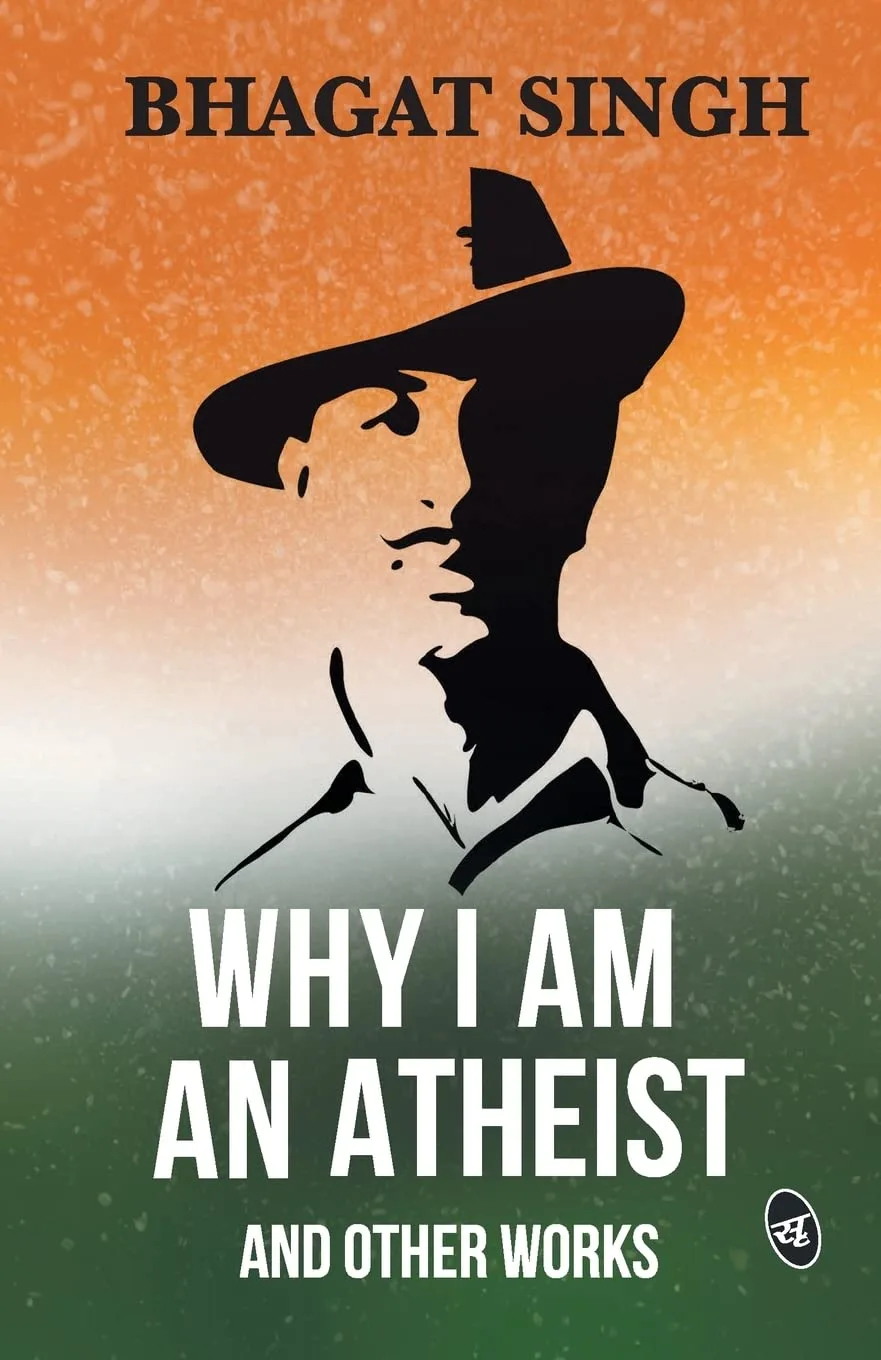
Download Cover Image
Do you want to download the full cover image for Why I am an Atheist and Other Works | Letters & Jail Diary of Bhagat Singh on Revolution?